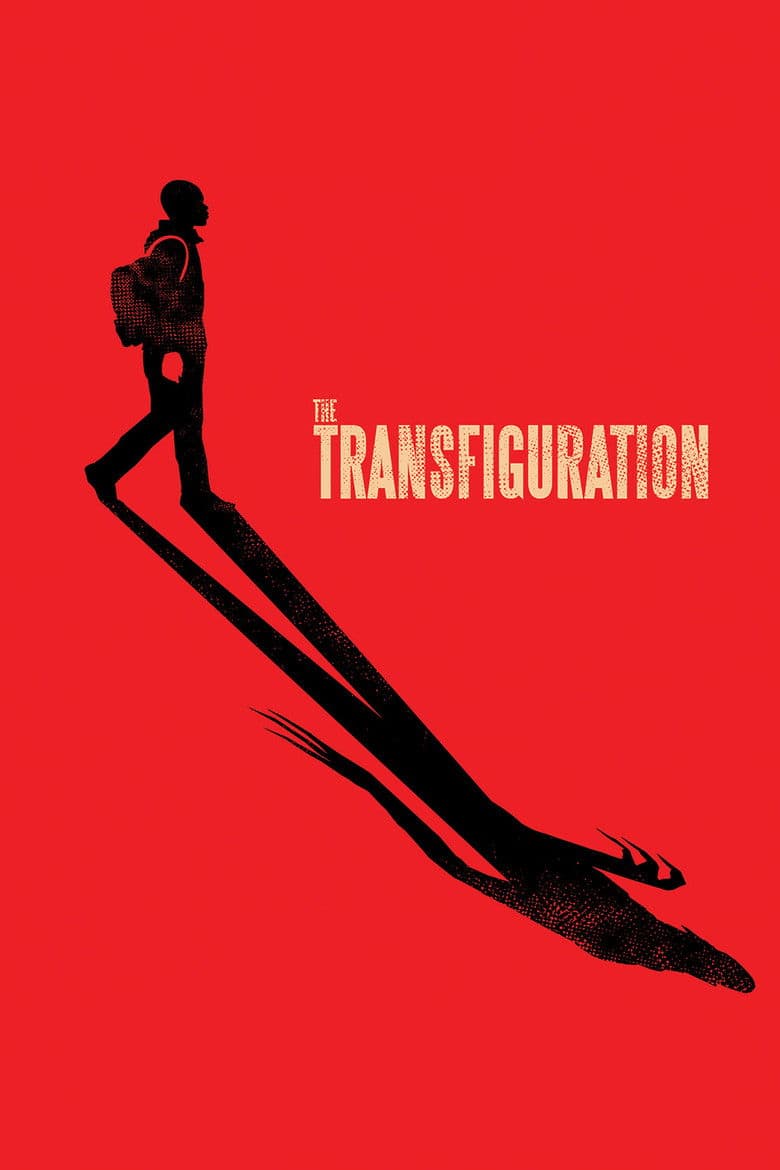
The Transfiguration follows Milo, a quiet fourteen-year-old boy who lives with his older brother in a worn housing project in Rockaway, Queens. Milo has lost both parents, faces bullying, and believes that he is becoming a vampire. He studies vampire films and hunts people for blood while trying to hide his secret. Sophie, a troubled girl who moves into the building, becomes his friend and possible love interest. The film uses a slow, bleak, and uneasy tone as Milo struggles with violence, guilt, and loneliness.
The film gives its social ideas a clear place inside Milo’s horror story. It shows a mostly black housing project beside richer and more newly built parts of New York, and it makes Sophie a white outsider in Milo’s world. A drug-seeking white visitor is called racist after assuming that Black residents sell drugs, while Lewis warns that police and other people can do worse harm. The film also links poverty and gentrification to American capitalism and treats society as a chain of predators. These ideas matter to the setting and ending, but Milo’s violence, trauma, and bond with Sophie remain the main focus.
Community feedback
Was our 44% Woke rating accurate?
Breakdown
These are the editorial factors and ratings behind our score for The Transfiguration.
Woke representation / casting
The film makes Milo Black in a mostly Black Rockaway housing project. The film makes Sophie white so that she feels like an outsider in that area. The director has said these race choices were deliberate. The contrast is visible, but the cast is not built around a wide range of identity roles.
18%
Woke political dialogue
Characters accuse a white visitor of racism after he asks Black residents for drugs. Lewis warns Milo that police may frame him. Lewis also says people ignore worse harm happening around them. These lines appear in separate parts of the film, so the social message returns beyond one brief exchange.
37%
Identity-driven story themes
The film centers a black teen and a white teen whose racial difference shapes their place in the story. The film shows Sophie as an outsider in the housing project and uses a racial insult against the couple. The story ties race, poverty, trauma, and violence together in Milo’s world. Milo’s main arc still follows his vampire belief, guilt, and choice to protect Sophie.
34%
Western institutional / cultural critique
The film contrasts neglected Rockaway housing with richer parts of New York that are being rebuilt for wealthier people. The film treats capitalism as a force that creates predatory places and turns the vampire into a food-chain image. Lewis warns that police can frame Milo and says people ignore worse harm around them. The criticism of class and social institutions returns through the setting, dialogue, and ending.
50%
Woke character or canon changes
Not relevant. The film is an original story. It changes no established character or source canon.
0%
Anti-woke backlash and complaints
Not present. No anti-woke reaction was found in the supplied X pass or in broader searches. Public debate focused on slow pacing, racial stereotypes, and the choice of a white director, not on claims that the film pushes DEI or left-wing politics.
0%
Creator track record context
The available creator record gives Michael O’Shea a score of 10 and shows no high-confidence record of activist or identity-driven behavior. The available producer records are low, and they describe mainly independent film professionals with some socially aware credits. Eve Battaglia has cast LGBTQ and serious social films, but her record does not show an activist public role. Anna Lomakina has a low score and no known political or activist statements. The overall creator context is mild.
16%
Production
Movie · 2016
A young, lonely woman is consumed by her deepest and darkest desires after tragedy strikes her quiet country life.

Movie · 2020
At the height of the Cold War, a Soviet spacecraft crash lands after a mission gone awry, leaving the commander as its only survivor.
Movie · 2022
In the wake of a young Jewish girl’s disappearance, the son of a Hasidic funeral director returns home with his pregnant wife in hopes of reconciling with his father.

Movie · 2017
In a small town in Maine, seven children known as The Losers Club come face to face with life problems, bullies and a monster that takes the shape of a clown called Pennywise.
Movie · 2024
When a kind of rabies that transforms people into aggressive creatures spreads across the planet, Manel isolates himself at home with his cat, relying on his wits to survive; but…
Movie · 2016
A mother and her 10-year old daughter are trapped in a forest. There is something in this forest. Something unlike anything they have heard before.

Movie · 2020
When an outbreak hits, Aidan barricades himself inside his apartment and starts rationing food. His complex is overrun by infected Screamers, and with the world falling apart into…
Movie · 2023
On the day of his scheduled execution, a convicted serial killer gets a psychiatric evaluation during which he claims he is a demon, and further claims that before their time is…
