Movie review
October 19, 2022 · 149 min · PG-13 · Fantasy · Comedy · Adventure
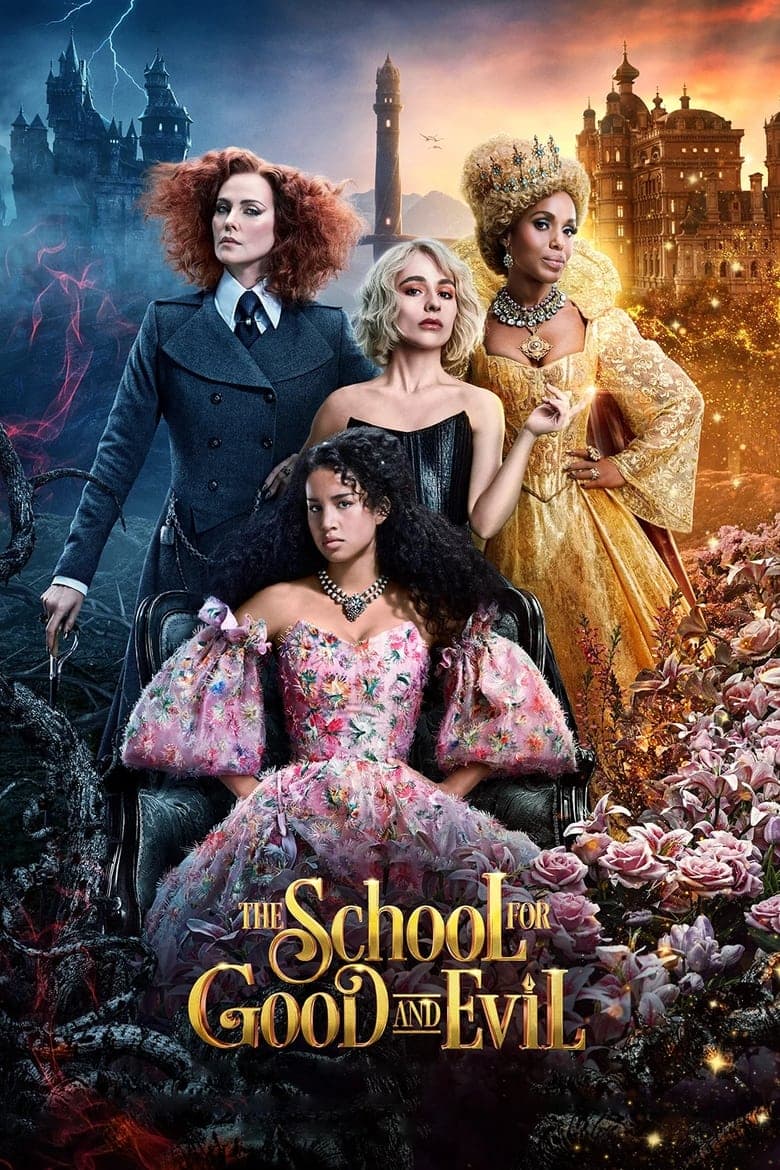
Two best friends, Sophie and Agatha, live in the small village of Gavaldon. Sophie dreams of becoming a princess, while Agatha is treated as a witch because of her dark clothes and her mother’s potions. A giant bird carries them to a school that trains fairy-tale heroes and villains, but the school sends each girl to the side she does not expect. The bright costumes, jokes, romance, and large battles give the fantasy story a busy and playful tone.
The film makes female friendship the main force in the story. It questions beauty rules, princess manners, and the idea that boys should lead while girls follow. Agatha becomes a fighter and rescuer, and she helps join the two schools against a hidden enemy. Sophie and Agatha share a kiss that creates a confirmed LGBTQ-related element, although the film calls their bond friendship and uses little direct modern political speech.
Community feedback
Was our 65% Woke rating accurate?
Breakdown
These are the editorial factors and ratings behind our score for The School for Good and Evil.
Woke representation / casting
The film gives major roles to a visibly mixed group of students, teachers, and leaders, including Sofia Wylie, Kerry Washington, Michelle Yeoh, and Laurence Fishburne. The fantasy world has no stated real-world population, but the cast is openly designed as a mix of fairy-tale cultures. Netflix coverage calls the setting a melting pot and says no one region should be overrepresented. The pattern is easy to notice, but the film does not turn casting into a spoken identity speech.
52%
Woke political dialogue
The film includes a line that says girls can do anything boys do. The beauty class calls smiling a way to empower women, and Agatha rejects that idea. The film also tells Tedros to look past the school’s black-and-white labels. These lines appear in several school scenes, but the film has no long modern political speech.
29%
Identity-driven story themes
The film makes two girls’ friendship the main force that saves the school and defeats the villain. The story repeatedly questions beauty rules, princess behavior, and the idea that boys should lead. Agatha becomes a main fighter and rescuer while Tedros is often vain, confused, or in need of help. Sophie and Agatha share a kiss that confirms an LGBTQ-related element, but the film calls it love between friends.
61%
Western institutional / cultural critique
The schools train children to follow fixed rules about beauty, manners, rank, and princess roles. The film shows those rules as shallow and links them to the schools’ failure to understand the girls. Agatha mocks the idea that a girl needs a prince, and the story makes a vain prince learn to question his old beliefs. The criticism stays inside a fairy-tale school system and does not become a broad attack on modern Western society.
49%
Woke character or canon changes
Not relevant. The film changes plot details, looks, and character traits from the book, but no clear identity or DEI reason is reported for those changes. The same-sex kiss also appears in the book, so it is not a new identity change made for the film.
0%
Anti-woke backlash and complaints
One small anonymous account called Agatha’s recast “blackification” and forced diversity. The account said a pale book character in dark clothes had been ruined, but it had very little reach. No boycott, review-bombing drive, or organized culture-war campaign was reported. Most wider complaints focused on writing, pacing, effects, or changes from the book.
12%
Creator track record context
Paul Feig is known for female-led projects and has supported strong female characters. Soman Chainani links his work to queer identity and challenges to old fairy-tale rules. Laura Solon has spoken about sexism in comedy, while most other listed creators show little activist history. This context supports the film’s girl-centered and LGBTQ-related choices, but it does not prove that every story choice was political.
42%
Production

Movie · 2019
As the gang return to Jumanji to rescue one of their own, they discover that nothing is as they expect. The players will have to brave parts unknown and unexplored in order to…
Movie · 2023
Paul and Sophie, interns at a mysterious London firm, become steadily aware their employers Humphrey and Dennis are anything but conventional – they are disrupting the world of…
Movie · 2020
Seven years since the Monsterpocalypse began, Joel Dawson has been living underground in order to survive. But after reconnecting over radio with his high school girlfriend Aimee…
Movie · 2023
Following the sudden death of his mother, a mild-mannered but anxiety-ridden man confronts his darkest fears as he embarks on an epic odyssey back home.

Movie · 2026
A group of college students go downstairs to their dorm lobby to get a delivery pizza. There's only one issue: They're insanely high on a homemade drug, turning their simple…
Movie · 2021
When single mom Callie and her two kids Trevor and Phoebe arrive in a small Oklahoma town, they begin to discover their connection to the original Ghostbusters and the secret…
Movie · 2001
Young hobbit Frodo Baggins, after inheriting a mysterious ring from his uncle Bilbo, must leave his home in order to keep it from falling into the hands of its evil creator.
Movie · 2024
After a family tragedy, three generations of the Deetz family return home to Winter River. Still haunted by Betelgeuse, Lydia's life is turned upside down when her teenage…
