
Movie review
November 19, 2020 · 97 min · G · Kids · Comedy · Romance · Family
The movie follows Margaret, a duchess who must become queen after the king’s death in the European kingdom of Montenaro. She worries that royal work has pushed Kevin, the baker she loves, out of her life. Her friend Stacy, now a princess in nearby Belgravia, switches places with Margaret so the couple can meet in secret. A greedy cousin named Fiona then kidnaps the wrong woman and tries to take the crown, turning the story into a bright, silly Christmas comedy.
Three lookalike women drive nearly every part of the story. Stacy and Margaret plan the switches, manage royal duties, rescue one another, and expose the plot, while Fiona chases money and power. The men mostly serve as partners, helpers, love interests, or comic obstacles. Kevin worries that he is not Margaret’s equal until she tells him that royal status does not matter. The movie ends with a wedding, a promise to balance love with royal duty, and Margaret’s coronation.
Community feedback
Was our 34% Woke rating accurate?
Breakdown
These are the editorial factors and ratings behind our score for The Princess Switch: Switched Again.
Woke representation / casting
The film puts a visibly black man, Kevin, in a main romantic role in a made-up European royal world. The role is important, but the story does not connect his race to the plot. The film also places women in central royal and business roles, but it does not call those choices a diversity goal. These visible choices create a mild representation signal rather than a strong one.
18%
Woke political dialogue
Not present. The dialogue covers royal duty, romance, money, and Christmas. It does not push modern identity or activist ideas.
0%
Identity-driven story themes
The movie centers on three women who make nearly every important choice. Stacy runs a bakery and royal charities, Margaret trains for the crown and chooses to rule, and Fiona designs the main theft. The men mostly support, romance, or oppose these women, and Kevin worries that he is not Margaret’s equal. This repeated female-led pattern is clear, although the film presents it through light romance instead of a political lesson.
50%
Western institutional / cultural critique
Not present. The film uses a royal setting and a dishonest adviser, but it does not attack monarchy, family, men, or Western institutions as modern systems.
0%
Woke character or canon changes
Not relevant. The film adds Fiona and changes Margaret’s place in the royal line, but it does not change a character’s race, gender, sexuality, or source-canon identity.
0%
Anti-woke backlash and complaints
Not present. Audience complaints focused on weak writing, silly plotting, and the three-Hudgens gimmick. No anti-woke complaint was found in the supplied X research or the broader sources reviewed.
0%
Creator track record context
The writers have some female-lead and queer-representation context, but their public record does not show a strong activist pattern. Hudgens has spoken as an LGBT ally and about her Filipino roots. The director and most producers have low or no documented activist context. This gives the title mild creator track record context.
18%
Production

Movie · 2018
Elizabeth, a charming morning show news anchor, seeks advice from her dog's therapist after a breakup. Tara, a spunky barista, dreams of a life beyond the coffee shop.

Movie · 2022
An engaged, spoiled hotel heiress finds herself in the care of a handsome, blue-collar lodge owner and his precocious daughter after getting amnesia in a skiing accident.

Movie · 2021
Shaun's seasonal excitement turns to dismay when a farmhouse raid to get bigger stockings for the flock inadvertently leads to Timmy going missing.

Movie · 2022
Follows Ralphie, now adult, who returns to the house on Cleveland Street to give his kids a magical Christmas like the one he had as a child, reconnecting with childhood friends…

Movie · 2020
While gathering evidence to support closing a tropical U.S. Air Force base, a congressional aide warms to its generous captain.
Movie · 2020
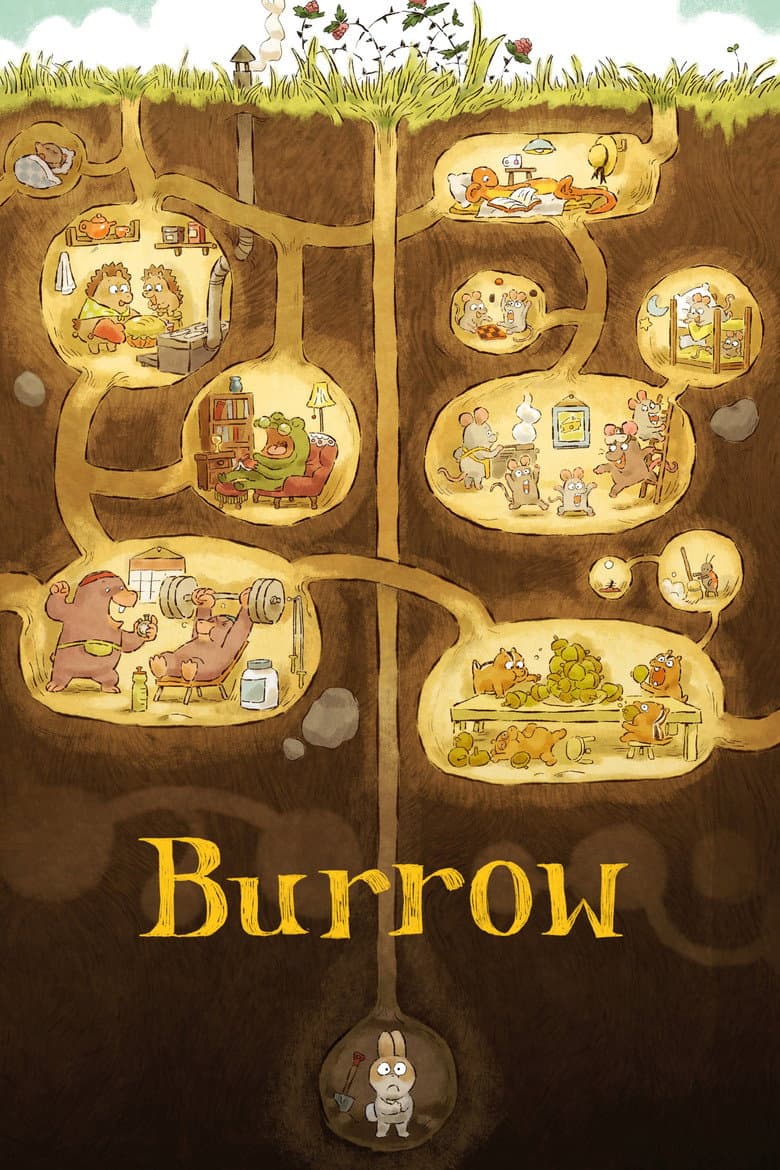
A young rabbit embarks on a journey to dig the burrow of her dreams, despite not having a clue what she's doing.

Movie · 2022
When the Primm family moves to New York City, their young son Josh struggles to adapt to his new school and new friends.

Movie · 2020
Peter is thrilled that his Grandpa is coming to live with his family. That is, until Grandpa moves into Peter's room, forcing him upstairs into the creepy attic.
