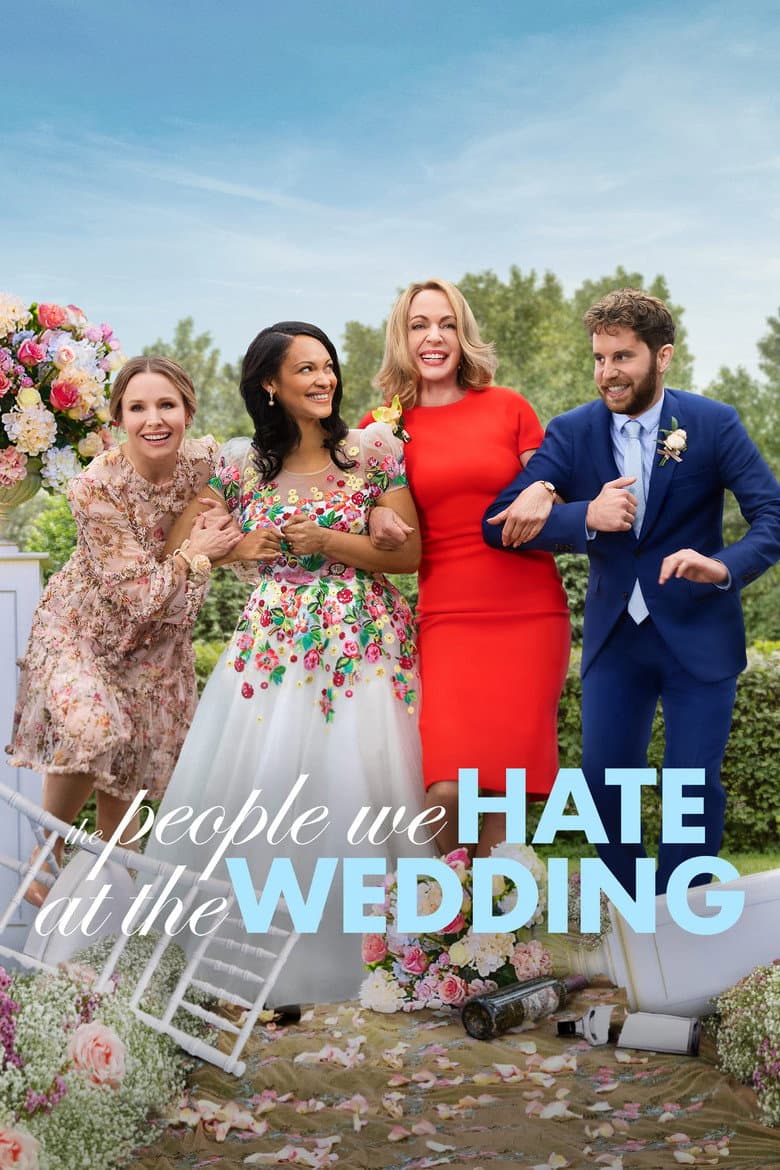
Alice and Paul are unhappy adult siblings who live far from their family. They travel from America to England with their mother, Donna, for the wedding of their wealthy half-sister, Eloise. Old anger, jealousy, affairs, grief, and family secrets turn the wedding trip into a series of bad choices. The tone is crude and mean, but the story ends by treating family forgiveness as the main answer.
Paul is openly gay, lives with his boyfriend Dominic, and worries that his mother never accepted him. His relationship, an argument about his father's views, and a failed attempt at a threesome make gay identity and sex a repeated part of the comedy. Donna's later defense of Paul helps repair their family bond. The film also places a black woman at the center of the wedding and shows a mixed family, but the main story is still about selfish relatives facing old hurt and learning to reconnect.
Community feedback
Was our 38% Woke rating accurate?
Breakdown
These are the editorial factors and ratings behind our score for The People We Hate at the Wedding.
Woke representation / casting
Not present. The movie gives major roles to a black half-sister, a gay man, and his Indian boyfriend, but those choices fit the modern mixed family and the story. The film does not show a clearly mismatched cast or a diversity-first casting message.
0%
Woke political dialogue
Paul talks several times about being gay and about his fear that his mother rejects him. Donna later tells others that she accepts Paul and turns that support into a comic public moment. The film uses those lines to repair a family bond, not to argue about DEI or current politics.
16%
Identity-driven story themes
The film makes Paul's gay identity a continuing part of his family conflict. Paul lives with Dominic, argues over an open relationship and a failed threesome, and later learns why his mother hid the truth about his father. The family accepts him by the end, so queer acceptance shapes a meaningful subplot. Alice's affair, grief, and jealousy still take equal or greater space, so the whole movie is not a queer story.
49%
Western institutional / cultural critique
Not present. The film mocks selfish relatives, adultery, wealth, and poor communication. It does not build a modern activist attack on Western institutions, traditional family life, or Christianity.
0%
Woke character or canon changes
Not relevant. The movie adapts Grant Ginder's novel rather than a franchise or historical story. The source already makes Paul gay, so no identity-related change to an established character is clear.
0%
Anti-woke backlash and complaints
Not present. Audience posts and reviews mostly discuss weak jokes, poor pacing, sex jokes, and unlikeable characters. No meaningful anti-woke, DEI, or identity-politics backlash is documented, and the supplied X pass found none.
0%
Creator track record context
The Molyneux sisters often write women with strong comic agency and feminist ideas. Claire Scanlon and Theo Park have supported inclusive or diverse casting. Grant Ginder shows liberal and anti-authoritarian interests, but his work is not mainly identity politics. Several stored producer notes also connect the team to the feminist film Promising Young Woman. This gives the title a moderate creator track record context, while the movie itself stays focused on family comedy.
44%
Production

Movie · 2024
Inseparable best friends AJ and Moose decide to run the local pool's snack shack after their plan to sell home-brewed beer goes down the drain.

Movie · 2023
A chaotic intervention. An action-packed stay in rehab. After a weird couple of years, John Mulaney comes out swinging in his return to the stage.
Movie · 2023
From his onstage tackle to the slap heard round the world, Dave Chappelle lets loose in this freewheeling and unfiltered stand-up comedy special.
Movie · 2016
A comedy that follows a group of friends as they navigate their way through the freedoms and responsibilities of unsupervised adulthood.

Movie · 2018
Adam Sandler takes his comical musical musings back out on the road, from comedy clubs to concert halls to one very unsuspecting subway station.

Movie · 2024
Pansy is a woman so full of rage that every interaction she has devolves into lashing out, whether at her utterly cowed husband and son, or random strangers who have the temerity…
Movie · 2016
Two teenage boys from inner-city Cork steal bicycles and ride off on a 160km quest to find an unrecovered bale of cocaine worth 7,000,000 euros.
Movie · 2023
Leo and Angela Russo live a simple life in Queens, surrounded by their overbearing Italian-American family. When their son finds success on his high school basketball team, Leo…
