Movie review
October 15, 2023 · 109 min · R · Sci-Fi · Comedy · Thriller · Adventure · Drama
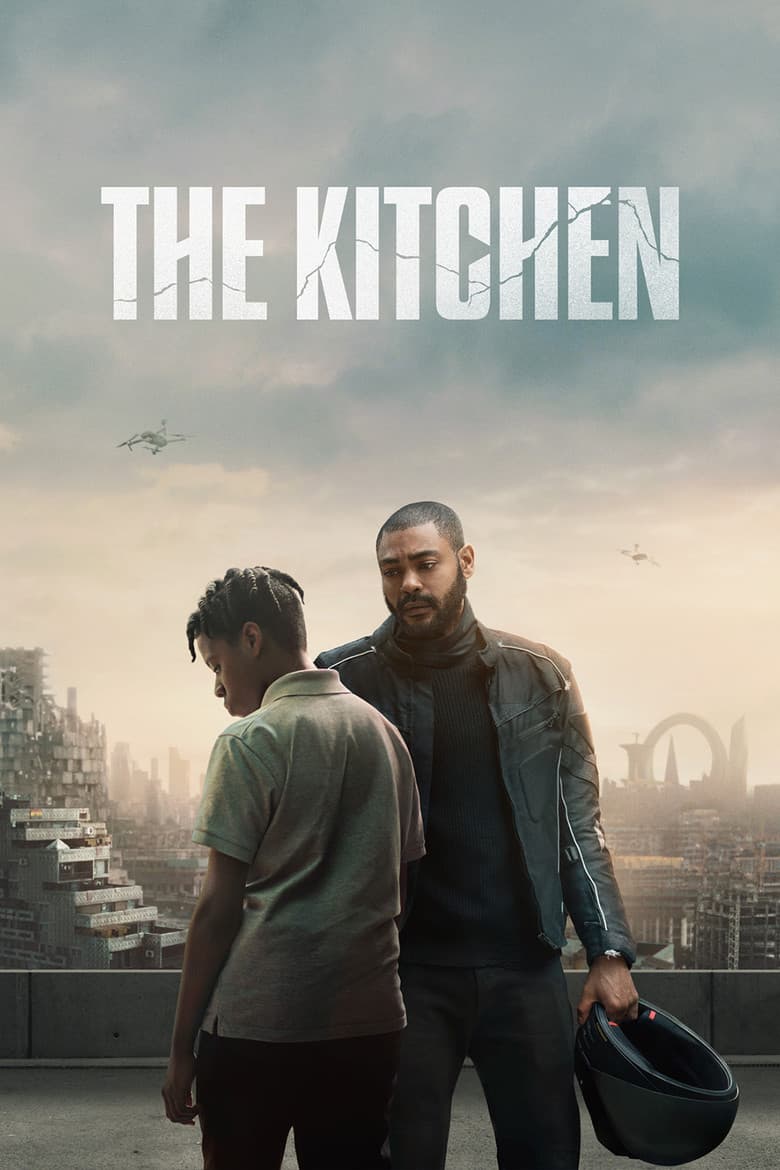
Izi lives in The Kitchen, the last social housing estate in a future London where poor people have been pushed out of the city. He works at a funeral business and saves money for a small flat in the rich Buena Vida complex. After he meets Benji, a 12-year-old boy whose mother has died, Izi must choose between leaving and caring for the boy. The film mixes tense police raids, street crime, music, and warm scenes of neighbors helping one another.
Class and housing politics drive the whole story. The city has ended social housing, luxury homes surround The Kitchen, and armed police keep attacking the residents so the land can be cleared. The film treats private wealth, forced removal, and state power as the main causes of suffering, while it presents the estate's shared life as worth protecting. Izi's bond with Benji gives the political message a family story, but race, gender, and queer identity are not the main subject.
Community feedback
Was our 60% Woke rating accurate?
Breakdown
These are the editorial factors and ratings behind our score for The Kitchen.
Woke representation / casting
Most named residents and major gang figures are black, including Izi, Benji, Staples, and Ruby. The film presents The Kitchen as a Black London community, so identity is visible across the main cast. The story does not explain why this estate has a mostly black population. The pattern is clear, but it is not a one-of-each group or a gender-swap story.
34%
Woke political dialogue
Residents talk about the city taking their land and leaving them behind. Staples says the gang steals from richer areas to correct an unfair system. During a police raid, Benji says “I can’t breathe,” which recalls a Black Lives Matter protest phrase. These lines make the politics clear, but they appear in a few key scenes rather than throughout every conversation.
35%
Identity-driven story themes
The story follows a mostly black working-class community facing removal, police raids, and control of basic needs. The film connects the residents' identity with a wider story about poverty and state power. Benji's “I can't breathe” moment brings a clear Black Lives Matter reference into the main conflict. Family and class stay larger than race or identity, so this theme is important but not dominant.
38%
Western institutional / cultural critique
The city has ended social housing and pushes poor workers into a crowded estate. Luxury towers, police drones, armed raids, and forced removal show institutions serving money and control. Residents say the land is being taken, and they fight back against the city. The film treats housing policy, private wealth, and state force as harmful, so this critique shapes the whole plot.
62%
Woke character or canon changes
Not relevant. The film is an original story and does not change an established character, canon, or historical figure.
0%
Anti-woke backlash and complaints
Not present. Public complaints focused on slow pacing, an unclear ending, and thin world building. No clear anti-woke, anti-DEI, or identity-politics backlash was found.
0%
Creator track record context
Daniel Kaluuya's public record includes films about race and support for underrepresented black filmmakers. Kibwe Tavares has made work about race, class, migration, and black communities. Amy Baty often writes about women and gender, while Aisha Bywaters supports meaningful diversity in casting. Joe Murtagh and the listed producers have weaker or mixed links to activist themes. This background supports the film's social focus, but the film's own story remains the stronger evidence.
54%
Production
Movie · 2017
In 1981, an enthusiastic young adventurer follows his dreams into the Bolivian Amazon jungle with two friends and a guide with a mysterious past.
Movie · 2022
After accidentally crash-landing in 2022, time-traveling fighter pilot Adam Reed teams up with his 12-year-old self on a mission to save the future.

Movie · 2020
2038: George Almore is working on a true human-equivalent AI, and his latest prototype is almost ready. This sensitive phase is also the riskiest as he has a goal that must be…
Movie · 2019
A down-on-his-luck crab fisherman embarks on a journey to get a young man with Down syndrome to a professional wrestling school in rural North Carolina and away from the…
Movie · 2021
After a sudden global event wipes out all electronics and takes away humankind’s ability to sleep, chaos quickly begins to consume the world.
Movie · 2026
When their plan to book a show at the Rivoli goes horribly wrong, Matt and Jay accidentally travel back to the year 2008.
Movie · 2023
Special agent Orson Fortune and his team of operatives recruit one of Hollywood's biggest movie stars to help them on an undercover mission when the sale of a deadly new weapons…

Movie · 2016
Captain William Stanaforth is on a one-way solo mission to take the first steps in colonising Mars. Like all pioneers throughout history, Stanaforth will face insurmountable odds…
