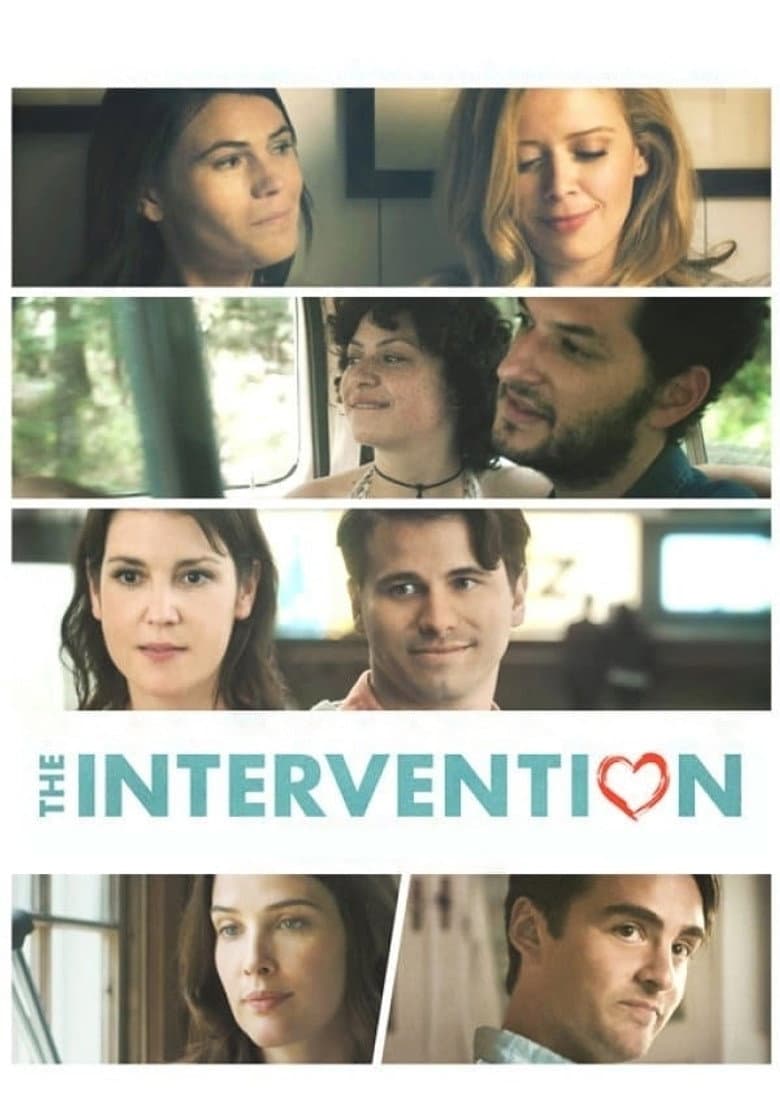
The Intervention follows Annie, a woman with a drinking problem who brings three couples to her family’s summer house near Savannah, Georgia. She tells herself that the trip will help Ruby and Peter end their unhappy marriage, but the plan quickly turns into a fight. The other couples also face fear, grief, cheating, and doubts about marriage. The film uses sharp jokes, tense arguments, sex talk, and sad moments as the friends learn that they cannot fix other people while ignoring their own lives.
The film gives one of its four main couples a lesbian relationship, and that couple faces a major conflict about commitment, attraction, and whether to move in together. Jessie kisses a younger woman, while Sarah says she misses sleeping with men, so the film presents same-sex love as part of normal adult life rather than as a problem to solve. The story also questions the idea that every woman should want to become a wife and mother. A brief dinner argument mentions a racism test and a Nazi comparison, but these lines are jokes inside a larger story about messy friendships and marriages.
Community feedback
Was our 51% Woke rating accurate?
Breakdown
These are the editorial factors and ratings behind our score for The Intervention.
Woke representation / casting
The cast is mostly white and drawn from one friend group, so it does not use a wide mix of identity types. Jessie and Sarah are a prominent lesbian couple, and their relationship gets regular screen time. DuVall said she made the couple reflect her own life and wanted gay relationships to feel normal. That makes the identity choice visible, but it is one couple in a story about four couples.
38%
Woke political dialogue
A dinner argument says that a Harvard racism test proves one character is racist. The same scene jokes about Hitler and whether good intentions can excuse evil acts. A later speech links the burden of motherhood to the need for a husband. These points appear briefly during comic fights and do not guide the whole plot.
27%
Identity-driven story themes
Jessie and Sarah are one of the four main couples, and their long-term relationship has a full side story. Jessie struggles with commitment, kisses Lola, and says she misses sleeping with men. The film treats two women in love as ordinary friends while giving their problems the same space as the other couples. The main story still centers on marriage, drinking, grief, and meddling, so queer themes are important but not the whole film.
43%
Western institutional / cultural critique
The film questions the idea that every woman should want marriage and children. Annie says she does not want to be a mother or a wife, even though Matt wants that future. The friends also treat a bad marriage as something to escape, while Peter is shown as selfish and angry. The women also make selfish and dishonest choices, and the film does not attack churches, capitalism, or Western institutions.
24%
Woke character or canon changes
Not relevant. The film is an original story about modern friends. It does not change an older character or a known story.
0%
Anti-woke backlash and complaints
Not present. No anti-woke complaints were found in the reviewed news, audience pages, or social discussion. The X research pass also reported no on-title anti-woke posts.
0%
Creator track record context
Clea DuVall has a strong record of queer stories and public support for queer visibility. She wrote, directed, and acted in this film, so her past work closely matches its lesbian relationship. The other listed producers and crew have little recorded identity activism, although one producer has mainly liberal political ties. The director’s track record is the main reason this context score is high.
69%
Production

Movie · 2024
Emotions run high when three estranged sisters reunite in a cramped New York City apartment to watch over their ailing father during his final days.
Movie · 2024
In 2008, during the last month of summer before high school begins, an impressionable 13-year-old Taiwanese American boy learns what his family can't teach him: how to skate, how…
Movie · 2020
Scott has been a case of arrested development ever since his firefighter father died when he was seven. He's now reached his mid-20s having achieved little, chasing a dream of…

Movie · 2019
A young Scottish singer, Rose-Lynn Harlan, dreams of making it as a country artist in Nashville after being released from prison.

Movie · 2023
Two mismatched entrepreneurs – egghead innovator Mike Lazaridis and cut-throat businessman Jim Balsillie – joined forces in an endeavour that was to become a worldwide hit in…

Movie · 2024
When a construction worker unexpectedly joins a local theater's production of Romeo and Juliet alongside his estranged teenage daughter, the drama onstage starts to mirror his own…
Movie · 2017
When dictator Joseph Stalin dies, his parasitic cronies square off in a frantic power struggle to become the next Soviet leader.

Movie · 2025
1984; Michael Larson, an unemployed ice-cream truck driver from Ohio, steps onto the game show "Press Your Luck" harboring a secret: the key to endless amounts of money.
