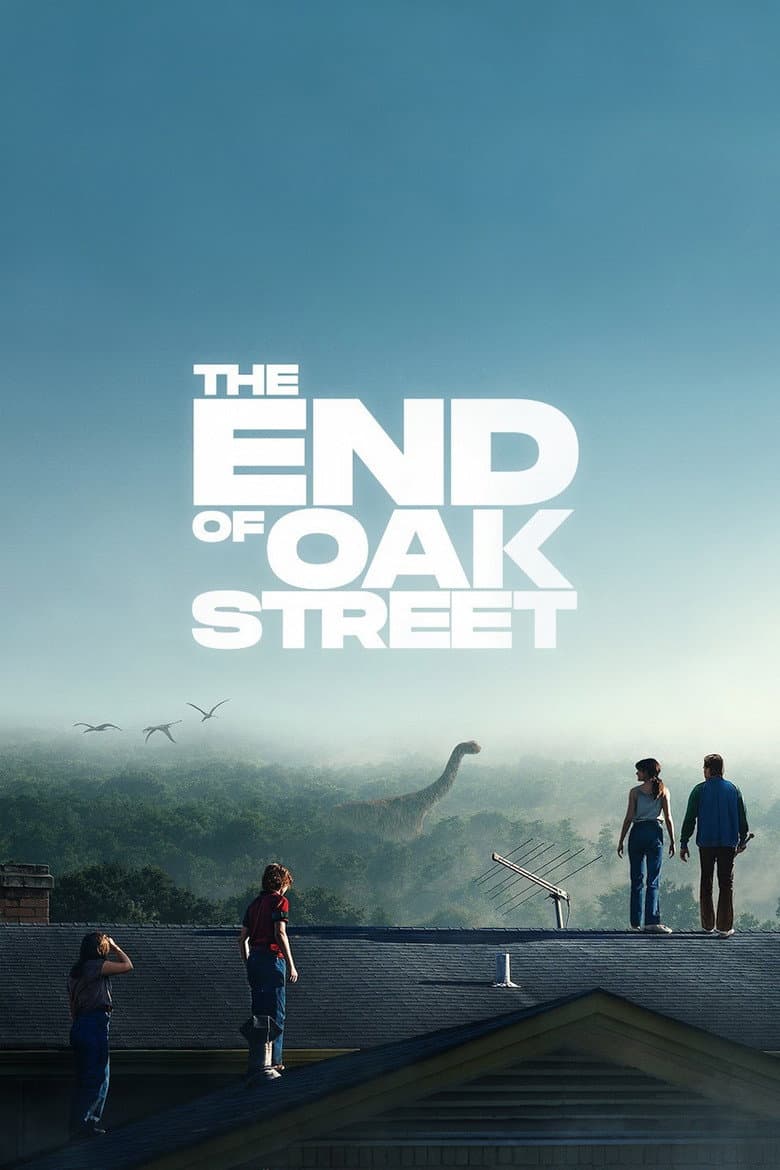
Denise Platt lives with her husband Greg, their daughter Audrey, their son Brian, and their dog on a quiet American street in 1982. Denise wants to become a writer, while Greg hides that he has lost his full-time job, and their marriage is close to breaking. A strange flash moves the whole neighborhood into a wild land filled with dinosaurs and creatures from long ago. The family must cross the changed streets and homes while trying to stay alive and decide whether they can remain together. The movie mixes tense survival scenes with strange humor and a sad family drama.
The film makes Denise the main person who plans, fights, and protects the family. Greg is often shown as weak, ashamed, or unable to act, while Denise uses a gun and takes charge in major danger scenes. Audrey is treated as the smartest child and has a romantic story involving a girl, but that relationship is a smaller part of the plot. The story also questions the old idea that a mother should give up her own work and a father should always lead, so gender roles are a clear part of the family conflict.
Community feedback
Was our 61% Woke rating accurate?
Breakdown
These are the editorial factors and ratings behind our score for The End of Oak Street.
Woke representation / casting
The main cast gives Denise the family’s lead protector role in a prominent action story. The film gives her the biggest heroic danger scenes, including a shotgun fight with a dinosaur. The setting and cast do not show a clear diversity-first or quota-style pattern. This gives the casting a small gender-role signal, but not a broad diversity message.
15%
Woke political dialogue
Not present. The film’s dialogue centers on family secrets, fear, and survival. It has no clear lines that push modern identity, DEI, or activist ideas.
0%
Identity-driven story themes
The film repeatedly makes Denise the person who thinks clearly, uses the gun, and leads the family through danger. The main women and Audrey solve more problems while Greg and Brian are often passive, ashamed, or ineffective. Audrey’s attraction to a girl adds a confirmed LGBTQ relationship, but it remains a smaller subplot. These choices make gender roles and female strength part of the main family story.
68%
Western institutional / cultural critique
The film presents the ideal 1980s suburban family as troubled beneath its neat surface. Denise’s secret book and wish to leave her family challenge the expected role of a wife and mother. Greg’s job loss, drinking, and weak responses make the old male-provider role look broken. The criticism stays focused on one family and does not become a broad attack on religion or Western culture.
52%
Woke character or canon changes
Not relevant. The film is an original story and does not change a known character, book, franchise, or real historical figure.
0%
Anti-woke backlash and complaints
Several right-leaning YouTube and blog commentators called the film woke or a girlboss story. They complained that Denise is the hero, Greg is weak, and the family story attacks old male and father roles. They also pointed to Audrey’s lesbian relationship and the film’s women-over-men pattern. The reaction had real but scattered reach, with no organized boycott or clear review-bombing drive.
38%
Creator track record context
The stored creator review gives David Robert Mitchell 2/100 and reports no political or identity activism. The stored reviews give most producers scores from 5 to 25 and describe normal industry work. Hannah Minghella scores 33 because of Women in Film and a women’s political group. Chris Bender scores 25 because of some social-impact work.
20%
Production
Movie · 2018
A college student, who sees a UFO, uses his exceptional math skills to investigate the sighting with his friends while the FBI follows closely behind.

Movie · 2021
In the near future on a colony of state-of-the-art robots, a private investigator is hired by the colony's creator to bring his missing daughter home.

Movie · 2019
Three astronomers accidentally intercept what they believe to be a signal from a distant alien civilization, but the truth is even more incredible than any of them could have…

Movie · 2023
A team of special agents discovers a revolutionary new computer program to bait and trap online predators. After teaming up with the program's troubled developer, they soon find…

Movie · 2016
A man trapped in an automated prison must outsmart a computer in order to escape and try and find his way back to the outside world that may already be wiped out.

Movie · 2017
An assassin seeks redemption after being given a second chance at life.

Movie · 2022
Mike and Kate, a young couple, get the once-in-a lifetime chance to win a cool five million dollars. The challenge: Live for 50 days in a blank space.

Movie · 2018
A mute man with a violent past is forced to take on the teeming underworld of a near-future Berlin as he searches for his missing girlfriend.
