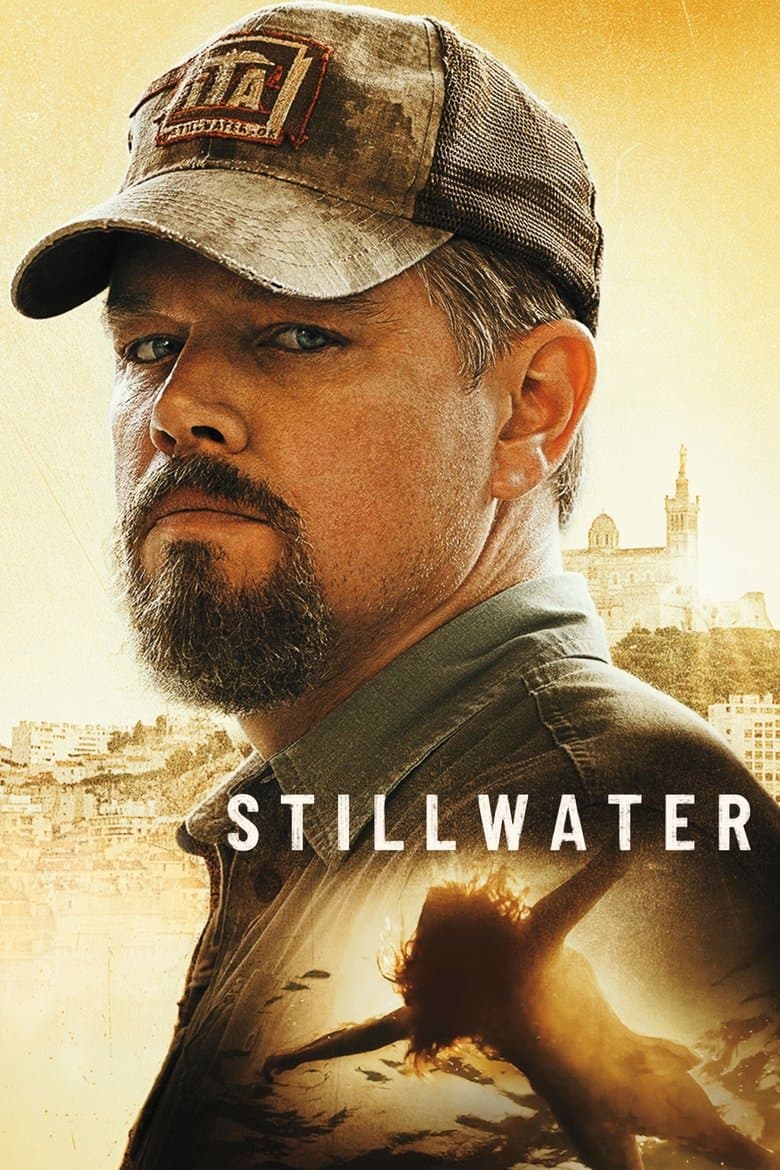
An American oil worker goes to France to try to save his daughter from prison. The daughter is serving time for killing her roommate, who was also her lover. This setup brings in central themes about same-sex relationships and racial tensions in Marseille. The movie shows these social issues through his struggle with different cultures and local prejudices.
Community feedback
Was our 65% Woke rating accurate?
Breakdown
These are the editorial factors and ratings behind our score for Stillwater.
Woke representation / casting
The film features a diverse cast of French and Arab-French characters to match its Marseille setting, including a biracial young girl. It also includes a central lesbian relationship as the core backstory for the daughter's imprisonment. The diversity feels mostly tied to the location, but the inclusion of the same-sex relationship serves as a prominent modern identity element that shapes the entire narrative.
35%
Woke political dialogue
The dialogue includes noticeable discussions about American politics, local prejudices, and the stereotype of the red-state conservative. Characters debate the protagonist's background, asking if he owns guns or voted for Donald Trump. There is also occasional dialogue addressing anti-Arab racism in France. While these conversations are integrated into the culture-clash theme, they highlight present-day political and social divides.
Production
35%
Identity-driven story themes
The story deals heavily with cultural differences and racial prejudice, showing anti-Arab bigotry in France. A major part of the plot revolves around the daughter's romantic relationship with her female roommate, which drives the mystery. The narrative uses these identity elements to explore social justice topics, making them a visible part of the viewing experience.
55%
Western institutional / cultural critique
The movie presents a noticeable critique of the traditional American "savior" mindset. The protagonist, a religious, gun-owning Oklahoman roughneck, represents a caricature of conservative America. His attempt to take the law into his own hands in a foreign country ultimately leads to tragic mistakes, suggesting his bootstrap confidence is deeply flawed. The film also critiques French societal institutions and local racism.
45%
Woke character or canon changes
The film was heavily inspired by the real-life trial of Amanda Knox. However, the creators made major, identity-driven changes to the real-world story. The real victim was a white British student, but the film changes her to an Arab-French woman. Additionally, the film invents a sexual relationship between the daughter character and the victim, turning it into an LGBTQ+ plot point. These changes drew public anger from Knox.
50%
Anti-woke backlash and complaints
There was some minor online backlash from viewers who complained about the film's "woke preaching" and political messaging. These complaints focused on the negative portrayal of the conservative American protagonist and the heavy focus on French racism. However, this backlash was fairly small and was largely overshadowed by the wider controversy surrounding Amanda Knox's public objections to the movie.
25%
Creator track record context
The creative team has almost no public record of social justice activism or DEI advocacy. The directors, Loïc Chavanon, Masanobu Takayanagi, and Thierry Zemmour, are artistic and technical professionals with no political footprints. Among the producers, only Renuka Ballal has a mild association with industry representation through a VFX training program, leaving the group's overall activist track record very low.
10%
Movie · 2017
A traumatized veteran, unafraid of violence, tracks down missing girls for a living. When a job spins out of control, his nightmares begin to overtake him, and a conspiracy is…
Movie · 2021
Based on true events, "Nitram" lives with his parents in suburban Australia in the mid-90s. He lives a life of isolation and frustration at never fitting in.

Movie · 2017
The story of the kidnapping of 16-year-old John Paul Getty III and the desperate attempt by his devoted mother to convince his billionaire grandfather Jean Paul Getty to pay the…

Movie · 2022
After escaping a Michigan prison, a charming career criminal assumes a new identity in Canada and goes on to rob a record 59 banks and jewellery stores while being hunted by a…
Movie · 2019
A leader of a drug cartel sends his two toughest henchmen to investigate why a shipment was botched.

Movie · 2019
A charismatic New York City jeweler always on the lookout for the next big score makes a series of high-stakes bets that could lead to the windfall of a lifetime.
Movie · 2019
In the wake of his dramatic escape from captivity, Jesse Pinkman must come to terms with his past in order to forge some kind of future.

Movie · 2016
As a math savant uncooks the books for a new client, the Treasury Department closes in on his activities and the body count starts to rise.
