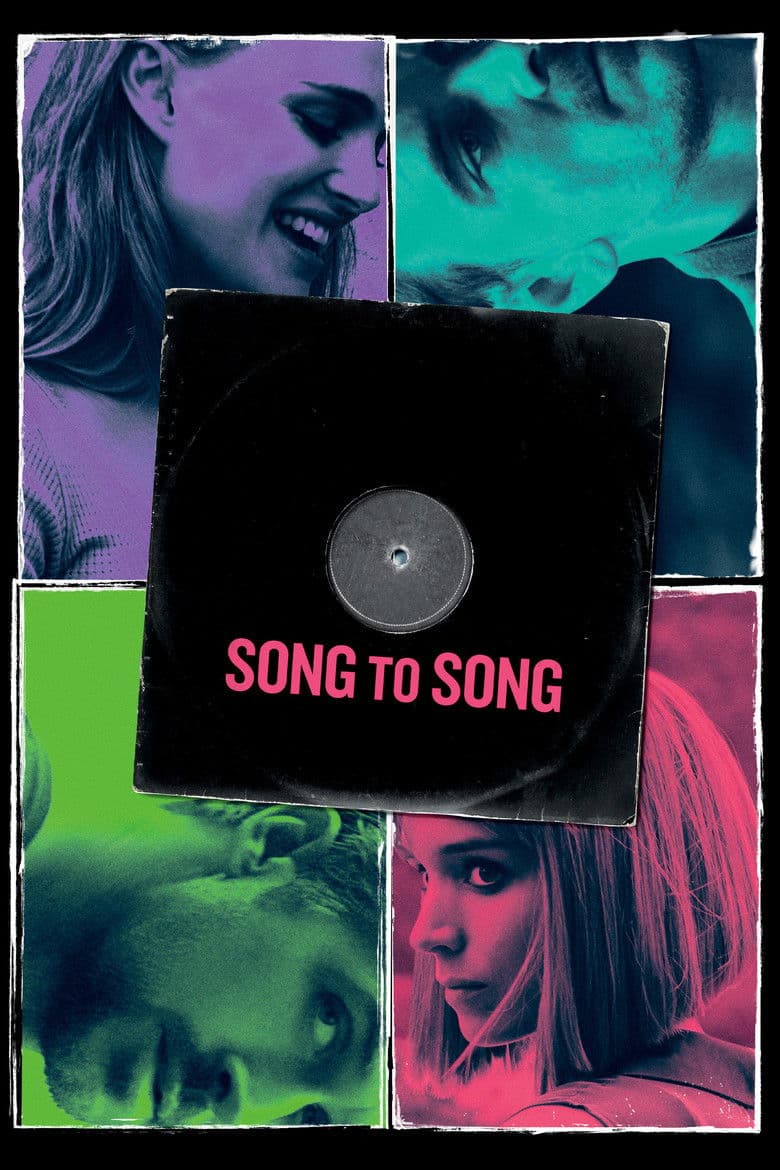
Song to Song follows Faye and BV, two young musicians trying to build lives in Austin’s busy music scene. Faye is already tied to Cook, a rich producer who offers fame while using people around him. She and BV fall in love, but their secret and Cook’s control break the couple apart. Cook also draws Rhonda, a waitress and former teacher, into his drugs, sex, and party world, with tragic results. The film has a dreamy, loose style, with whispered thoughts, concert crowds, bright homes, and a serious search for love, guilt, mercy, and a better life.
The film gives Faye a short but clear relationship with Zoey, a French woman, after Faye’s breakup with BV. The two women kiss, hold hands in public, and talk about feeling connected. The film also shows open sexual behavior and multiple partners as part of its main drama, but it treats these choices as part of a wider story about selfish desire and harm rather than as a political cause. The story repeatedly shows Cook’s male power, sexual pressure, and control over younger women, while Rhonda’s suffering and suicide expose the cost of his lifestyle. Its main message favors honesty, love, family duty, and spiritual change over fame, lust, and greed.
Community feedback
Was our 23% Woke rating accurate?
Breakdown
These are the editorial factors and ratings behind our score for Song to Song.
Woke representation / casting
Not present. The film does not make cast identity or diversity a visible message. The modern Austin setting and the French secondary character fit the story without a stated representation goal.
0%
Woke political dialogue
Not present. The film has no sustained political speeches or debates about race, gender, DEI, capitalism, or current parties. A rebellious song lyric about making your own rules is not developed into a modern political message.
0%
Identity-driven story themes
Faye has a clear but limited relationship with Zoey after her breakup with BV. The two women kiss, hold hands in public, and speak about feeling connected. The film also shows multiple partners and sexual freedom, but it treats these events as part of a wider story about desire, guilt, and harm rather than as a political cause.
23%
Western institutional / cultural critique
Cook repeatedly uses money, fame, and sex to control Faye and Rhonda. The story presents his cheating and pressure as destructive. Rhonda’s suicide shows lasting harm from his lifestyle. Cook also takes credit for BV’s songs, linking male power with unfair control in the music business. The film does not turn this into a broad attack on Western institutions or conservative politics.
28%
Woke character or canon changes
Not relevant. Song to Song is an original modern story, not an adaptation of known characters or a historical event. The film does not change an established character or historical figure for identity reasons.
0%
Anti-woke backlash and complaints
Not present. The supplied X pass found no anti-woke reaction or specific complaints. Web coverage and audience discussion focus on the film’s pace, loose structure, sex, and acting rather than woke, DEI, or identity politics.
0%
Creator track record context
Terrence Malick’s work includes anti-war themes and long-running concern with nature and spiritual life. Available background shows little explicit DEI or activist politics from him. Francine Maisler has worked on diverse ensembles, but no public activist profile is documented. The other credited crew members have low or no documented identity-focused advocacy.
15%
Production
Movie · 2018
The coming-of-age tale of 16-year-old Lina Vilkas who is deported to Siberia amid Stalin's reign of terror in the Baltic region during WWII.

Movie · 2017
Recently deceased, a white-sheeted ghost returns to his suburban home to console his bereft wife, only to find that in his spectral state he has become unstuck in time, forced to…

Movie · 2017
A brilliant but impulsive young surgeon spirals into self-destruction after a painful breakup, struggling to cope with love, loss, and the consequences of his own temper.
Movie · 2018
As a young New York couple goes from college romance to marriage and the birth of their first child, the unexpected twists of their journey create reverberations that echo over…
Movie · 2018
Seasoned musician Jackson Maine discovers — and falls in love with — struggling artist Ally. She has just about given up on her dream to make it big as a singer — until Jack…
Movie · 2017
The story of four characters whose lives intertwine amid the hustle and bustle of the Coney Island amusement park in the 1950s: Ginny, an emotionally volatile former actress now…
Movie · 2020
Lonely college freshman Alex has closed himself off from his peers, who all appear to have this whole "college thing" figured out.
Movie · 2018
German artist Kurt Barnert has escaped East Germany and now lives in West Germany, but is tormented by his childhood under the Nazis and the GDR regime.
