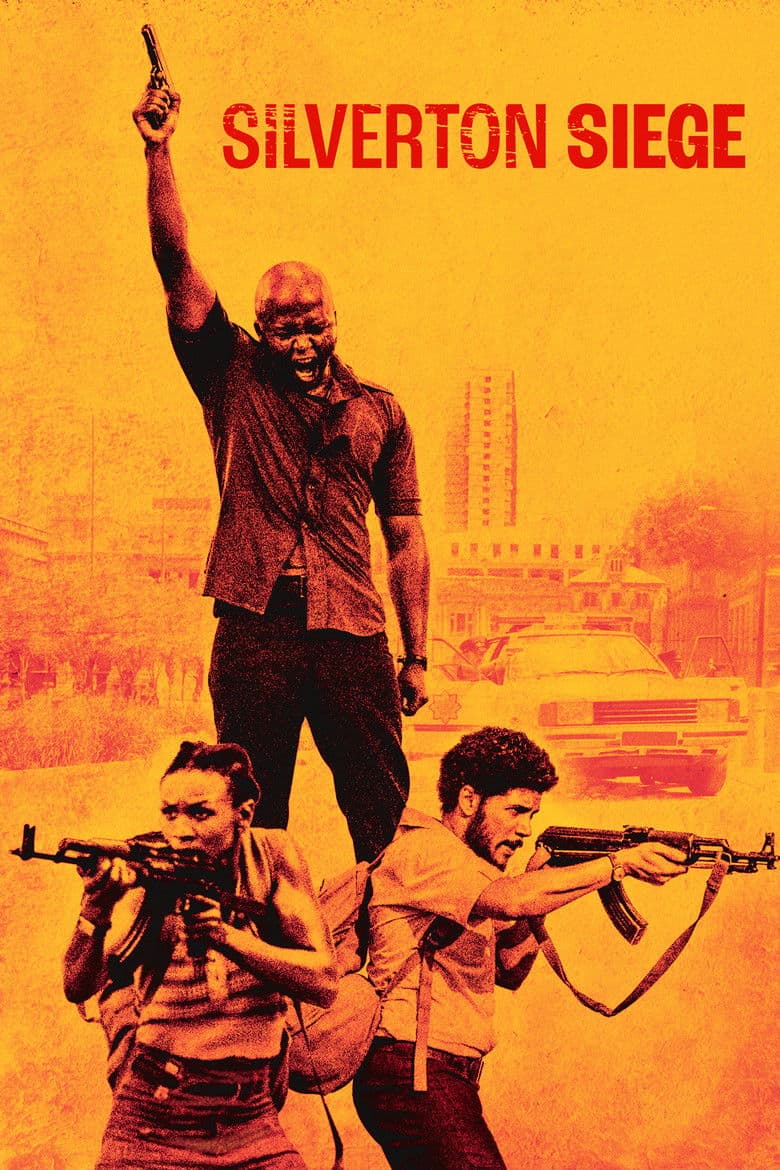
Calvin Khumalo leads three young anti-apartheid fighters in Pretoria in 1980. After police trap them during a mission to destroy an oil depot, Calvin, Terra, and Aldo run into a bank and take the people inside hostage. Calvin turns the siege into a demand for Nelson Mandela’s release, while a police captain tries to keep the hostages alive. The film mixes gun battles, tense talks, and personal anger with a serious story about the cost of freedom.
The story makes race, skin color, and the fight against apartheid part of nearly every major choice. Calvin speaks about Black poverty and police violence, while Rachel, a black woman with albinism, explains how others treat her as white. Christine, the justice minister’s daughter, rejects her father’s racist system and helps the hostage takers. The movie also changes one real-life male fighter into Terra, a strong female fighter, so identity and representation are visible parts of the historical drama.
Community feedback
Was our 79% Woke rating accurate?
Breakdown
These are the editorial factors and ratings behind our score for Silverton Siege.
Woke representation / casting
Terra is one of the three main fighters, but the real trio were all men. Dube said he chose to make one fighter female after working with Noxolo Dlamini. The film also creates Rachel, a black woman with albinism, and makes her treatment by others part of the plot. The wider cast fits the South African setting.
57%
Woke political dialogue
Calvin repeatedly talks about the white minority regime, Black poverty, police violence, and the need to fight for freedom. Calvin and Rachel argue about privilege, skin color, and who gets treated as fully human. Christine tells the police that the fighters are sending a message and that Mandela should be freed. The dialogue supports anti-apartheid politics, but it mostly stays inside the 1980 story.
42%
Identity-driven story themes
The story makes racial identity and unequal treatment central to the hostage crisis. Calvin connects his family’s deaths and poverty to being black under apartheid. Rachel’s albinism creates a plot about being treated as white and feeling unseen by both sides. Christine rejects her father’s racist power, so the film repeatedly links personal choices to race and social justice.
54%
Western institutional / cultural critique
The film presents the apartheid police and government as racist institutions that protect white power. The script also uses the modern activist idea of white privilege when Calvin argues with a hostage about safety, money, and skin color. The criticism is tied to a historical regime, so it is limited as a Western institutional / cultural critique.
19%
Woke character or canon changes
The real 1980 bank trio were three men, but the movie makes one of them Terra, a woman. The movie also adds Rachel, a black woman with albinism, whose racial treatment becomes a major scene. The film gives the fighters new names and invents a mole and other events, but those non-identity changes do not affect this factor. The gender swap and added identity story are prominent enough to score high.
62%
Anti-woke backlash and complaints
X research found no anti-woke reaction and no complaints were listed there. A web reaction called Terra a token female and objected to the added albinism story as identity messaging. Another review complained about speeches and rants on current-day ideology, while a small Reddit discussion included a claim of anti-woke review bombing. The evidence is small and scattered, so the backlash appears limited.
29%
Creator track record context
Dube has a stored creator score of 65/100 and a record of African history and liberation stories. Dube said this film should inspire young people, show that African stories matter, and help Africans retell their own history. The stored scores for writer Sabelo Mgidi, producer Walter Ayres, and casting director Bonnie Lee Bouman are low. The director supplies most of the activist context, so this factor is moderate.
54%
Production
Movie · 2023
When his aging mob boss is whacked, Charlie Swift, a loyal friend and hired gun, will stop at nothing to destroy the upcoming crew that took him out.

Movie · 2023
The hardened son of a powerful industrialist returns home after years abroad and vows to take bloody revenge on those threatening his father's life.
Movie · 2019
One memorable night in the life of veteran patrol officer Ray Mandel and his trainee, ambitious rookie cop Nick Holland in the LAPD's Olympic Division.
Movie · 2020
David Cuevas is a family man who works as a gangland tax collector for high ranking Los Angeles gang members.
Movie · 2016
Years after resigning command of an elite military police unit, the nomadic, righter-of-wrongs Reacher is drawn back into the life he left behind when his friend and successor…
Movie · 2025
Expert thief Parker gets a shot at a major heist, but to pull it off he and his team must outsmart a South American dictator, the New York mob, and the world's richest man.
Movie · 2019
A former mob enforcer who is released from prison after serving 22 years for a crime he didn't commit sets out on a path for revenge against the people who wronged him.
Movie · 2020
A small time delinquent, turned police mechanic for a go fast task force, is forced to defend his innocence when his mentor is killed by dirty cops.
