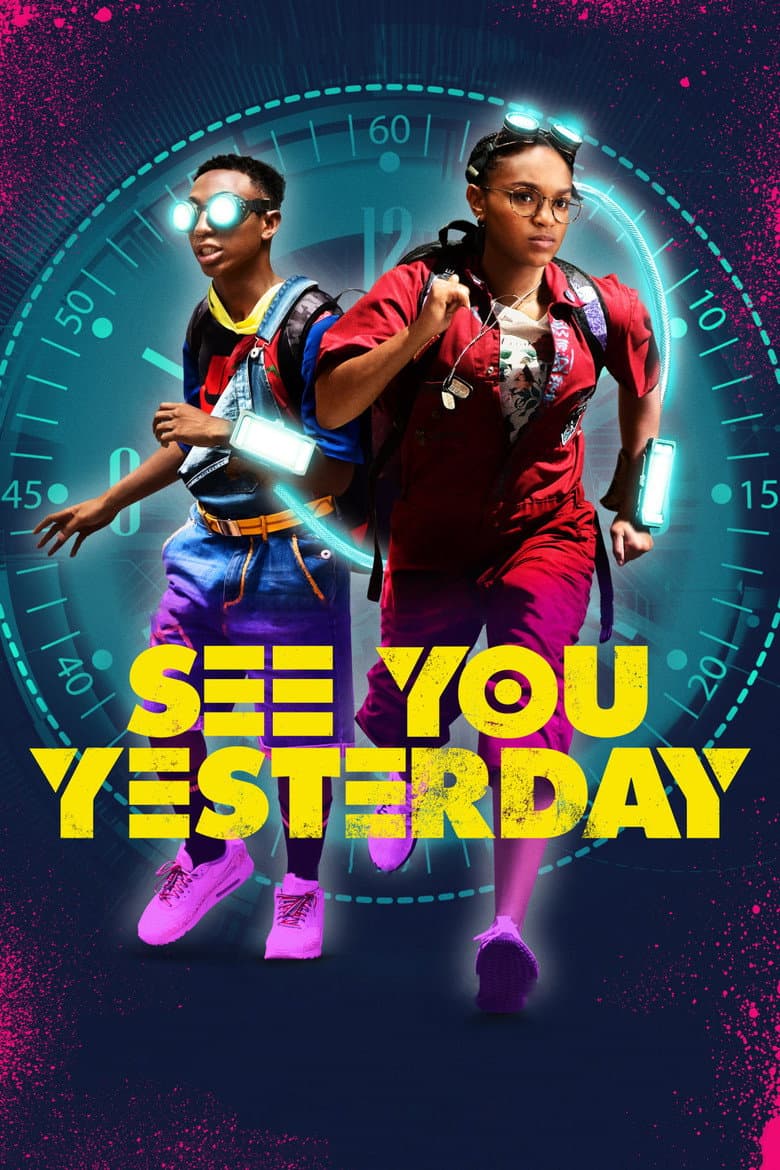
See You Yesterday follows C.J. Walker, a gifted Brooklyn teenager who builds a time machine with her best friend, Sebastian. The pair hope their invention will help them get into college, but C.J.'s older brother Calvin is killed after police mistake him for a robbery suspect. C.J. and Sebastian keep traveling back to the same day, but each new plan changes who is hurt or killed. The movie moves from playful teen science fiction to a tense and sad story about family, choice, and loss.
The film makes racial identity part of the main story instead of leaving it in the background. C.J. is presented as a brilliant black female scientist, and the movie repeatedly shows Black teenagers dealing with police suspicion and violence. It includes direct talk about black identity, being told to “act right,” and the need to keep pushing back. The final time jump leaves C.J. still fighting a wider problem that science cannot easily solve.
Community feedback
Was our 85% Woke rating accurate?
Breakdown
These are the editorial factors and ratings behind our score for See You Yesterday.
Woke representation / casting
The film places a black girl and a black boy at the center as gifted students at the Bronx High School of Science. C.J. is a brilliant young inventor, and her race and gender are part of the public pitch for the film. The black and Caribbean family and neighborhood fit the Brooklyn setting, so the score does not rely on a simple diversity mismatch. Interviews and the Strong black Lead campaign still present the casting as a representation goal.
65%
Woke political dialogue
The film repeats talk about police harassment, racial profiling, and danger to black people. C.J. and Sebastian use direct black-identity language when they affirm each other. A short exchange about C.J. needing to “act right” links her behavior to how society reads black women. The movie delivers most of the message through events and images, so the dialogue is recurring but not constant.
38%
Identity-driven story themes
C.J. drives the story as a black girl who invents time travel and refuses to accept her brother’s death. The film makes Black STEM achievement and Black Caribbean community life part of its main appeal. Police shootings, protest images, and repeated attempts to save Calvin turn racial injustice into the film’s central problem. The ending asks viewers to keep fighting a social problem that science cannot easily fix.
78%
Western institutional / cultural critique
The film shows police treating black people as threats during ordinary street encounters. The officer kills Calvin after mistaking him for a robber, and later time loops put Sebastian in the same danger. News and protest images connect the shootings to a wider problem with law enforcement. The story does not widen this attack to capitalism, Christianity, or family life, but its police critique remains central.
68%
Woke character or canon changes
Not relevant. The movie uses original characters and is based on the filmmakers’ own 2017 short.
0%
Anti-woke backlash and complaints
Several Reddit users complained that the film pushes social-justice themes, treats police as racist or evil, or forces a relevant message. Some anonymous IMDb users called the film political propaganda or objected to its Black Lives Matter and girl-power framing. Mainstream reviews mostly treated the social message as the film’s point and did not report a major backlash. The supplied X pass found no anti-woke reaction.
30%
Creator track record context
Stefon Bristol’s past work repeatedly focuses on black identity, police violence, and social-justice stories. Fredrica Bailey’s known writing shows a smaller but clear focus on representation. Spike Lee brings a strong public history of racial-justice films and statements. Other credited producers, casting directors, and the script supervisor have little recorded activist history, so the context is strong but not uniform.
55%
Production
Movie · 2019
Henry Brogan is an elite 51-year-old assassin who's ready to call it quits after completing his 72nd job. His plans get turned upside down when he becomes the target of a…

Movie · 2023
The hardened son of a powerful industrialist returns home after years abroad and vows to take bloody revenge on those threatening his father's life.
Movie · 2023
Humans built huge engines on the surface of the earth to find a new home. But the road to the universe is perilous.
Movie · 2017
The Guardians must fight to keep their newfound family together as they unravel the mysteries of Peter Quill's true parentage.

Movie · 2023
When his aging mob boss is whacked, Charlie Swift, a loyal friend and hired gun, will stop at nothing to destroy the upcoming crew that took him out.
Movie · 2023
Ex-con Russell Gaines is attempting to rebuild his life with the help of his father, Mitchell. However, the arrival of Maben sends his new life into chaos, leading the pair to go…
Movie · 2026
Fighting crime full-time as Spider-Man in a world that doesn't remember him—and the pressure of seeing his old friends move on without him—sparks a change in Peter Parker he may…
Movie · 2025
When a raging flood traps a researcher and her young son, a call to a crucial mission puts their escape — and the future of humanity — on the line.
