Movie review
November 25, 2022 · 117 min · PG · Kids · Fantasy · Comedy · Family
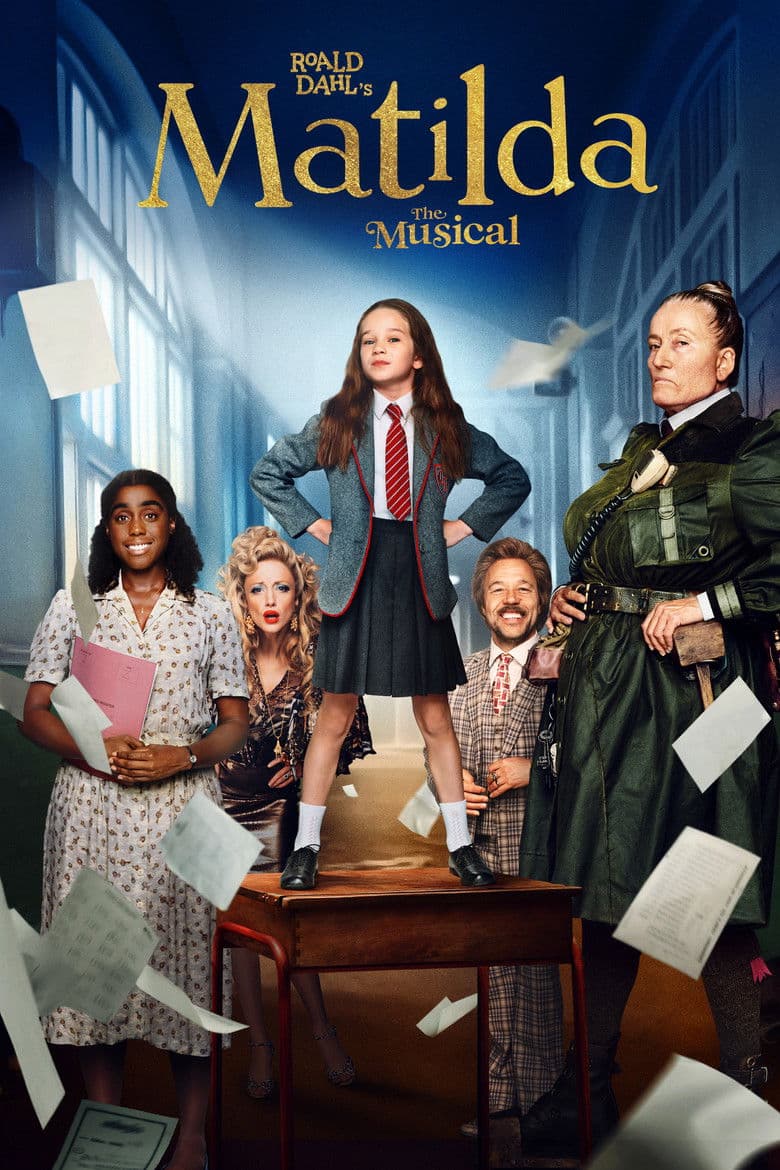
Matilda is a very smart little girl who loves books. Her parents ignore her and treat her badly. She starts at a harsh school run by Miss Trunchbull, a cruel head who scares the kids. Matilda finds a kind teacher, Miss Honey, learns she has mind powers, and helps the children fight back. The film is a bright, loud family musical with big songs and dances.
What stands out for a normal viewer is girl-power energy and mixed casting more than modern political lectures. Matilda is a brave girl hero who “changes her story,” leads kids against a mean adult, and ends up with a better home. Netflix even tags the film as girl power. Miss Honey is played by Lashana Lynch, a black actress in a famous kind-teacher role often played by white women before. Sindhu Vee plays the librarian, and many school kids are from different backgrounds. Songs talk about courage, growing up, and kids saying no to bullies. That feels like classic kids-vs-mean-adults Dahl, not a race or queer identity plot on screen. A few online posts call the casting or vibe “woke,” but there was no huge news fight.
Community feedback
Was our 53% Woke rating accurate?
Breakdown
These are the editorial factors and ratings behind our score for Roald Dahl's Matilda the Musical.
Woke representation / casting
Lashana Lynch as Miss Honey is a clear race change of a famous kind-teacher role. Sindhu Vee is the librarian. Many kids in the school cast are mixed. Common Sense calls the cast strongly diverse with several big parts for people of color. Matilda herself still matches classic looks. The pattern is easy to see in key helper roles, not a total rewrite of every character.
42%
Woke political dialogue
Songs and lines push “be brave,” “change your story,” and kids fighting bullies. That is kid empowerment talk, not modern speeches about race, gender identity, or DEI. Viewers hear strong girl-power energy without activist slogan lectures.
22%
Identity-driven story themes
The story centers a smart girl who takes charge and leads a kids’ revolt. Girl-power framing and “write your own story” messaging are clear. Themes stay courage, reading, and cruel adults—classic Dahl—not a race, queer, or modern identity-politics plot.
34%
Western institutional / cultural critique
The main target is a cartoon school tyrant and rotten parents. That is fairy-tale cruelty, not a modern lecture on patriarchy, whiteness, or capitalism. Digs at shallow, money-first parents stay in Dahl’s usual style.
18%
Woke character or canon changes
Biggest identity-linked change is casting Miss Honey with a black actress and diversifying some supporting adults versus older white-default versions. Plot and songs mostly follow the stage musical and book spirit. Trunchbull as a woman matches the book more than some male stage casts.
32%
Anti-woke backlash and complaints
Some social posts and a few online reviews call the film woke or complain about black Miss Honey. No big mainstream scandal. Complaints exist but are scattered and low-volume.
18%
Creator track record context
Director Matthew Warchus scores higher for *Pride* and queer stage choices. Casting directors have pushed broader on-screen diversity. Other producers and the Dahl estate side sit lower. Overall crew context is moderate, not extreme.
38%
Production
Movie · 2021
In suburban Chicago during the late 1980s, ten-year-old Jake Doyle embarks on a herculean quest to get the latest and greatest video game system for Christmas.
Movie · 2020
Andy, at the urging of his former mentor and Magic Camp owner Roy Preston, returns to the camp of his youth hoping to reignite his career.
Movie · 2025
When a young girl’s sketchbook falls into a strange pond, her drawings come to life—chaotic, real, and on the loose.
Movie · 2021
As Emily struggles to fit in at home and at school, she discovers a small red puppy who is destined to become her best friend.
Movie · 2018
The Grinch hatches a scheme to ruin Christmas when the residents of Whoville plan their annual holiday celebration.
Movie · 2018
Christopher Robin, the boy who had countless adventures in the Hundred Acre Wood, has grown up and lost his way.
Movie · 2022
Follows Ralphie, now adult, who returns to the house on Cleveland Street to give his kids a magical Christmas like the one he had as a child, reconnecting with childhood friends…
Movie · 2021
When Flora rescues a squirrel she names Ulysses, she is amazed to discover he possesses unique superhero powers, which take them on an adventure of humorous complications that…
