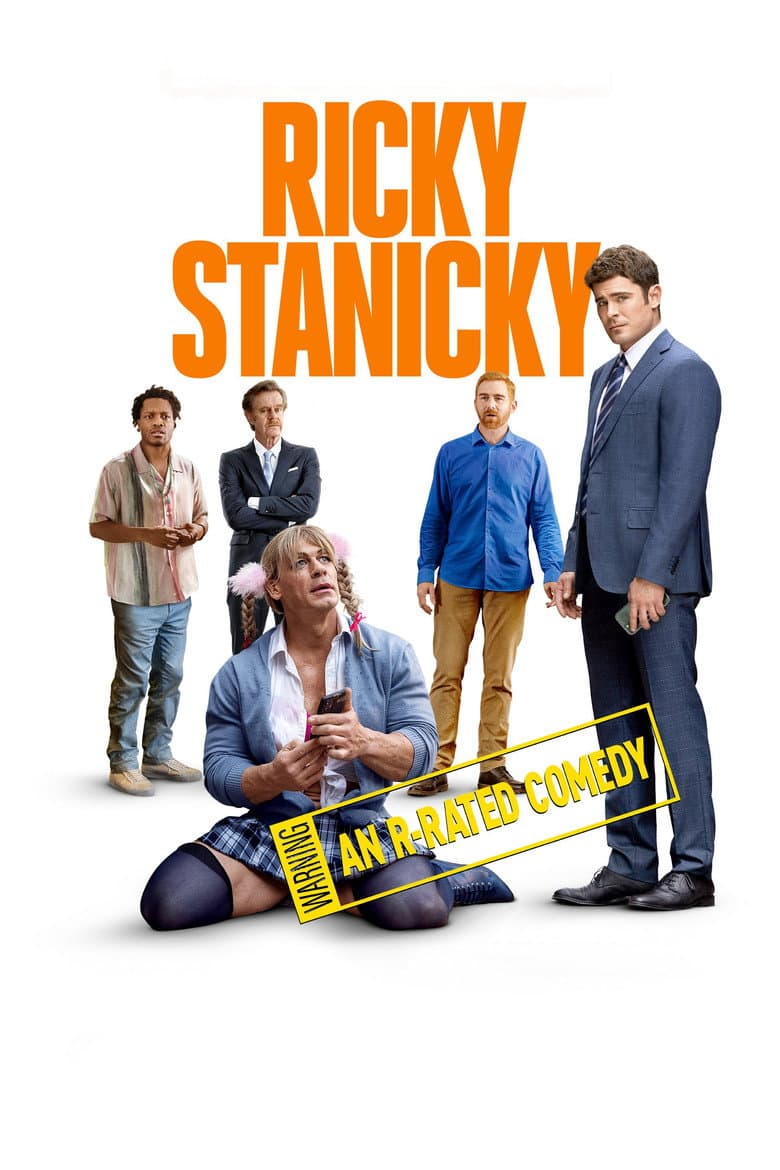
Dean, JT, and Wes are three childhood friends who still blame an imaginary friend for their bad choices. They live adult lives with partners, jobs, and family duties, but they keep using Ricky to escape those duties. When JT misses his baby’s early birth, the friends hire Rod, a broke actor from Atlantic City, to pretend to be Ricky. The plan turns into a wild R-rated comedy about lying, friendship, growing up, and second chances.
Wes is a black gay man, and his relationship with his boyfriend Keith is a continuing side story. Wes says that he once claimed to be dating Ricky, who was bisexual, so he could leave himself an escape route. Rod also helps Wes rethink a children’s story about a gay Christmas, and the movie treats that idea as personal expression rather than a political cause. The film gives the main cast several visible identity traits, but those traits support side plots instead of driving the main lie and its fallout.
Community feedback
Was our 30% Woke rating accurate?
Breakdown
These are the editorial factors and ratings behind our score for Ricky Stanicky.
Woke representation / casting
The main friend group includes two White men and one black man, with Wes clearly shown as gay. The partners include a black woman in an interracial couple and a disabled gay man. These identity choices are visible in important roles and create a noticeable diversity pattern. The movie and its marketing do not present the casting as a diversity campaign, and the modern setting makes the mix believable, so the score stays moderate.
28%
Woke political dialogue
Not present. The characters do not argue for a political program or activist cause. Rod makes a brief joke about Atlantic City getting “woke,” and he attacks a banker’s role, but the film does not develop either point into woke political dialogue.
0%
Identity-driven story themes
Wes is a black gay man in the main trio, and his relationship with Keith returns through several scenes. Wes uses the fake Ricky story to get time away from Keith, and he once claimed Ricky was bisexual to protect himself while dating Keith. Rod then helps Wes reshape a children’s book around a gay Christmas. The movie treats these issues as personal relationship and self-expression problems, not as a larger activist campaign.
32%
Western institutional / cultural critique
The film repeatedly shows Dean, JT, and Wes avoiding partners, a baby shower, and family duties for drinking and partying. Their wives and partners push them to act like adults, so the story gives a mild critique of male entitlement and selfish behavior. The point stays tied to these men’s bad choices and does not attack marriage, family, religion, or Western institutions.
14%
Woke character or canon changes
Not relevant. The movie is an original story about a fake friend and an actor who pretends to be him. It does not adapt a known character, series, book, or real historical figure.
0%
Anti-woke backlash and complaints
A few small X accounts called the film “corny and woke” or “demasiado woke” because it includes a gay black man, an interracial couple, a disabled partner, and a diverse cast. Other posts called Cena’s dress scenes a Hollywood “humiliation ritual” and complained about a no-family message. Some accounts said the only black man in the group being gay was a tired Hollywood pattern. The posts had very low views or likes, and no organized boycott or review-bomb push appeared.
15%
Creator track record context
The stored creator notes describe a mainly mainstream comedy group. Peter Farrelly has a cached score of 9/100, and the other writers range from 0 to 5. Most producers and casting directors also have low cached scores, with Michael De Luca at 24/100 and Paul Currie at 20/100. No key creator has a strong identity-first or activist pattern in those notes.
11%
Production
Movie · 2024
Inseparable best friends AJ and Moose decide to run the local pool's snack shack after their plan to sell home-brewed beer goes down the drain.
Movie · 2018
Adam Sandler takes his comical musical musings back out on the road, from comedy clubs to concert halls to one very unsuspecting subway station.
Movie · 2016
Two teenage boys from inner-city Cork steal bicycles and ride off on a 160km quest to find an unrecovered bale of cocaine worth 7,000,000 euros.
Movie · 2022
Exploring every facet of ‘Weird Al’ Yankovic’s life, from his meteoric rise to fame with early hits like ‘Eat It’ and ‘Like a Surgeon’ to his torrid celebrity love affairs and…
Movie · 2023
From his onstage tackle to the slap heard round the world, Dave Chappelle lets loose in this freewheeling and unfiltered stand-up comedy special.
Movie · 2016
A comedy that follows a group of friends as they navigate their way through the freedoms and responsibilities of unsupervised adulthood.
Movie · 2023
Two mismatched entrepreneurs – egghead innovator Mike Lazaridis and cut-throat businessman Jim Balsillie – joined forces in an endeavour that was to become a worldwide hit in…
Movie · 2023
A chaotic intervention. An action-packed stay in rehab. After a weird couple of years, John Mulaney comes out swinging in his return to the stage.
