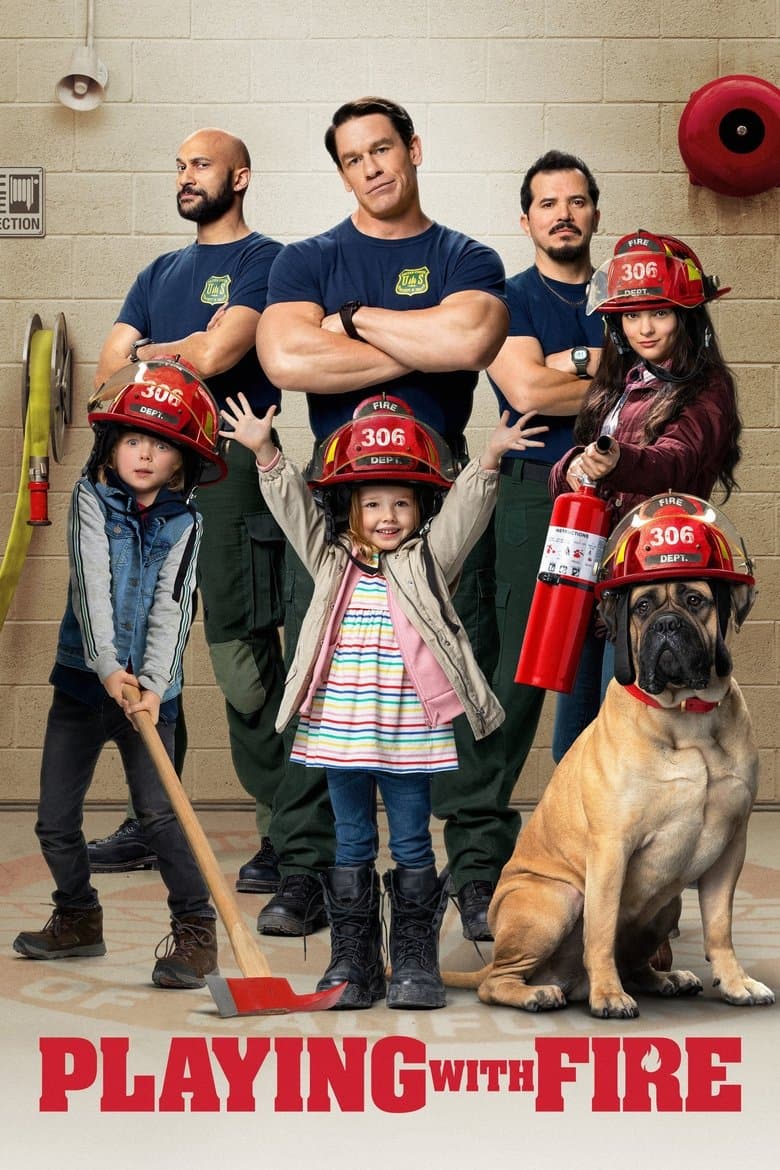
Playing with Fire follows Jake Carson, a strict smokejumper who leads a small rescue crew in the California woods. Jake wants to become a division commander, just as his late father hoped. After the crew rescues three siblings from a burning cabin, Jake and his men must care for them when they learn the children’s parents are dead. The movie uses loud jokes, slapstick accidents, and a warm family tone as the tough men struggle with childcare.
The story gives a small amount of attention to gender roles through Dr. Amy Hicks, a field scientist and Jake’s former date. Jake first asks her for help because he thinks a woman may know how to care for children, and Amy calls out that idea. The movie also makes the male firefighters look helpless with babies, then teaches Jake that family and care matter more than his promotion. These points are clear but brief, and the main story remains a simple lesson about grief, teamwork, friendship, and choosing family over work.
Community feedback
Was our 25% Woke rating accurate?
Breakdown
These are the editorial factors and ratings behind our score for Playing with Fire.
Woke representation / casting
The fire crew includes a white leader, a black teammate, a Latino teammate, and a black commander. Amy is a female field scientist with a clear supporting role. The film uses a visibly mixed modern California group without making identity a main subject. The casting shows some diversity emphasis, but it is not presented as a major message.
18%
Woke political dialogue
Amy asks Jake if he wants her help because she is a woman. Jake denies that reason and says he wants help from a scientist. Jake later repeats that he is not asking her because she is a woman. The exchange gives a short, clear gender message, but it does not return throughout the movie.
24%
Identity-driven story themes
Amy protects her work as a field scientist when Jake tries to hand the children to her. The movie makes the male firefighters look unready for babies and asks them to learn care and patience. Jake then chooses the children and family over his promotion. These ideas are visible, but gender identity is not the main conflict.
24%
Western institutional / cultural critique
Jake treats childcare as a woman’s job in one early exchange. The movie makes his hard, emotionless work style look unhealthy and incomplete. Amy answers him as an equal scientist, and the ending links personal growth with family life. The film does not attack men, religion, or Western institutions in a broad way.
16%
Woke character or canon changes
Not relevant. The movie uses an original story about smokejumpers and three children. It does not change a known character, canon, or historical event.
0%
Anti-woke backlash and complaints
Not present. The supplied X research found no anti-woke reaction or specific complaint. Broader web coverage focused on weak jokes, predictability, and family themes rather than woke or DEI messaging.
0%
Creator track record context
Andy Fickman is mainly tied to comedy, theater, and television work. Matt Lieberman has worked on mainstream family and comedy films without a documented activist record. Dan Ewen later co-created Clean Slate, a series centered on a black transgender woman with queer, trans, and POC writers. That later work gives limited context because this film stays focused on family comedy.
14%
Production

Movie · 2022
Follows Ralphie, now adult, who returns to the house on Cleveland Street to give his kids a magical Christmas like the one he had as a child, reconnecting with childhood friends…

Movie · 2018
Elizabeth, a charming morning show news anchor, seeks advice from her dog's therapist after a breakup. Tara, a spunky barista, dreams of a life beyond the coffee shop.

Movie · 2017
Teenage outsider Adam sets out on an epic and daring quest to uncover the mystery behind his long-lost dad, only to find out that he is none other than the legendary Bigfoot!

Movie · 2021
In suburban Chicago during the late 1980s, ten-year-old Jake Doyle embarks on a herculean quest to get the latest and greatest video game system for Christmas.

Movie · 2016
A harried prehistoric bird mother entrusts her precious, soon-to-hatch egg to Sid. When she recommends him to her neighbours, business booms at his new egg-sitting service.

Movie · 2018
Siblings Kate and Teddy try to prove Santa Claus is real, but when they accidentally cause his sleigh to crash, they have to save Christmas.
Movie · 2021
Peter Rabbit runs away from his human family when he learns they are going to portray him in a bad light in their book.
Movie · 2024
After discovering she can see everyone's imaginary friends, a girl embarks on a magical adventure to reconnect forgotten imaginary friends with their kids.
