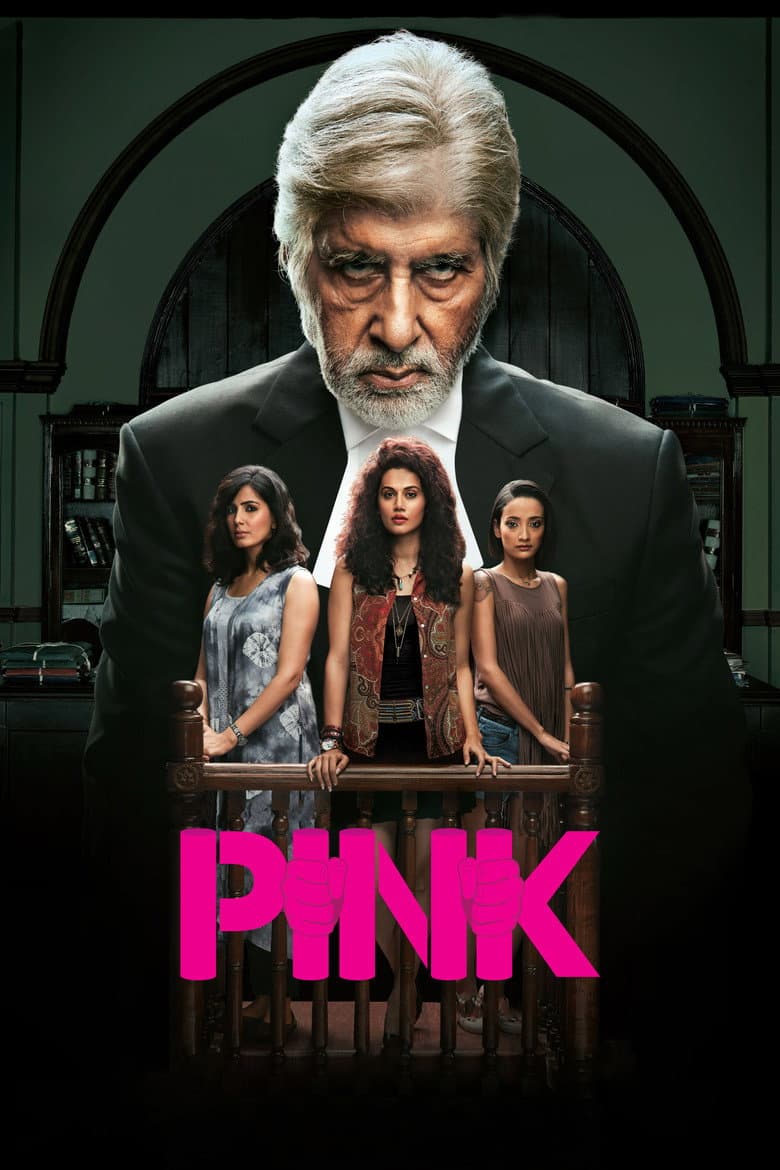
Pink is a Hindi courtroom thriller set in present-day Delhi. Minal Arora lives with Falak and Andrea, two working friends, and the three women become targets after Minal hits a man who tries to force himself on her. The men use their money and connections to accuse the women of serious crimes and shame them in public. A troubled retired lawyer takes their case, so the tense story moves between threats, police offices, and a long court fight.
Consent is the film’s main message, and the repeated idea is that a woman’s “no” ends the matter. The court scenes attack the belief that a woman’s clothes, drinking, late nights, friendships, or past can excuse an assault. The film also shows male entitlement, victim blaming, police failure, and a rich family using power against women. These ideas drive the case and the ending, although the women often depend on an older male lawyer to speak for them.
Community feedback
Was our 87% Woke rating accurate?
Breakdown
These are the editorial factors and ratings behind our score for Pink.
Woke representation / casting
Pink puts three women from Delhi, Lucknow, and Meghalaya in the main group. The women’s different regional backgrounds are visible, and Andrea’s Northeast identity gets a court scene about extra harassment. The film makes this all-female group the center of the case. The setting makes this mix believable, so the signal is clear but it does not look like a forced one-of-each group.
42%
Woke political dialogue
Deepak repeatedly says that a woman’s “no” must be respected. The courtroom turns clothes, drinking, late nights, laughter, and contact with men into examples of unfair rules placed on women. The lawyer calls out male entitlement and the double standard between men and women. These speeches fill much of the second half and state the film’s social message directly.
76%
Identity-driven story themes
The film makes women’s consent and freedom the main issue. The women face judgment because they live alone, drink, wear short clothes, and have past relationships. The men, police, neighbors, and court system repeatedly judge the women by stricter rules. The ending confirms the women’s account, so the gender message shapes the whole story.
88%
Western institutional / cultural critique
Pink repeatedly presents neighbors, police, lawyers, and family members as parts of a system that judges women more harshly than men. The men’s threats grow from their belief that money, status, and male power should control the women. The court scenes mock rules that tell women where to go, what to wear, and how to behave. The target is Indian social and legal practice, not Christianity or Western institutions.
52%
Woke character or canon changes
Not relevant. Pink uses original characters in a present-day legal story. It does not change a known character, canon, or historical event.
0%
Anti-woke backlash and complaints
Some viewers called the film preachy and objected to Amitabh Bachchan’s long lesson about women’s consent. India Today described these viewers as few and said their complaints did not damage the film’s success. The supplied X pass found only small nationalist accounts mocking Taapsee Pannu and Bachchan’s feminist roles. No boycott, review-bombing, or sustained campaign was found.
24%
Creator track record context
The director has a repeated record of stories about women’s freedom, social pressure, and unfair systems. The writers also have major work about consent, social harm, and people facing powerful institutions. The producer has backed television stories about women’s strength and gender roles. The casting director’s record is mainly realistic casting, with no clear activist profile.
57%
Production

Movie · 2016
When Iraq invades Kuwait in August, 1990, a callous Indian businessman becomes the spokesperson for more than 170,000 stranded countrymen.
Movie · 2018
After receiving an anonymous tip, a tax officer leads a raid on the mansion of the most powerful figure in Lucknow, a member of parliament who has been evading income tax for…

Movie · 2025
Marty Mauser, a young man with a dream no one respects, goes to hell and back in pursuit of greatness.

Movie · 2024
A ride-share turns into a high-stakes game of cat and mouse after it follows a car fitting the description of an AMBER Alert.

Movie · 2022
Based on the true nail-biting mission that captivated the world. Twelve boys and the coach of a Thai soccer team explore the Tham Luang cave when an unexpected rainstorm traps…

Movie · 2021
Inspired by the life of Captain Vikram Batra (PVC), the film celebrates his bravery, valiant spirit and honors his invaluable sacrifice during the Kargil War of 1999, at the age…

Movie · 2017
A former rodeo star, now a motel manager, meets a young man who is responsible for the violence that suddenly has seized his small town.

Movie · 2017
After a botched bank robbery lands his younger brother in prison, Connie Nikas embarks on a twisted odyssey through New York City's underworld to get his brother Nick out of jail.
