Movie review
January 13, 2025 · 89 min · NR · Horror · Fantasy · Thriller
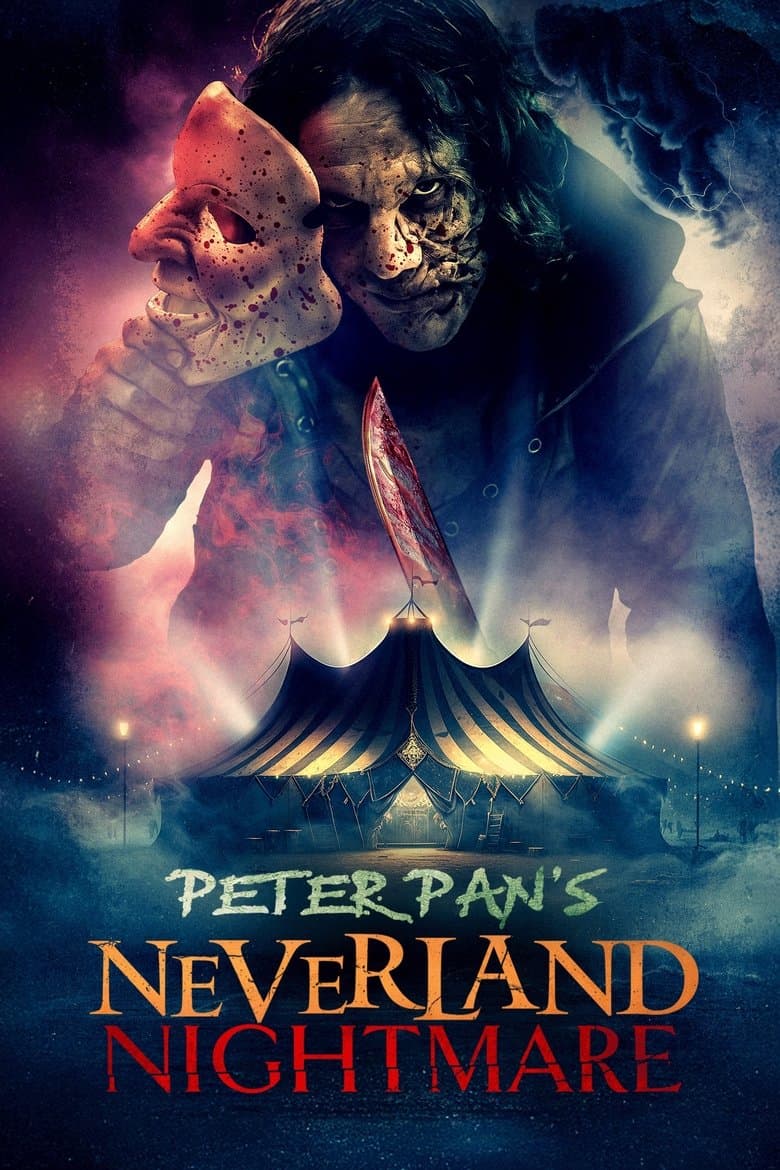
Peter Pan's Neverland Nightmare follows Wendy Darling, an older sister who searches for her kidnapped brother, Michael. A cruel man who calls himself Peter Pan takes boys from their families and promises a place called Neverland. Wendy follows clues through modern English towns, homes, roads, and a filthy hideout filled with circus images. The film uses a grim horror tone with child danger, murder, torture, and heavy blood.
The clearest identity-driven material comes from Tinker Bell, who is a trans woman first known as Timmy. Peter says girls cannot join his Lost Boys, so he gives her the fairy role and controls her with heroin that he calls pixie dust. Tinker Bell's identity, abuse, and forced bond with Peter form a repeated subplot, while Peter's rules also focus on which children count as boys. Wendy and her friend Tiger Lily lead the search, but the story does not turn their roles into a broad political message.
Community feedback
Was our 60% Woke rating accurate?
Breakdown
These are the editorial factors and ratings behind our score for Peter Pan's Neverland Nightmare.
Woke representation / casting
Not present. The film casts Kit Green in a trans role and uses a mixed modern English cast, but no diversity-first casting message or clear identity-based casting mismatch is established.
0%
Woke political dialogue
The film has no speeches about elections, parties, or modern policy. It does have direct identity-based lines about Peter allowing boys into Neverland while rejecting girls, including Tinker Bell. Those lines explain the plot but do not become a wider political debate.
15%
Identity-driven story themes
Tinker Bell is a trans woman whose identity shapes her whole backstory. Peter refuses to let her join the Lost Boys, gives her a fairy role, and controls her with drugs. The film ties her identity to abuse, forced loyalty, and her later choice to turn against Peter. Peter's rules also focus on which children count as boys, so identity is a major subplot even though Wendy's rescue mission remains the main plot.
72%
Western institutional / cultural critique
Not present. The film shows abusive parents and a killer who claims to protect children from the adult world. It does not make a modern activist attack on capitalism, Christianity, Western institutions, or ordinary family life.
0%
Woke character or canon changes
The film changes familiar characters in a way centered on identity. Tinker Bell becomes a trans woman who is barred from Peter's Lost Boys and controlled as a fairy. Peter also becomes an adult child killer, but that horror change is not an identity message. The Tinker Bell rewrite is prominent and drives her addiction, abuse, and part in the main danger.
74%
Anti-woke backlash and complaints
A small number of audience posts mock the trans Tinker Bell and treat the gender change as an unwanted agenda. Other viewers praise the same subplot or focus only on gore and the horror twist. No broad anti-woke campaign or major news fight about the film was found.
18%
Creator track record context
Scott Chambers is openly gay, but no major record of political activism or DEI advocacy is documented in the cached context. J.M. Barrie and the listed producers have little or no clear woke track record. The creators' broader record adds only a small signal beyond the film itself.
10%
Production
Movie · 2023
A powerful biotech company has breakthrough technology allowing them to clone history’s most influential people with just a few fragments of DNA.
Movie · 2018
The Shadow Mountains, 1983. Red and Mandy lead a loving and peaceful existence; but when their pine-scented haven is savagely destroyed, Red is catapulted into a phantasmagoric…

Movie · 2024
Nothing is what it seems when a twisted one-night stand spirals into a serial killer’s vicious murder spree.
Movie · 2023
Recently fired and desperate for work, a troubled young man named Mike agrees to take a position as a night security guard at an abandoned theme restaurant: Freddy Fazbear's…
Movie · 2024
A gothic tale of obsession between a haunted young woman and the terrifying vampire infatuated with her, causing untold horror in its wake.
Movie · 2017
A frustrated, angry teenage girl awakens something in the woods when she naively performs an occult ritual to invoke a witch to kill her mother.
Movie · 2026
After a young couple witnesses a gruesome highway accident, they soon realize they did not leave the crash scene alone, as a demonic presence called the Passenger that won't stop…
Movie · 2025
Ten-year-old Aurora asks her hitman neighbor to kill the monster under her bed that she claims ate her family.
