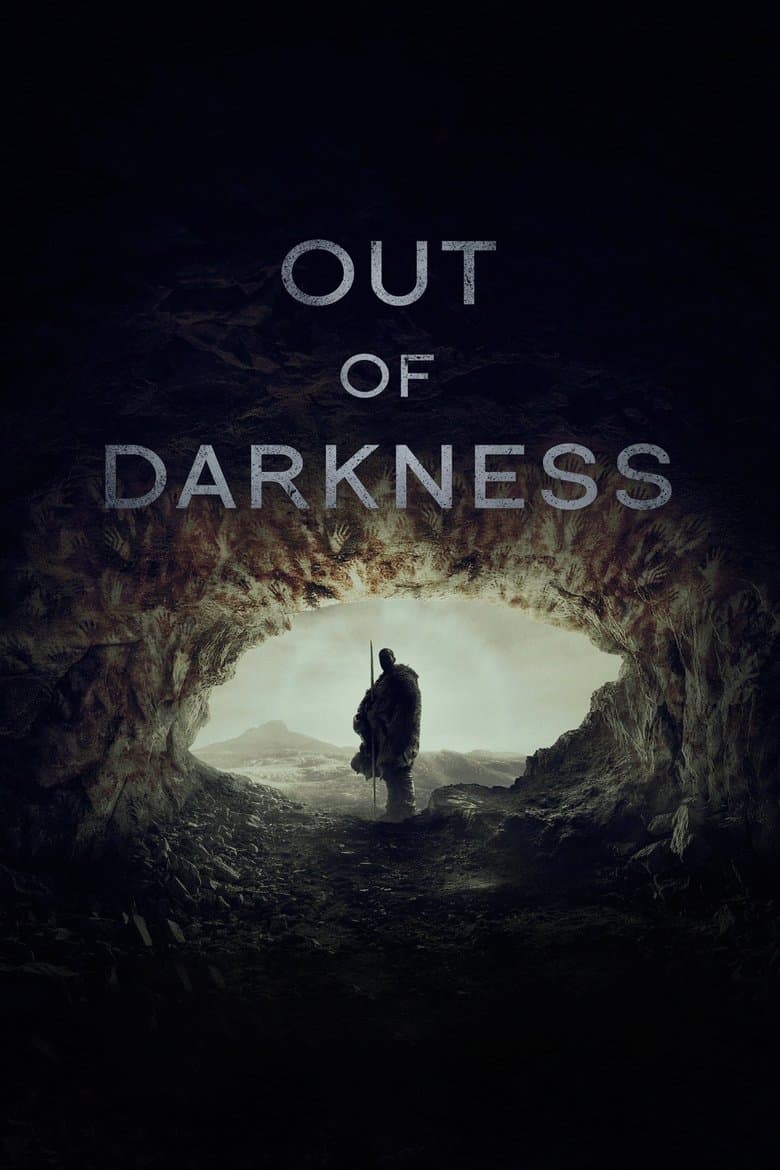
Out of Darkness follows Beyah, a teenage stray who joins five early humans searching for food and shelter 45,000 years ago. The group reaches a cold, empty land in what is now Scotland, but the promised hunting ground offers little food and no safe home. A hidden enemy stalks the camp at night, takes a child, and drives the group into fear, hunger, and violence. Beyah must survive the group’s harsh rules, face a danger they mistake for a demon, and decide what kind of person she will become.
The film gives its strongest arc to a young woman who is treated as weak and useful only for sex and having children. Beyah is blamed for the attacks after she gets her first period, and the group tries to offer her to the unseen enemy. She escapes, fights through the caves, rescues the child, and takes charge at the end while the male leader’s pride helps destroy the group. The ending says fear of people who seem different can turn ordinary survival into cruelty, then asks whether people can learn to live beside one another.
Community feedback
Was our 70% Woke rating accurate?
Breakdown
These are the editorial factors and ratings behind our score for Out of Darkness.
Woke representation / casting
The main group uses a visibly mixed-race cast for a Stone Age band in what is now Scotland. The film puts Safia Oakley-Green's Beyah at the center and makes her the key fighter and final survivor. Chuku Modu still plays the group's male leader, and the film gives him real power until his death. The film does not explain the group's different backgrounds or market the cast as a diversity statement, so the casting signal is noticeable but not dominant.
46%
Woke political dialogue
The film says that a girl's place must be earned and that Beyah becomes useful to Adem once she can have children. The film also has Adem tell Beyah that she is there for whatever he needs, which points to sexual control and male entitlement. These lines recur around Beyah's first period and the threat of forced sex. The film has no modern DEI speech or repeated political slogan.
31%
Identity-driven story themes
The film makes Beyah's treatment as a stray girl a major part of the danger. The group links her first period to her value as a sexual partner and tries to sacrifice her when fear spreads. Beyah escapes, fights the supposed monster, and saves Heron while Adem fails and Geirr cannot lead the group. The ending shows that fear of a different people can turn survival into hate and says the survivors should try again. The story repeatedly joins female oppression, male control, and outsider fear to the main horror plot.
64%
Western institutional / cultural critique
The film treats Adem's control of the group as dangerous, especially when he claims Beyah is available to him. The story shows fear around a girl's period leading the group to punish and offer her to the threat. The male-led order breaks down, while Beyah's resistance becomes the path to survival. The film does not attack Christianity, capitalism, or a named Western institution, but it clearly presents male entitlement and traditional gender roles as harmful.
55%
Woke character or canon changes
Not relevant. The film uses fictional prehistoric people and does not change a known character, source story, or real historical person.
0%
Anti-woke backlash and complaints
Small X accounts called the movie woke because its girl hero saves the child, kills a caveman, and the cast is racially mixed. One user review also called it a woke movie with a woke multiracial cast. Reddit viewers made similar complaints about a female tough-girl lead and the film's message about fear of outsiders. The reaction stayed scattered, with no major campaign, boycott, or review-bombing drive.
35%
Creator track record context
Ruth Greenberg has a clear feminist genre record, with stories about women, fear, and violence. Andrew Cumming has a lower public activist profile, but he has linked this film to fear of outsiders and cycles of exclusion. Luca Intili has some queer and trans-focused production credits, while the other listed producers show little public identity-driven work. The current film matches Greenberg's gender-focused interests more than it reflects a crew-wide activist campaign.
33%
Production
Movie · 2022
A recently widowed man and his two teenage daughters travel to a game reserve in South Africa. However, their journey of healing soon turns into a fight for survival when a…
Movie · 2016
A deaf woman is stalked by a psychotic killer in her secluded home.

Movie · 2019
When a huge hurricane hits her hometown in Florida, Haley ignores evacuation orders to look for her father. After finding him badly wounded, both are trapped by the flood.
Movie · 2023
Father Gabriele Amorth, Chief Exorcist of the Vatican, investigates a young boy's terrifying possession and ends up uncovering a centuries-old conspiracy the Vatican has…
Movie · 2026
After a young couple witnesses a gruesome highway accident, they soon realize they did not leave the crash scene alone, as a demonic presence called the Passenger that won't stop…

Movie · 2025
A collection of Halloween-themed videotapes unleashes a series of twisted, blood-soaked tales, turning trick-or-treat into a struggle for survival.
Movie · 2017
When a fearless enemy out for revenge unleashes a brutal and deadly new virus, BSAA captain Chris Redfield enlists the help of Agent Leon S.

Movie · 2018
Laurie Strode comes to her final confrontation with Michael Myers, the masked figure who has haunted her since she narrowly escaped his killing spree on Halloween night four…
