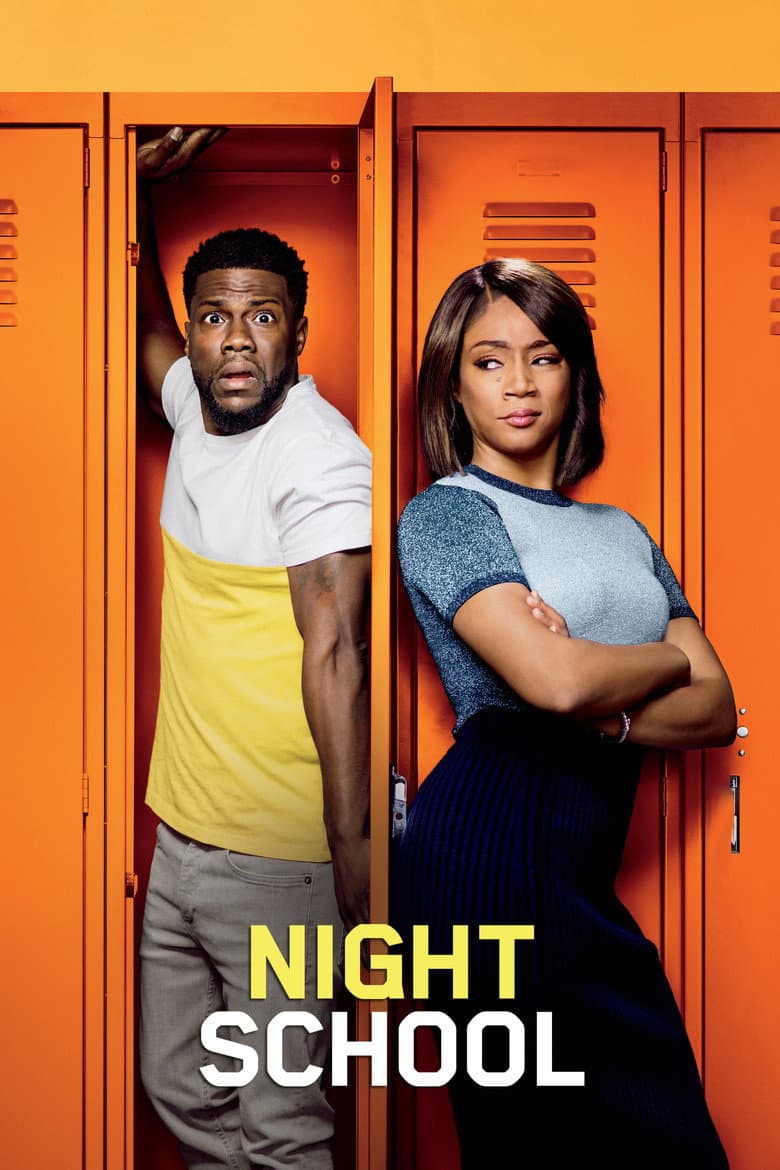
Teddy Walker is a smooth barbecue salesman who has built his life around a false image of wealth. After an accident destroys his job, he must return to his old high school in Atlanta and earn a GED to get a better job. He joins a rough night class led by Carrie, a blunt teacher, while facing Stewart, the former student he bullied, and the fiancée he deceives. The film uses loud jokes, crude scenes, school chaos, and a hopeful ending.
The film gives clear space to a mixed group of adult students, including black characters, a Mexican immigrant, a teen sent to class instead of juvenile detention, a working mother, and a prisoner who joins by video. Carrie is a strong black teacher who helps Teddy uncover dyslexia, dyscalculia, and other learning problems, and she briefly says that she is gay. The story also jokes about racism, low teacher pay, job loss from robots, living paycheck to paycheck, and a dishonest finance world. These ideas support second chances and learning support, but they stay inside a broad comedy instead of becoming a sustained political campaign.
Community feedback
Was our 49% Woke rating accurate?
Breakdown
These are the editorial factors and ratings behind our score for Night School.
Woke representation / casting
The film builds its central class as an intentionally diverse group of adult underdogs. The class includes several black leads, a Mexican immigrant, a white teen, a white man, a working mother, and an inmate who joins by video. The film also gives major roles to a tough black female teacher and a successful black female fiancée. Producer Will Packer said the team wanted a diverse group with different backgrounds and views, which makes representation part of the casting message.
43%
Woke political dialogue
The film includes a brief race exchange when Stewart says he does not hear color after Teddy calls out his forced use of rap and hip-hop references. The film also mentions low teacher pay, paycheck pressure, job loss from robots, and a finance industry built on empty talk. The film presents these points as jokes or background comments, and it does not build a full political argument around them.
26%
Identity-driven story themes
The film makes Teddy’s undiagnosed learning problems a major part of his struggle and gives him a positive path through testing and support. The class treats adults who were called dumb, a teen mother, an immigrant, and other outsiders as people who deserve another chance. Carrie is a black lesbian teacher, but the film reveals her sexuality in one short scene and does not make it a major plot. The message favors inclusion and personal support more than identity politics.
37%
Western institutional / cultural critique
The film mocks a finance company as a place where workers sell things they do not understand. The film shows a factory worker losing his job to a robot and a teacher working for low pay. The film presents public school as strained and lets a female teacher fight to keep her students moving. These ideas recur around the class, but the story stays focused on Teddy’s lies, education, and personal growth instead of a broad attack on Western institutions.
31%
Woke character or canon changes
Not relevant. The film is an original comedy about adult students and does not adapt established characters, a known story world, or real historical events. No woke character or canon change is shown.
0%
Anti-woke backlash and complaints
The supplied X pass found one large right-leaning account that called the film SJW propaganda because a lesbian teacher helps Hart’s character. The pass also found only a handful of small or anonymous complaints and no boycott or coordinated campaign. The complaint reports a reaction, but it does not prove that the film is propaganda or that the criticism is fair. Mainstream coverage focused on weak reviews, crude humor, and social themes rather than anti-woke controversy.
15%
Creator track record context
The director, producers, and casting team include several people with moderate representation-focused records. Kevin Hart’s record is more mixed, and most of the other writers have little or no activist pattern. Producer Will Packer described the class as a diverse group of underdogs. The writers also described teachers as fighting a public school system that is sometimes collapsing, which supports a moderate creator track record context score.
38%
Production
Movie · 2024
Inseparable best friends AJ and Moose decide to run the local pool's snack shack after their plan to sell home-brewed beer goes down the drain.

Movie · 2018
Adam Sandler takes his comical musical musings back out on the road, from comedy clubs to concert halls to one very unsuspecting subway station.
Movie · 2016
A comedy that follows a group of friends as they navigate their way through the freedoms and responsibilities of unsupervised adulthood.
Movie · 2016
Two teenage boys from inner-city Cork steal bicycles and ride off on a 160km quest to find an unrecovered bale of cocaine worth 7,000,000 euros.
Movie · 2022
Exploring every facet of ‘Weird Al’ Yankovic’s life, from his meteoric rise to fame with early hits like ‘Eat It’ and ‘Like a Surgeon’ to his torrid celebrity love affairs and…

Movie · 2020
Four stagnant high school teachers decide to test out a theory that maintaining a constant level of intoxication will improve their overall lives.
Movie · 2023
A chaotic intervention. An action-packed stay in rehab. After a weird couple of years, John Mulaney comes out swinging in his return to the stage.
Movie · 2023
From his onstage tackle to the slap heard round the world, Dave Chappelle lets loose in this freewheeling and unfiltered stand-up comedy special.
