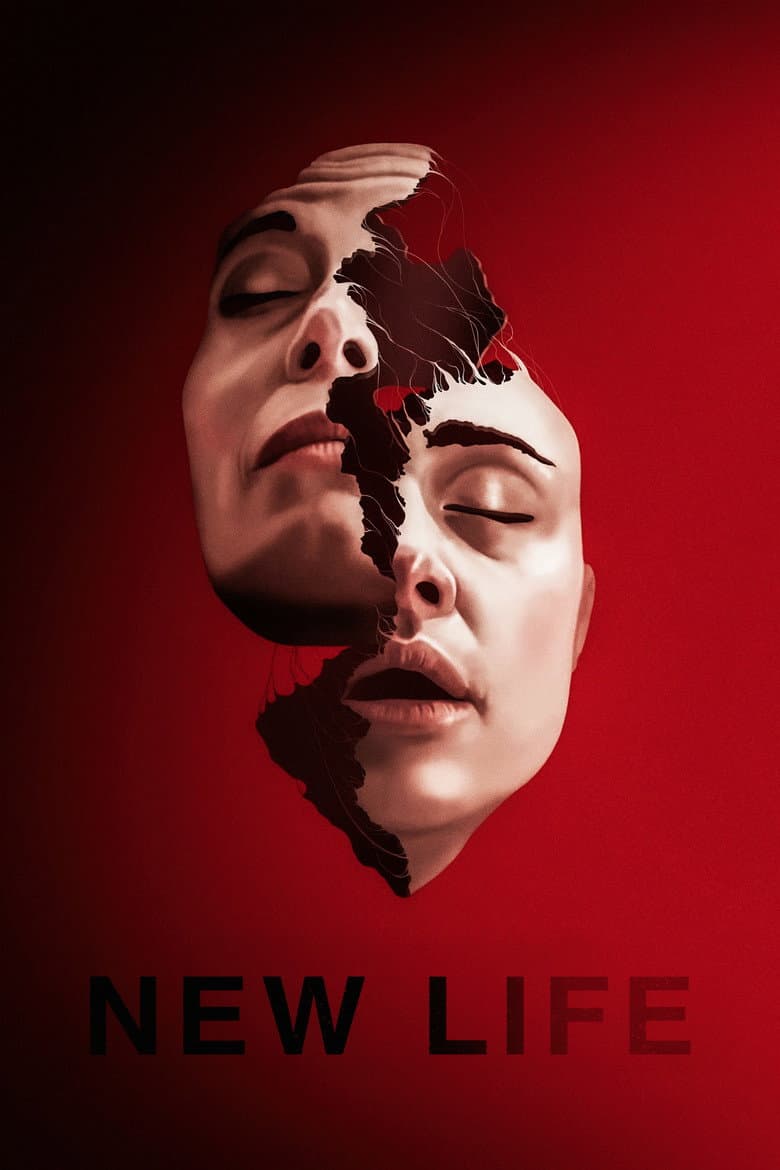
New Life follows Jessica Murdock, a young woman covered in blood who runs across the Pacific Northwest toward the Canadian border after escaping a secret facility. Elsa Gray, a skilled fixer, follows her while hiding the early signs of ALS. The chase moves through small towns, farms, forests, and mountains as the film shifts from a quiet mystery into body horror. The mood is bleak and tense, but the story also makes room for kindness, grief, and a small sense of hope.
The film puts two women at the center of the chase and gives Elsa the dangerous fixer role while her illness slowly limits her body. Jessica is first treated as a possible domestic abuse victim and later as a carrier of a deadly infection, so her story focuses on freedom, fear, and the cost of survival. The film shows a drug company hiding the outbreak and misleading its agent, which gives the story a brief criticism of a powerful company. The two-woman design is visible, but the film does not build its plot around identity politics, diversity speeches, or queer themes.
Community feedback
Was our 31% Woke rating accurate?
Breakdown
These are the editorial factors and ratings behind our score for New Life.
Woke representation / casting
New Life gives both main roles to women, including Elsa, an older professional fixer who handles the dangerous mission. The film puts women in the main escape and pursuit roles while most men stay in smaller support roles. Rosman described the story as being told from a female perspective and linked that choice to the long history of male action heroes. This makes the gender pattern clear, but the film does not use a broad one-of-each cast or a diversity campaign.
38%
Woke political dialogue
Not present. The film’s spoken lines focus on the chase, ALS, infection, grief, and survival. No recurring lines push DEI, identity politics, gender-role activism, or queer politics.
0%
Identity-driven story themes
The story keeps two women at the center from the opening escape through the final choice. Elsa is the most skilled worker in the pursuit, while Jessica survives alone and earns help from strangers. Their arcs focus on freedom, work, illness, grief, and compassion rather than on gender politics. The female-centered design is recurring and important, but the film does not include feminist speeches, male-bashing, or a direct fight over patriarchy.
38%
Western institutional / cultural critique
The drug company hides the infection to protect its name and tells Elsa that she is chasing an Ebola case. The cover-up makes the company and its government links part of the danger. The film keeps this criticism tied to the outbreak plot and does not turn it into a broad attack on capitalism, Western culture, religion, family, or traditional gender roles.
12%
Woke character or canon changes
Not relevant. The film is an original story with no established characters, source material, or historical figures to reinterpret.
0%
Anti-woke backlash and complaints
Not present. The available X discussion showed no anti-woke reaction or boycott talk. Reddit and Letterboxd users mainly argued about pacing, plot logic, the ALS story, and the outbreak rather than DEI or identity politics.
0%
Creator track record context
John Rosman has a mainly genre-focused record and no clear activist or DEI persona. David Lawson Jr., Michael Marchlewski, and Mike Marchlewski likewise have no clear identity-focused public record. T. Justin Ross has supported some political material, but no sustained representation-first pattern is documented. This gives the title only a very weak creator track record signal.
4%
Production

Movie · 2020
A fur trapper leaves his wife and daughter behind to kill a rogue wolf in the remote wilderness, but they soon become increasingly worried when their peaceful existence is…
Movie · 2023
A team of special agents discovers a revolutionary new computer program to bait and trap online predators. After teaming up with the program's troubled developer, they soon find…

Movie · 2019
When a 12-year-old boy goes missing at a local park, a detective investigates the case to help the boy's family find answers.
Movie · 2022
Laura, traumatized by an abusive relationship, runs away from her former husband with her seven-year-old son Cody.

Movie · 2019
Newcomer Evan joins a group of teens on a getaway in Joshua Tree. While exchanging ghost stories around the campfire, Evan reads aloud a mysterious chant from an internet site.
Movie · 2017
A young man and his three younger siblings are plagued by a sinister presence in the sprawling manor in which they live.
Movie · 2025
Two parents enter a race against time when they receive a distressing late-night phone call from their daughter after she caused a tragic car accident.
Movie · 2026
A strange doorway appears in the basement of a furniture showroom.
