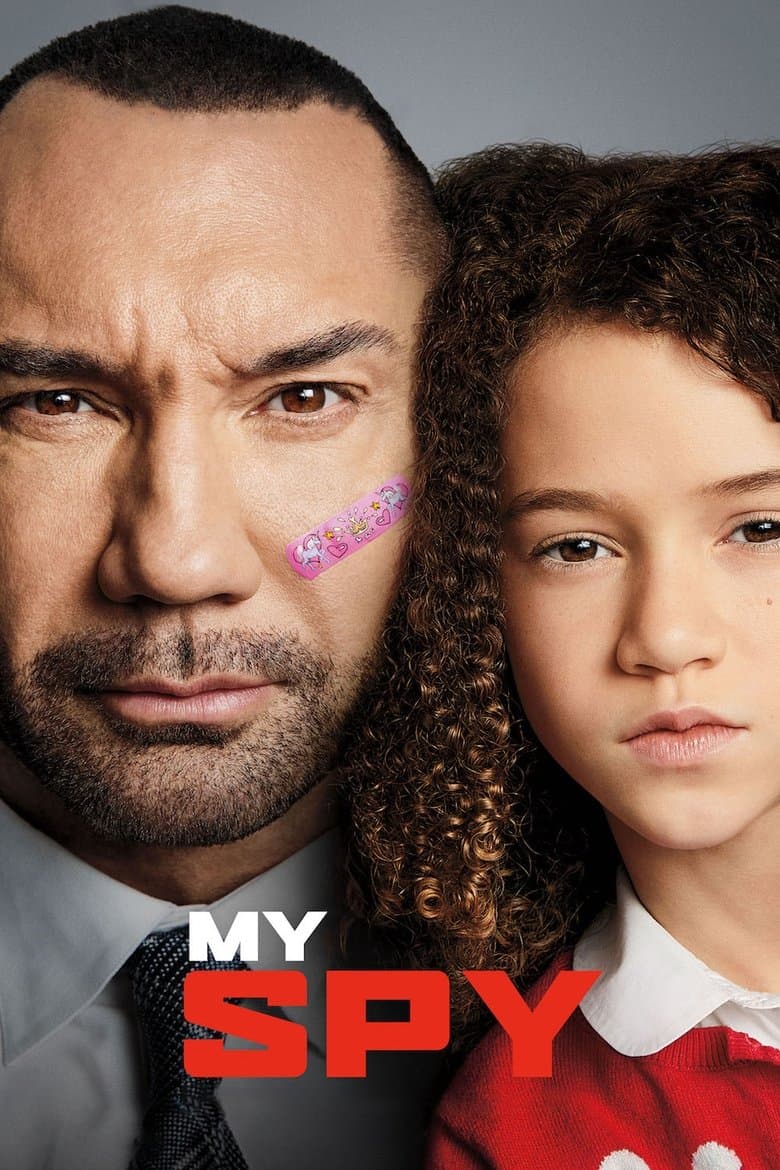
JJ is a strong but closed-off CIA agent who loses control of a mission and is sent to Chicago with his tech partner, Bobbi. He and Bobbi watch Kate, a widow and nurse, and her nine-year-old daughter, Sophie, because Kate may be linked to an arms dealer. Sophie discovers the hidden cameras and forces JJ to teach her spy skills. The story mixes gun fights, silly danger, school scenes, romance, and a warm family comedy about JJ learning to care about other people.
The film gives important roles to a black single mother, an Asian CIA boss, a smart female tech agent, and a male gay couple who live next door. Sophie often outsmarts JJ, and Bobbi wants to be treated as his equal, so female skill and male clumsiness become visible parts of the comedy. The film keeps these ideas inside the character jokes and family plot instead of building a wider message about race, identity, or politics. The gay neighbors appear only briefly, and Carlos is written with broad comic mannerisms that make the film’s LGBTQ content more noticeable than its political content.
Community feedback
Was our 19% Woke rating accurate?
Breakdown
These are the editorial factors and ratings behind our score for My Spy.
Woke representation / casting
The film places a black single mother, an Asian CIA boss, a smart female tech agent, and a male gay couple in visible supporting roles. Sophie repeatedly outsmarts the much larger male spy, while Bobbi wants equal respect in the field. The Chicago setting can support a mixed cast, and the film does not sell this as a diversity campaign. The pattern is noticeable but stays secondary to the family comedy.
18%
Woke political dialogue
Not present. JJ talks about CIA work, weapons, crime, and family problems, but the film does not use recurring speeches about current politics, identity, or activism.
0%
Identity-driven story themes
Sophie’s story centers on a clever girl who controls the training of a large male spy and often beats him at his own game. Bobbi also asks to be treated as JJ’s equal instead of staying behind the desk. Carlos and Todd appear as a gay couple, but their scenes are brief and mostly comic. These identity elements support jokes and character bonds rather than a larger activist message.
15%
Western institutional / cultural critique
The film mocks JJ’s hard, macho image by making him awkward with children, romance, dancing, and school life. Bobbi wants to leave the tech desk and work in the field as JJ’s equal. The story does not present the CIA, family life, or traditional relationships as oppressive institutions. The gender message remains a small part of a broad comedy.
9%
Woke character or canon changes
Not relevant. The movie is an original story with no established characters, source canon, or real historical figures to change.
0%
Anti-woke backlash and complaints
Not present. Online discussion and reviews focused on the formula, violence, language, and gay-neighbor stereotypes, not claims that the film pushes DEI or identity politics.
0%
Creator track record context
Most of the director and writer context has low cached scores and no activist public profile. Producer Dave Bautista has spoken against Donald Trump and supported LGBTQ+ causes. Producers Gigi Pritzker and Chris Bender have shown some interest in underrepresented voices and social-impact stories. The film itself does not turn those views into a main political message.
24%
Production

Movie · 2024
JJ, a veteran CIA agent, reunites with his protégé Sophie, in order to prevent a catastrophic nuclear plot targeting the Vatican.
Movie · 2016
After supervillain Shredder escapes custody, he joins forces with mad scientist Baxter Stockman and two dimwitted henchmen, Bebop and Rocksteady, to unleash a diabolical plan to…

Movie · 2020
Powered with incredible speed, Sonic The Hedgehog embraces his new home on Earth. That is, until Sonic sparks the attention of super-uncool evil genius Dr. Robotnik.
Movie · 2022
While hanging out after school, Charlie and his friends discover the headquarters of the world’s most powerful superhero hidden beneath his home.

Movie · 2017
Six young ninjas are tasked with defending their island home of Ninjago. By night, they’re gifted warriors using their skill and awesome fleet of vehicles to fight villains and…
Movie · 2024
Twins Phoebe and Max are enjoying their superhero lifestyle, but when one 'save' goes awry, the Thundermans are sent back to Hiddenville.

Movie · 2026
George Hardy is a shepherd who reads detective novels to his beloved sheep every night, assuming they can't possibly understand.
Movie · 2024
Gru and Lucy and their girls—Margo, Edith and Agnes—welcome a new member to the Gru family, Gru Jr., who is intent on tormenting his dad.
