Movie review
November 11, 2022 · 129 min · R · Hindi · Comedy · Crime · Mystery · Thriller · Drama
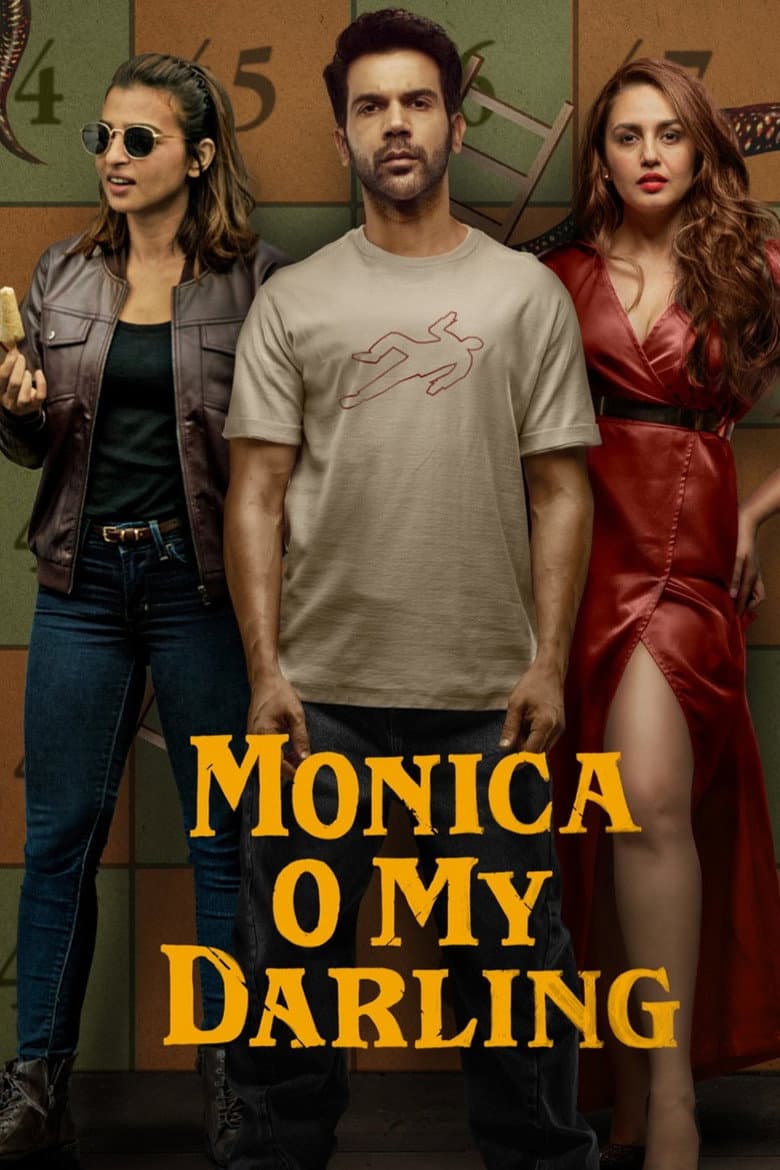
Jayant Arkhedkar is a talented robotics engineer from a modest Pune background who has finally reached the top at Unicorn Robotics. He is engaged to Nikki, the boss's daughter, but he is also having an affair with Monica, a secretary who says she is pregnant and demands money. When Jayant learns that two other men at the company face the same threat, the three men plan to kill Monica and hide the crime. The story turns into a dark, funny mystery filled with betrayal, panic, snakes, and sudden reversals.
The film gives its main women clear power over the men in several parts of the story. Monica uses her sexuality, nerve, and knowledge of male weakness to demand a better life, while ACP Naidu is a bold female police officer who enjoys making suspects nervous. Nikki also uses her family influence, and Monica fights Jayant as an equal in a long physical scene. These choices support a modern message about women having agency and men being less secure than they appear, but the main plot still follows Jayant's greed, guilt, and struggle to escape murder.
Community feedback
Was our 49% Woke rating accurate?
Breakdown
These are the editorial factors and ratings behind our score for Monica, O My Darling.
Woke representation / casting
Monica is a prominent female secretary who drives the blackmail plot through sexual confidence and planning. ACP Naidu is a visible female police officer, and Nikki uses her family power to threaten Jayant. The director also said he wanted the corrupt cop role to be female and wanted all the women to have strong personas. The repeated focus on strong women is audience-visible, but the cast is not built as a broad diversity showcase.
38%
Woke political dialogue
Not present. The spoken lines focus on blackmail, ambition, sex, murder, work rivalry, and guilt. The film does not use a recurring speech or slogan about identity, DEI, or activism.
0%
Identity-driven story themes
Monica openly uses sex and blackmail to seek money and control in a company run by powerful men. ACP Naidu acts as a confident and corrupt police officer who enjoys using her authority. Nikki uses her father's influence, and Monica holds her own in a physical fight with Jayant. These repeated gender reversals give the story a noticeable message about female agency and male weakness, although the murder puzzle remains the main story.
45%
Western institutional / cultural critique
The company treats a worker's death as an accident and protects its public image. The male executives use women for sex and then fear losing their jobs, money, and family status. The film therefore mocks male entitlement and a workplace built on power, but it treats corporate greed as crime satire rather than a full attack on capitalism or Western culture. The film does not ridicule Christianity or present a broad political program.
28%
Woke character or canon changes
Bala said he wanted Radhika Apte to play ACP Naidu and tweaked the role for her. The 2011 Japanese screen version of the Higashino story lists a male detective, so the adaptation appears to shift that police role from male to female. The change is visible and gives a prominent woman control over the investigation, but it affects one supporting role rather than the whole story.
28%
Anti-woke backlash and complaints
Not present. The X research pass found no anti-woke complaints. Other searched discussion was mostly praise for the acting, music, twists, and the film's lack of propaganda, while gender criticism came from the opposite side and does not count as anti-woke backlash.
0%
Creator track record context
Vasan Bala has a moderate track record of stories about outsiders, male vulnerability, female agency, and authentic representation. Yogesh Chandekar has mostly written crime, thriller, horror, and dark comedy, with only some identity-related work. Nikita Grover and Anmol Ahuja show inclusion-minded casting habits, while most of the producers have craft-focused public profiles. This context supports the film's gender focus, but it does not show a strong activist group behind the project.
39%
Production
Movie · 2018
A series of mysterious events changes the life of a blind pianist who now must report a crime that was actually never witnessed by him.
Movie · 2023
Following the brutal murder of a young real estate agent, a hardened detective attempts to uncover the truth in a case where nothing is as it seems, and by doing so dismantles the…

Movie · 2016
In 1967, four undercover CIA agents were sent to NASA posing as a documentary film crew. What they discovered led to one of the biggest conspiracies in American history.
Movie · 2022
Leonard is an English tailor who used to craft suits on London’s world-famous Savile Row. After a personal tragedy, he’s ended up in Chicago, operating a small tailor shop in a…

Movie · 2017
Lynn, a brilliant student, after helping her friends to get the grades they need, develops the idea of starting a much bigger exam-cheating business.

Movie · 2025
A former Army Ranger and struggling father turns to robbing McDonald’s restaurants by cutting holes in their roofs, earning him the nickname "Roofman." After escaping prison, he…

Movie · 2017
When a depressed woman is burglarized, she finds a new sense of purpose by tracking down the thieves alongside her obnoxious neighbor.

Movie · 2022
The roguishly charming and endlessly troublesome Fletch becomes the prime suspect in a murder case while searching for a stolen art collection.
