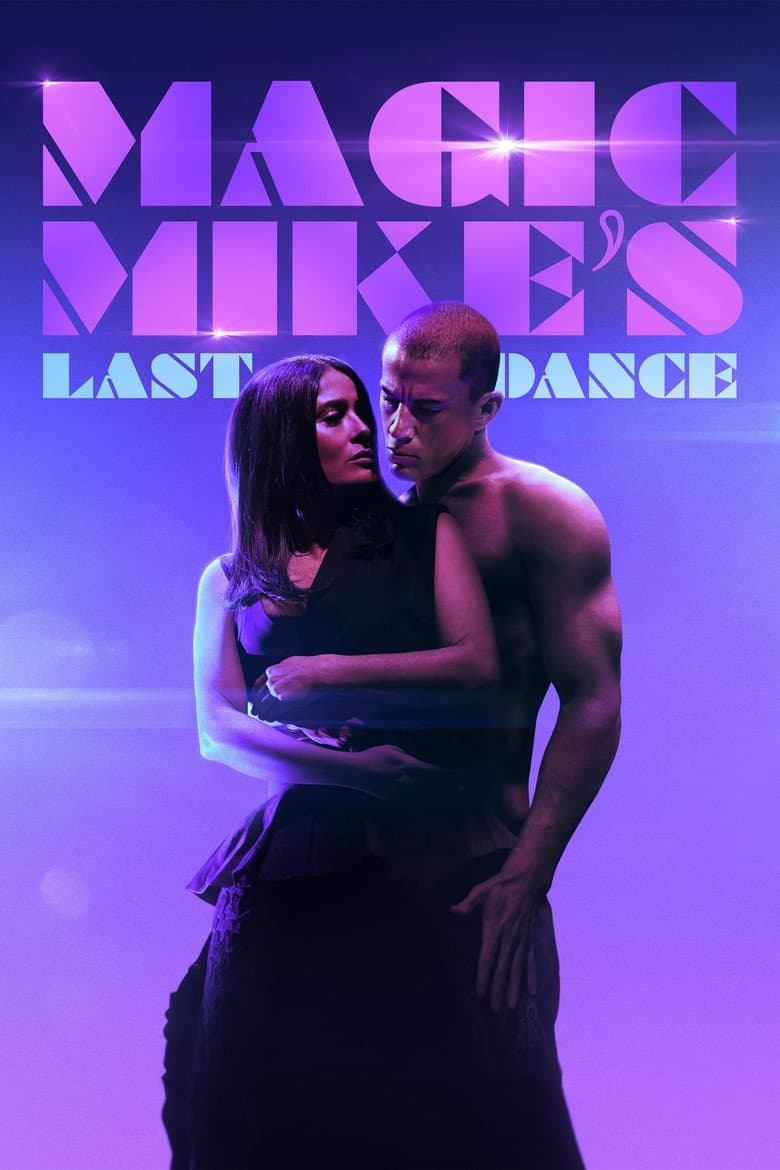
Mike Lane is a retired male dancer who is broke after his furniture business fails, so he works as a bartender in Florida. A wealthy woman named Maxandra Mendoza hires him for a private dance and takes him to London. Mike must build a new male dance show in a historic theater while he and Max deal with her divorce, her angry husband, and their growing romance. The movie has a glossy, playful, and sexy tone, but it also follows Mike's fear of starting over and his love of dance.
The story puts female desire and female choice at its center. Max fights to control her own life, while Mike teaches the dancers to ask for permission and to make women feel safe and wanted. The stage show rejects an old story in which a woman must choose between a rich husband and a poor lover. The new ending gives her more choices and celebrates freedom, love, pleasure, and control over her future. These ideas shape the main London plot and appear in repeated talks, rehearsal scenes, the teenage narrator's comments, and the final show.
Community feedback
Was our 48% Woke rating accurate?
Breakdown
These are the editorial factors and ratings behind our score for Magic Mike's Last Dance.
Woke representation / casting
The film makes Maxandra, played by Salma Hayek Pinault, the powerful female co-lead beside Mike. Public interviews around the film describe the female lead as a deliberate change because the earlier movies focused on men. The London dancer group comes from different backgrounds, but that mix fits the setting and is not presented as a special race-based campaign.
24%
Woke political dialogue
The film repeatedly uses direct language about consent, permission, female empowerment, and women being heard. Mike teaches dancers to ask for permission before intimate moves. Max says that a strong female lead must know what she wants, and the show talks about women having more than two life choices. These talks are part of the rehearsal and show plot, but they are not the whole movie.
33%
Identity-driven story themes
The film makes female desire, choice, and control over one's life the main ideas of the London story. Max leaves a rich husband, fights to run her theater, and tries to choose her own future. Mike's dancers are told to serve women's fantasies while respecting their limits. The final show rejects the idea that a woman must choose only money or romance. These themes shape the central plot, while the movie also remains a glossy romance and dance show.
48%
Western institutional / cultural critique
The film treats the old West End theater as a stuffy place that protects old rules and old ideas about women. Max's husband uses money and the theater's name to pressure her during the divorce. The new show mocks the idea that a woman must choose a safe marriage or a poor but loving man. The story offers freedom and sexual choice as the answer, but it does not make a broad attack on Christianity, capitalism, or Western society.
25%
Woke character or canon changes
Not relevant. The sequel changes the setting and supporting cast for a new London story. It does not make a documented woke rewrite of an established character or real person.
0%
Anti-woke backlash and complaints
Breitbart writer John Nolte called the film woke and blamed its poor box office on female empowerment and consent lessons. A second Breitbart article called its message faux-feminist. The separate X search found only a few small right-leaning accounts repeating the claim. No large-account pile-on, boycott, or review-bomb push appeared.
12%
Creator track record context
Steven Soderbergh has a record of progressive liberal views and social commentary in other projects. Carmen Cuba is known for including people who often get fewer big roles, and Julie M. Anderson's work centers black history and representation. Reid Carolin and most producers have low or neutral political profiles. Interviews tied to this film also frame it around female desire, consent, and strong female leads. This background is moderate and does not dominate the film.
36%
Production
Movie · 2021
Resolving to achieve professional success without compromising her ethics, Lucy embarks on a ruthless game of one-upmanship against cold and efficient nemesis Joshua, a rivalry…
Movie · 2019
Charlie suffers from a serious disease that causes acute narcolepsy whenever he is happy. Although he develops a variety of techniques to deny himself pleasure and deal with his…
Movie · 2016
A week in the life of Paterson, a poet bus driver, and his wife Laura, a very creative artist, who live in Paterson, New Jersey, hometown of many famous poets and artists.
Movie · 2016
Mia, an aspiring actress, serves lattes to movie stars in between auditions and Sebastian, a jazz musician, scrapes by playing cocktail party gigs in dingy bars, but as success…

Movie · 2016
A young woman struggles to move on with her life after the death of her husband, an acclaimed folk singer, when a brash New York writer forces her to confront her loss and the…
Movie · 2020
Lonely college freshman Alex has closed himself off from his peers, who all appear to have this whole "college thing" figured out.

Movie · 2018
At a picturesque lakeside estate, a love triangle unfolds between the legendary diva Irina, her lover Boris, and the ingénue Nina.
Movie · 2017
After the early death of his wife, a mourning father moves with his teenage son across the country for a private school teaching job.
