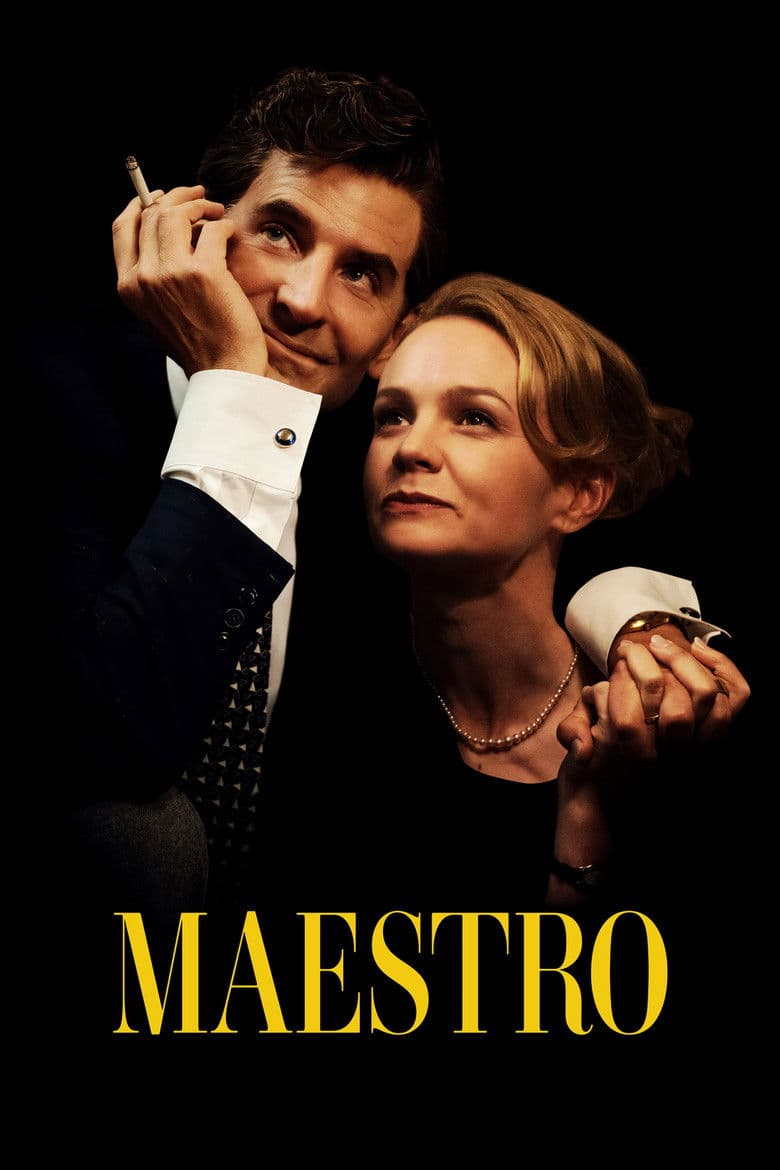
Leonard Bernstein is a rising American conductor and composer in the mid-1900s. The movie follows his long marriage to actress Felicia Montealegre. Fame, music, and family fill their life, but his affairs with men keep breaking trust. The tone is emotional and personal, focused on love, pain, and art more than a full career story.
The main thing a normal viewer will notice is that Bernstein’s attraction to men sits at the center of the plot. Early scenes show him with a male partner. Later scenes show more affairs, fights with Felicia, lies to his daughter, and stress about secrets. The story treats his private life and marriage as the main drama, with his music often in the background. That queer story line is clear, repeated, and hard to miss. Other modern political lectures are not the focus. The film is sold as a big love story about a real marriage under heavy pressure.
Community feedback
Was our 64% Woke rating accurate?
Breakdown
These are the editorial factors and ratings behind our score for Maestro.
Woke representation / casting
Main roles follow real people: Cooper as Bernstein, Mulligan as Felicia, and Matt Bomer and others as male partners. Queer roles are visible and important, so identity casting is noticeable. This is still a period biopic of known figures, not a modern race- or gender-quota cast. Story need, not random diversity casting, drives most choices.
32%
Woke political dialogue
Talk about secret affairs, career risk if he were open, rumors, lies to his daughter, and Felicia’s “lonely old queen” fight is clear on screen. It is personal and of its time, not modern slogan speech about rights, DEI, or current politics. Viewers who care about identity will hear it; it is not a lecture film.
35%
Identity-driven story themes
Bernstein’s same-sex desire and affairs are the main engine of the marriage story. Reviews and plot summaries treat that conflict as the core of the movie. Music success sits around it. For many viewers, queer identity is front-and-center and hard to miss, even though the film also sells itself as a love story.
80%
Western institutional / cultural critique
The film shows mid-century pressure to hide same-sex life for career and image. That is period social fear, not long modern attacks on capitalism, “whiteness,” the church, or patriarchy as systems. Mild background sense of old rules; not activist institutional critique as the main point.
28%
Woke character or canon changes
Not relevant. The film uses real people. Bernstein’s attraction to men is part of the historical record, not an invented identity swap. Cuts and focus choices are normal biopic choices, not identity-driven rewrites of made-up canon.
0%
Anti-woke backlash and complaints
A smaller set of complaints says the movie shrinks a genius to sex and mirrors modern identity focus. That counts as anti-woke style pushback. The bigger news fight was the nose and Jewish casting debate, which is not anti-woke criticism and is not scored here. No large, lasting anti-woke boycott wave.
18%
Creator track record context
Key names land low to mild on the stored scores (Cooper, Singer, Spielberg, Scorsese, Krieger, Libatique, and craft leads). Support for Democrats or prestige history films is not the same as a strong identity-activism record. Creator context is light support only, not a hardline activist team.
20%
Production

Movie · 2018
Seasoned musician Jackson Maine discovers — and falls in love with — struggling artist Ally. She has just about given up on her dream to make it big as a singer — until Jack…

Movie · 2025
Laura and Simon have been best friends since college. Over the years, they've realized their bond is more than platonic.
Movie · 2017
Addie Moore and Louis Waters, a widow and widower, have lived next to each other for years. The pair have almost no relationship, but that all changes when Addie tries to make a…

Movie · 2016
Meeting by chance when they return to their tiny California hometown, two former high-school sweethearts reflect on their shared past.
Movie · 2018
The coming-of-age tale of 16-year-old Lina Vilkas who is deported to Siberia amid Stalin's reign of terror in the Baltic region during WWII.

Movie · 2016
Set during the last days of the Ottoman Empire, a love triangle develops between Mikael, a brilliant medical student, the beautiful and sophisticated artist Ana, and Chris, a…
Movie · 2019
England, early 20th century. The future writer and philologist John Ronald Reuel Tolkien (1892-1973) and three of his schoolmates create a strong bond between them as they share…

Movie · 2019
After learning that his terminally ill wife has six months to live, a man welcomes the support of his best friend who moves into their home to help out.
