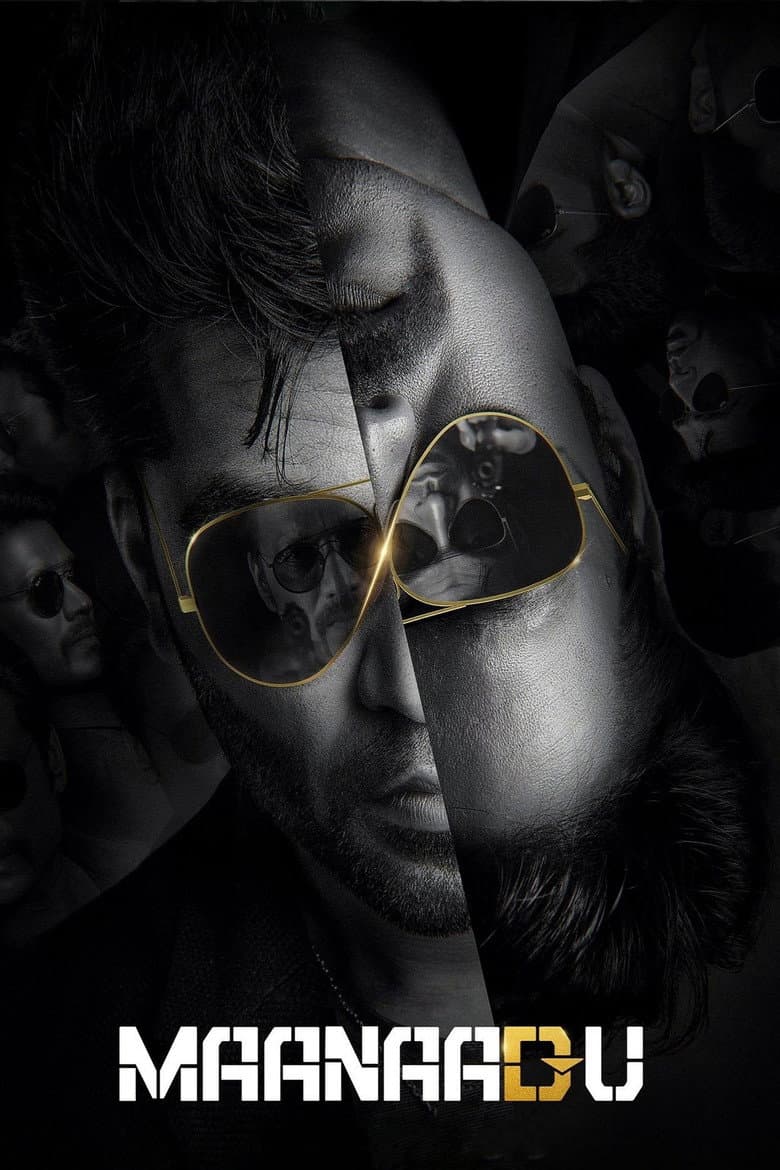
Maanaadu is a Tamil action thriller set around a political meeting in Coimbatore. Abdul Khaliq, a Muslim man returning from Dubai, becomes trapped in the same day again and again after a chief minister is killed. A corrupt police officer and politicians plan to blame Khaliq for the killing and use it to start religious riots. Khaliq must learn the pattern, protect the chief minister, and stop the crowd from becoming a target. The film mixes tense gun fights and chases with jokes, fast twists, and a strange time-loop idea.
The film makes Khaliq’s Muslim identity a major part of the danger and his reason to act. The story shows a good Muslim man being framed as a terrorist and warns that leaders can use religion and caste to gain power. It also shows Muslim and Hindu characters helping each other, including a Hindu family that protects Khaliq’s mother during earlier riots. The film uses a mosque demolition, past Hindu-Muslim violence, and a friendship across faiths to support a message against prejudice. These ideas return through the thriller, but the time-loop mystery and action still take most of the screen time.
Community feedback
Was our 57% Woke rating accurate?
Breakdown
These are the editorial factors and ratings behind our score for Maanaadu.
Woke representation / casting
Silambarasan plays the Muslim lead Abdul Khaliq in a modern Tamil setting. The story also includes Muslim friends and a Hindu-Muslim couple. The casting fits the setting, but the posters and interviews highlight the Muslim identity as part of the film’s purpose. The identity focus gives the lead casting a clear message beyond ordinary role choice.
28%
Woke political dialogue
Khaliq asks why a killer may be called a madman in one case while a Muslim killer is called a terrorist. He asks how long politicians will use religion and caste to gain power. The plot repeats that police and politicians plan to blame one religious group for the chief minister’s death. The dialogue is clear and recurring, but it stays inside the thriller instead of becoming a long speech.
52%
Identity-driven story themes
Khaliq is a good Muslim man who is framed as a terrorist so a riot can be started. His family story links a mosque demolition and past Hindu-Muslim violence to his birth in a Hindu temple. Muslim and Hindu characters help each other, including the friends and family around the wedding. The story uses these ideas to explain the danger and Khaliq’s reason for fighting, although the time-loop action plot still takes most of the film.
62%
Western institutional / cultural critique
Not present. The film criticizes corrupt police and politicians in its Indian setting. It does not target Western institutions, Christianity, family roles, or modern Western culture.
0%
Woke character or canon changes
Not relevant. Maanaadu uses invented characters and events. It does not alter a known franchise character or real historical figure.
0%
Anti-woke backlash and complaints
Two low-reach X posts called the Hindu-Muslim friendship an indirect message or warned that the Muslim lead could become anti-Hindu content. A lone Rotten Tomatoes audience review later called the film propaganda against Hindus. These online claims had no visible wider pickup. A 2021 BJP minority-wing objection said the film showed Muslims in a bad light, but that was a religious-content complaint rather than an anti-woke complaint, and the state BJP chief later called the film harmless entertainment. Most larger reviews and user reactions were favorable.
10%
Creator track record context
Venkat Prabhu has a mixed record, with mostly commercial films and some social themes. Suresh Kamatchi has a women-police drama and public workplace-safety concerns. Stunt Silva, K. Chandru, and Ezhilarasu Gunasekaran have little or no recorded activist pattern. Prabhu said this film aims to normalise Muslim identity and oppose prejudice, and Silambarasan said it should correct misconceptions about Muslims.
34%
Production
Movie · 2022
With the Parliament under siege, India’s first super soldier Arjun Shergill is tasked to get hold of the terrorists in time, save the Prime Minister from their clutches and stop a…
Movie · 2023
When a tech blogger lands an interview with a tech guru and stops an attack on him, he finds a mysterious ring that takes him back 57 seconds into the past.
Movie · 2020
Armed with only one word - Tenet - and fighting for the survival of the entire world, the Protagonist journeys through a twilight world of international espionage on a mission…

Movie · 2024
Post-apocalyptic survivors find refuge in the Rocky Mountains to hide from giant, insect-like creatures that can't live above 8,000 feet.
Movie · 2016
A special-ops team is dispatched to fight supernatural beings that have taken over a European city.
Movie · 2017
An assassin seeks redemption after being given a second chance at life.
Movie · 2018
When a young boy accidentally triggers the universe's most lethal hunters' return to Earth, only a ragtag crew of ex-soldiers and a disgruntled scientist can prevent the end of…
Movie · 2018
A brutal mugging leaves Grey Trace paralyzed in the hospital and his beloved wife dead. A billionaire inventor soon offers Trace a cure — an artificial intelligence implant called…
