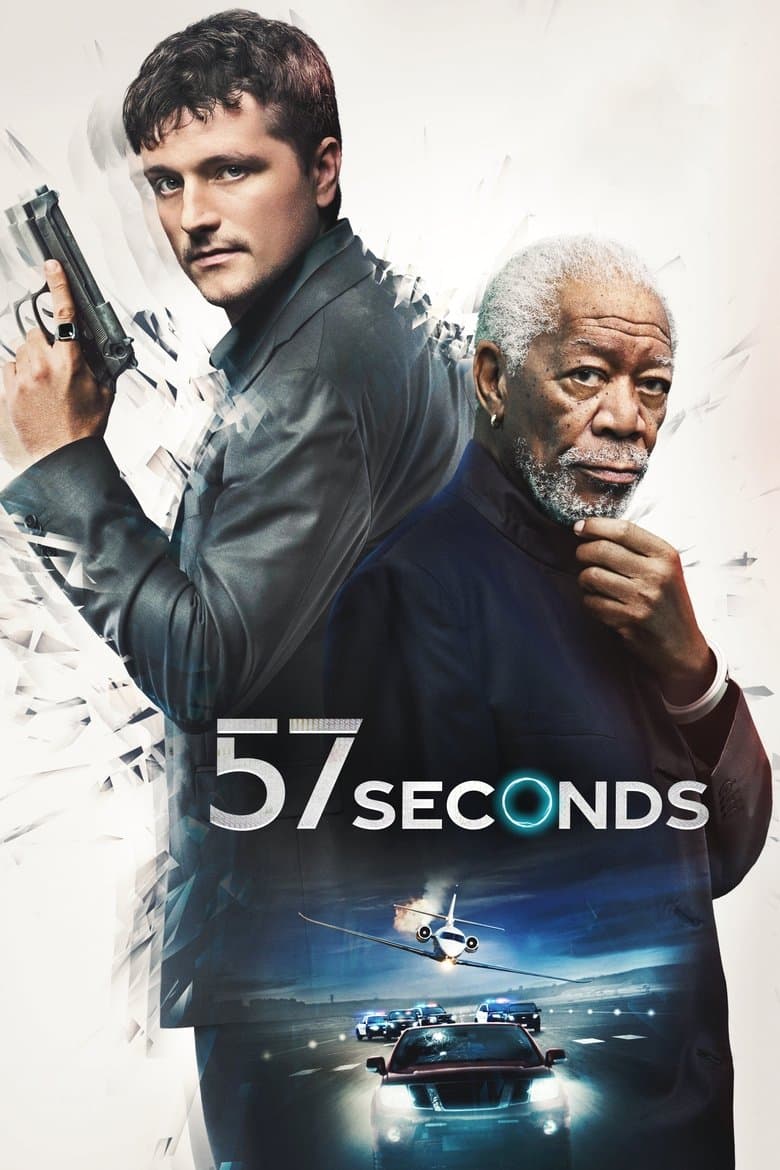
Franklin Fox is a tech blogger who wants to expose a drug company after its painkiller leads to his twin sister’s death. He meets health inventor Anton Burrell while trying to get an interview at a large technology event. Franklin finds a ring that sends him 57 seconds into the past, and he uses it to win money, fix mistakes, and enter the company he hates. The film is a violent, fast-moving science fiction thriller with a simple revenge plot.
Franklin’s main fight is against Sig Thorenson, a rich drug boss who hid the dangers of an addictive painkiller and harmed many people. Franklin works with his friend Andy to gather proof and send it to the media. His girlfriend Jala, a black artist, questions his lies, his greed, and his growing need to use the ring. The ending warns that power can become addictive, and Franklin destroys the ring after seeing how easily his choices can hurt innocent people.
Community feedback
Was our 13% Woke rating accurate?
Breakdown
These are the editorial factors and ratings behind our score for 57 Seconds.
Woke representation / casting
The movie gives prominent roles to black actors as the tech inventor Anton, Franklin’s artist fiancée Jala, and a senior company employee named Calvert. A white man remains the central hero, and the modern American setting makes these choices plausible. The film does not call attention to diversity or make race part of the conflict. The pattern gives a mild audience-visible representation signal, but it is not a major theme.
15%
Woke political dialogue
Not present. Characters discuss justice, dangerous medicine, and the ethics of time travel. The dialogue does not push current identity politics or modern activist politics.
0%
Identity-driven story themes
Not present. Franklin seeks revenge for his sister’s death, and Jala challenges his lies and greed. The film does not build its main story around race, gender, sexuality, or another identity issue.
0%
Western institutional / cultural critique
Not present. The film attacks one drug company for hiding an addictive product and harming people. That is a corruption and revenge plot, not a wider attack on Western culture, family life, religion, or traditional gender roles.
0%
Woke character or canon changes
Not relevant. The film is based on E.C. Tubb’s science fiction short story “Lucifer!” No identity-driven change to an established character, real person, or historical event is part of the film.
0%
Anti-woke backlash and complaints
Not present. The supplied X research found no anti-woke complaints, boycott calls, or review-bomb claims. Public reviews and audience posts mostly complain about plot holes, weak writing, and the ending.
0%
Creator track record context
Rusty Cundieff has used horror stories to address racism, police brutality, and corrupt politicians. Lori McCreary has supported MeToo, Time’s Up, diversity, and gender parity in entertainment. Macon Blair and E.C. Tubb have no similar record, and most producers have little or no comparable public record. This gives the film a mild creator track record signal, but the movie itself centers on revenge and technology.
24%
Production
Movie · 2021
A former special forces agent is trapped in a time loop and relives his death over and over again. To escape the terrible situation, he must track down those responsible and stop…
Movie · 2017
An assassin seeks redemption after being given a second chance at life.
Movie · 2016
Set in a near future, technology-reliant society that pits man against killing machines. Against this backdrop an elite army unit is helicoptered to a remote, off-the-grid island…
Movie · 2026
In the near future, a detective stands on trial accused of murdering his wife. He has ninety minutes to prove his innocence to the advanced AI Judge he once championed, before it…
Movie · 2019
A man steps out of a park fountain in Ho Chi Minh City with no recollection of who he is or where he came from.
Movie · 2017
“2048: Nowhere to Run” takes place one year before the events of Blade Runner 2049. The short film focuses on Sapper, a man who is trying to make it through life day-by-day…
Movie · 2022
The Red Ribbon Army, an evil organization that was once destroyed by Goku in the past, has been reformed by a group of people who have created new and mightier Androids, Gamma 1…
Movie · 2020
Armed with only one word - Tenet - and fighting for the survival of the entire world, the Protagonist journeys through a twilight world of international espionage on a mission…
