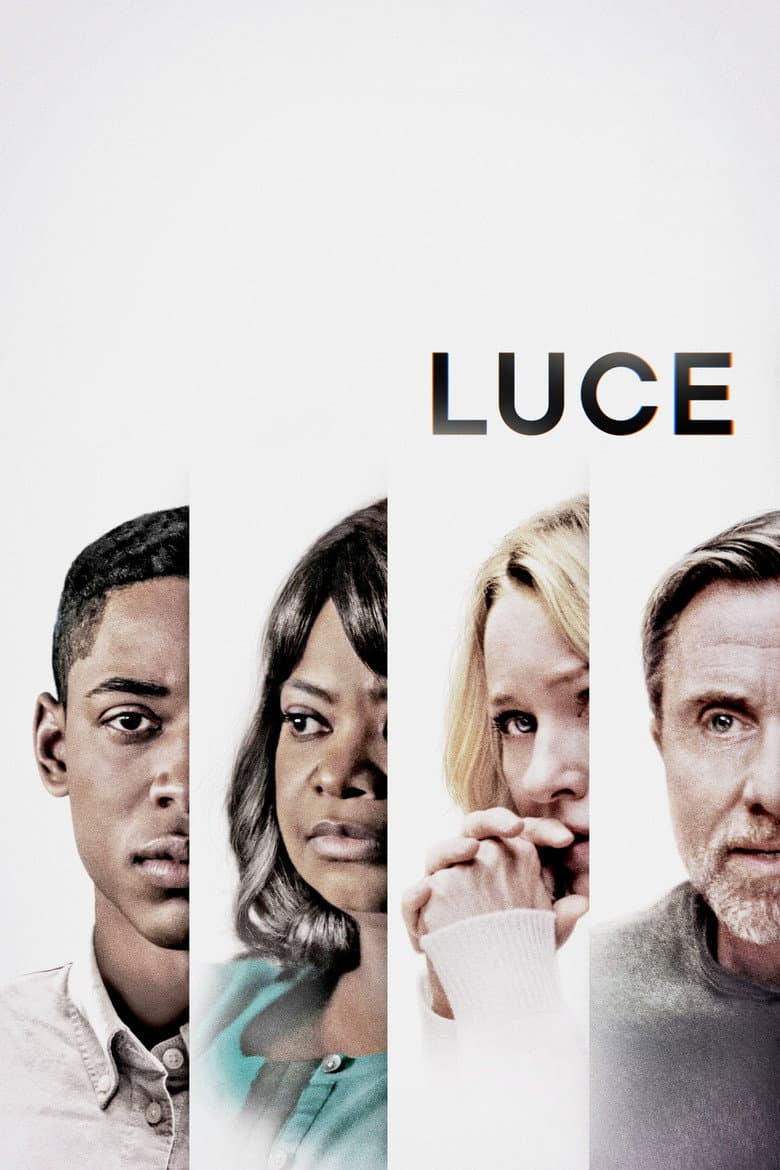
Luce Edgar is a star student, runner, and speaker at a wealthy high school in Arlington, Virginia. His white adoptive parents brought him from war-torn Eritrea when he was a child, and they believe he has built a perfect life. His history teacher becomes alarmed after he writes about Frantz Fanon and the use of violence against colonial rule. The tense drama turns into a mystery about whether Luce is being judged unfairly or hiding a dangerous plan.
The movie puts race, privilege, and black identity at the center of the family and school fight. Luce feels forced to act as a perfect example of black success, while another black student loses the benefit of the doubt and a Korean American girl becomes part of a disputed sexual assault case. The story questions white liberal parents, school rules, police power, and the way America places people in fixed boxes. The film keeps changing who seems truthful, so it raises activist identity questions without giving a simple answer.
Community feedback
Was our 82% Woke rating accurate?
Breakdown
These are the editorial factors and ratings behind our score for Luce.
Woke representation / casting
Luce is a Black Eritrean teenager, and Harriet is a black female teacher who has a major role in the conflict. DeShaun is another black athlete, while Stephanie is Korean American and Luce’s parents are white. These identities fit a modern Virginia school and the plot explains the main choices. The repeated focus on the identities of leading characters still makes representation a clear part of the film’s design.
43%
Woke political dialogue
The characters often speak about racism, segregation, redlining, civil rights, tokenism, and the pressure on black people to be perfect. Harriet talks about women needing courage to stand up, and the parents argue about sexist language and powerful women. Luce and Harriet debate whether he is a person or a symbol for other people. These talks return during the school, family, and teacher conflicts, so the political dialogue is a major part of the movie.
58%
Identity-driven story themes
The main story follows Luce’s struggle with being treated as either a perfect black success story or a dangerous black man. The film links that pressure to adoption, white liberal parents, school punishment, privilege, and the idea that people are forced into boxes. The story also gives a large place to a disputed sexual assault and the way adults decide whose account to trust. Race and identity shape the mystery, family damage, and ending, so this theme is hard to miss.
82%
Western institutional / cultural critique
The school rewards Luce as a model student but gives DeShaun less trust after finding drugs in his locker. The film questions whether white parents can love an adopted black child while still trying to control his story. The story shows police using force during a crisis involving Harriet’s mentally ill black sister. The film also says America puts black people in boxes, making its critique of school, family, and public power a recurring part of the plot.
68%
Woke character or canon changes
Not relevant. The movie adapts J.C. Lee’s original play. It does not change an established character, known canon, or historical figure through a race, gender, or sexuality swap.
0%
Anti-woke backlash and complaints
Not present. The separate X check found no anti-woke reaction. Broader searches found no clear boycott, review-bombing, or right-leaning complaint that the movie pushes identity politics.
0%
Creator track record context
J.C. Lee’s wider work strongly focuses on queer culture, identity, and social systems. Julius Onah’s stored profile links his work to race, class, privilege, and immigrant belonging. The stored profiles for the other listed crew show little public activist work. The key writer and director therefore give this title a strong identity-focused creator context.
61%
Production

Movie · 2025
Marty Mauser, a young man with a dream no one respects, goes to hell and back in pursuit of greatness.

Movie · 2016
When Krisha returns to her estranged family for Thanksgiving dinner, past demons threaten to ruin the festivities.

Movie · 2020
2038: George Almore is working on a true human-equivalent AI, and his latest prototype is almost ready. This sensitive phase is also the riskiest as he has a goal that must be…
Movie · 2018
Two lifelong friends head up to an isolated Scottish Highlands village for a weekend hunting trip that descends into a never-ending nightmare as they attempt to cover up a…

Movie · 2016
An American Ambassador is killed during an attack at a U.S. compound in Libya as a security team struggles to make sense out of the chaos.

Movie · 2019
A charismatic New York City jeweler always on the lookout for the next big score makes a series of high-stakes bets that could lead to the windfall of a lifetime.

Movie · 2021
When the aging Meyer Lansky is investigated one last time by the Feds who suspect he has stashed away millions of dollars over half a century, the retired gangster spins a…

Movie · 2017
A former rodeo star, now a motel manager, meets a young man who is responsible for the violence that suddenly has seized his small town.
