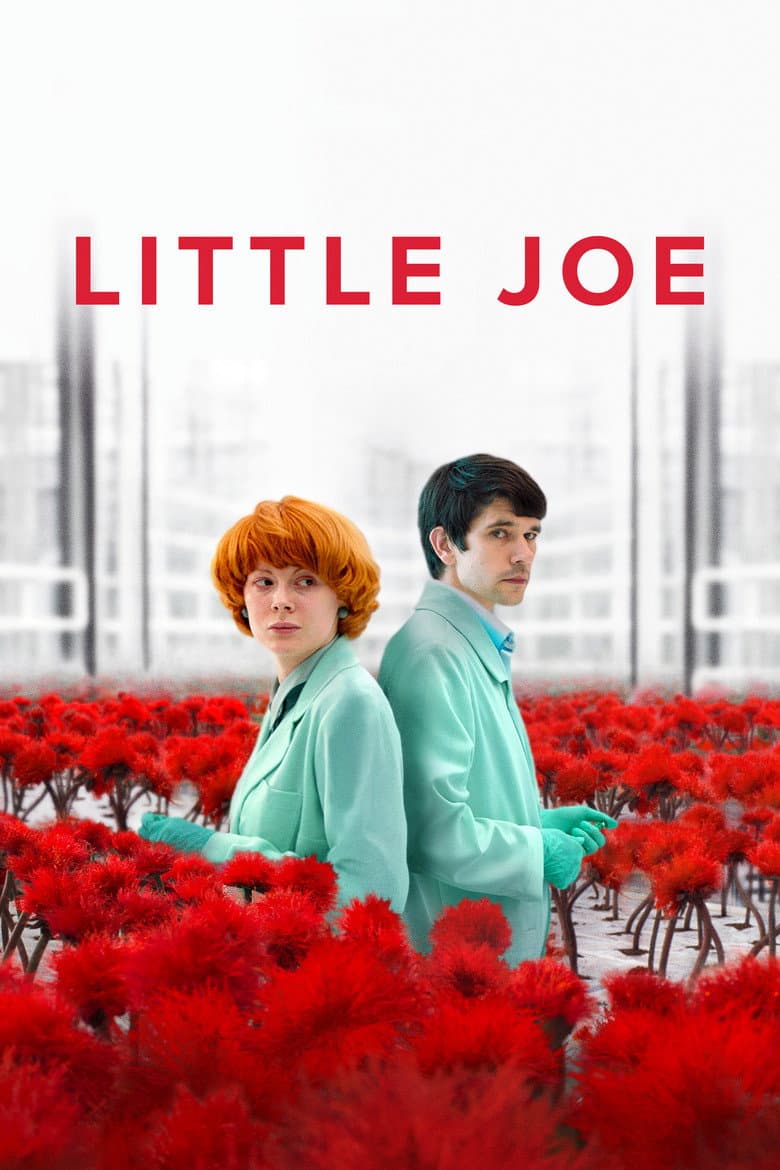
Alice Woodard is a gifted plant scientist and a single mother in a clean, modern research lab. She creates a red flower that can make people feel happy, then takes one home for her teenage son, Joe. Soon, Joe, Alice’s coworkers, and a dog seem to change after they meet the flower. Alice must decide whether the danger is real or whether guilt and fear are changing how she sees her family. The film uses quiet scenes, sharp colors, strange sounds, and a slow, uneasy tone.
The main woke element is Alice’s struggle between career success and the usual idea that a mother must put her child first. The story treats her choice to let Joe live with his father so she can keep working as a valid choice, not a moral failure. Women hold the main science roles, while male coworkers question or dismiss their warnings. The film also criticizes a company that sells happiness as a product and asks whether people still have real feelings after social pressure changes them.
Community feedback
Was our 61% Woke rating accurate?
Breakdown
These are the editorial factors and ratings behind our score for Little Joe.
Woke representation / casting
Alice is a woman who leads the genetic engineering project and holds the film's main scientific role. Bella is another important woman scientist, and a woman therapist handles Alice's key personal conflict. Men mostly appear as a boss, coworker, father, or son, and the story gives their warnings less weight than Alice's view. The film builds its central monster story around a female scientist, but its modern setting makes the casting believable and the cast is not a broad diversity showcase.
42%
Woke political dialogue
The characters repeatedly discuss whether Alice is a good mother or a better plant breeder. A coworker asks which of her two children she will choose, and another says that a boy needs his father. These lines question fixed ideas about motherhood and family roles. The film has no long activist speech, so the gender politics stay brief and tied to the plot.
27%
Identity-driven story themes
Alice's main conflict joins motherhood, career ambition, guilt, and the wish to be free of constant child care. The story questions the idea that a mother must always choose her child over her work. Alice finally accepts Joe living with his father, and the ending treats her return to work as a happy result. Women also raise the film's key warnings while men often dismiss them or call them unstable. This gender message shapes the whole plot, but the film remains unclear rather than openly activist.
62%
Western institutional / cultural critique
The lab treats happiness as a product and plans to sell the plant around the world. The company values a successful launch more than warnings that the plant may change people. The story links workplace rules, social pressure, and a culture that demands cheerful behavior. The closing song repeats the phrase “happiness business,” which gives the corporate system a clear critical edge. This critique is important, but it does not attack every Western institution.
46%
Woke character or canon changes
Not relevant. This is an original story that borrows ideas from Frankenstein and Invasion of the Body Snatchers. It does not change an established character, canon, or real historical event.
0%
Anti-woke backlash and complaints
Not present. The supplied X pass found no anti-woke posts about this film. Other audience comments focus on the slow pace, sound, strange tone, or unclear ending, not woke or DEI claims.
0%
Creator track record context
Jessica Hausner's earlier work shows a repeated interest in women, motherhood, social pressure, and people who resist expected roles. Hausner's interviews describe this film as a female version of Frankenstein and as a story about a mother who wants to keep her career. Géraldine Bajard has a much weaker public record of political activism, and most producers are known mainly for art-house work. Mary Burke's past producing work includes LGBTQ-centered films, but the overall creator record is moderate rather than activist.
45%
Production

Movie · 2018
Jonathan is a young man with a strange condition that only his brother understands. But when he begins to yearn for a different life, their unique bond becomes increasingly tested.

Movie · 2015
During a manned mission to Mars, Astronaut Mark Watney is presumed dead after a fierce storm and left behind by his crew.
Movie · 2016
A father and son go on the run after the dad learns his child possesses special powers.

Movie · 2017
14,000-year-old "Man from Earth" John Oldman, now teaching in northern California, realizes that not only is he finally starting to age, but four students have discovered his…

Movie · 2019
A man becomes obsessed with facts and events that have been collectively misremembered by thousands of people.
Movie · 2021
On a post-apocalyptic Earth, a robot, built to protect the life of his dying creator's beloved dog, learns about life, love, friendship, and what it means to be human.

Movie · 2016
A spacecraft traveling to a distant colony planet and transporting thousands of people has a malfunction in its sleep chambers.
Movie · 2019
In a series of escalating encounters, former security guard David Dunn uses his supernatural abilities to track Kevin Wendell Crumb, a disturbed man who has twenty-four…
