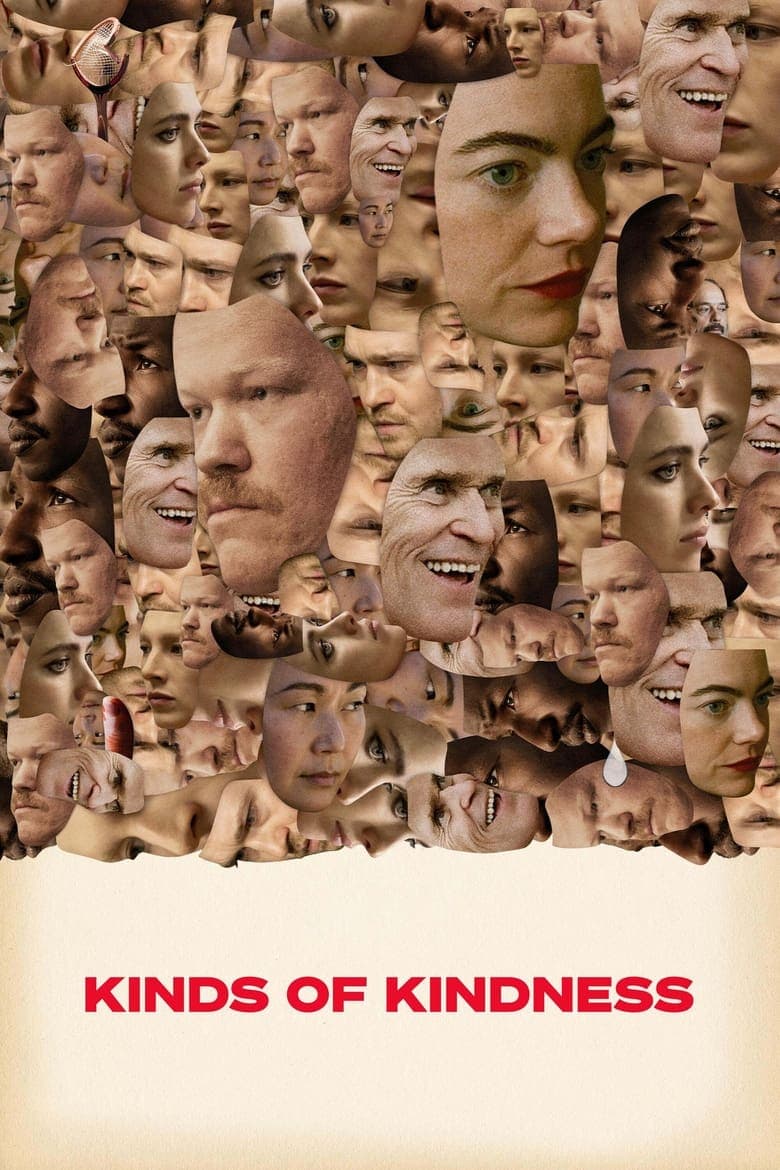
Kinds of Kindness follows the same group of actors through three separate stories in modern America. Jesse Plemons plays Robert, a worker whose boss controls his food, clothes, marriage, and daily choices. He later plays Daniel, a police officer who thinks his wife is a stranger after she returns from being lost at sea. He also plays Andrew, a man in a sex cult who searches with Emily for a woman who can bring the dead back to life. The film uses dry jokes, strange behavior, graphic violence, sex, and body horror to show people giving up their freedom to win love, safety, or approval.
The film has a mixed modern cast that includes Hong Chau, Mamoudou Athie, and a brief role for trans actress Hunter Schafer. A group sex recording also includes same-sex kissing. These details give the movie some audience-visible identity and queer content, but they do not lead a character journey or a clear political message. The main stories focus on bosses, spouses, and cult leaders who use fear, desire, and promises of care to control people. The film treats those relationships as cruel traps rather than as a direct argument about current identity issues.
Community feedback
Was our 24% Woke rating accurate?
Breakdown
These are the editorial factors and ratings behind our score for Kinds of Kindness.
Woke representation / casting
The cast includes Hong Chau and Mamoudou Athie in named roles, with Hunter Schafer in a brief role. The film shows same-sex kissing and sexual contact in a group scene. Those choices create clear but limited audience-visible queer and ethnic visibility. The story and marketing do not make identity the main reason to watch.
24%
Woke political dialogue
Not present. Dialogue stays absurdist and personal, focused on control, devotion, and paranoia with zero activist, identity-based, or political content.
0%
Identity-driven story themes
The film shows a husband demanding painful proof from his wife and a cult policing sexual behavior. The film also includes same-sex sexual contact, but no character explains a queer identity or asks for identity-based rights. The three stories use these events to explore control, fear, and belonging across several kinds of relationships. The identity-driven element stays brief and does not guide the whole plot.
12%
Western institutional / cultural critique
The film shows a boss controlling a worker, a husband controlling his wife's body, and a cult controlling its members. The film treats work, marriage, and spiritual groups as places where people can lose free choice. The story does not connect those scenes to a current attack on capitalism, patriarchy, Christianity, or conservatives. The institutional and cultural critique is broad, dark, and surreal, so the woke signal remains small.
18%
Woke character or canon changes
Not relevant. fully original stories with no established characters, source material, or historical figures altered for ideological reasons.
0%
Anti-woke backlash and complaints
Not present. No anti-woke or right-leaning criticism exists; public debate ignores politics entirely and targets only the film’s weirdness and tone.
0%
Creator track record context
Lanthimos often makes stories about social control, freedom, and awkward human behavior. His past work includes strong female agency and gender satire, but it rarely uses open activist language. Filippou has no known record of identity advocacy, and the producers have low public political profiles. One casting director has spoken about diversity, but this film does not sell itself through that message.
28%
Production

Movie · 2016
An improv group deals with several crises, including the loss of their lease and one member hitting the big time.

Movie · 2024
Mismatched cousins David and Benji reunite for a tour through Poland to honor their beloved grandmother. The adventure takes a turn when the pair's old tensions resurface against…

Movie · 2023
Single mom Flora is at a loss about what to do with her rebellious teenage son, Max. Her efforts to keep him out of trouble lead to a beat-up acoustic guitar, a washed-up LA…

Movie · 2016
Mia, an aspiring actress, serves lattes to movie stars in between auditions and Sebastian, a jazz musician, scrapes by playing cocktail party gigs in dingy bars, but as success…
Movie · 2017
When dictator Joseph Stalin dies, his parasitic cronies square off in a frantic power struggle to become the next Soviet leader.

Movie · 2023
Two mismatched entrepreneurs – egghead innovator Mike Lazaridis and cut-throat businessman Jim Balsillie – joined forces in an endeavour that was to become a worldwide hit in…
Movie · 2017
Steve Coogan and Rob Brydon embark on a road trip along the coast of Spain.
Movie · 2017
Ingrid becomes obsessed with a social network star named Taylor Sloane who seemingly has a perfect life. But when Ingrid decides to drop everything and move west to be Taylor's…
