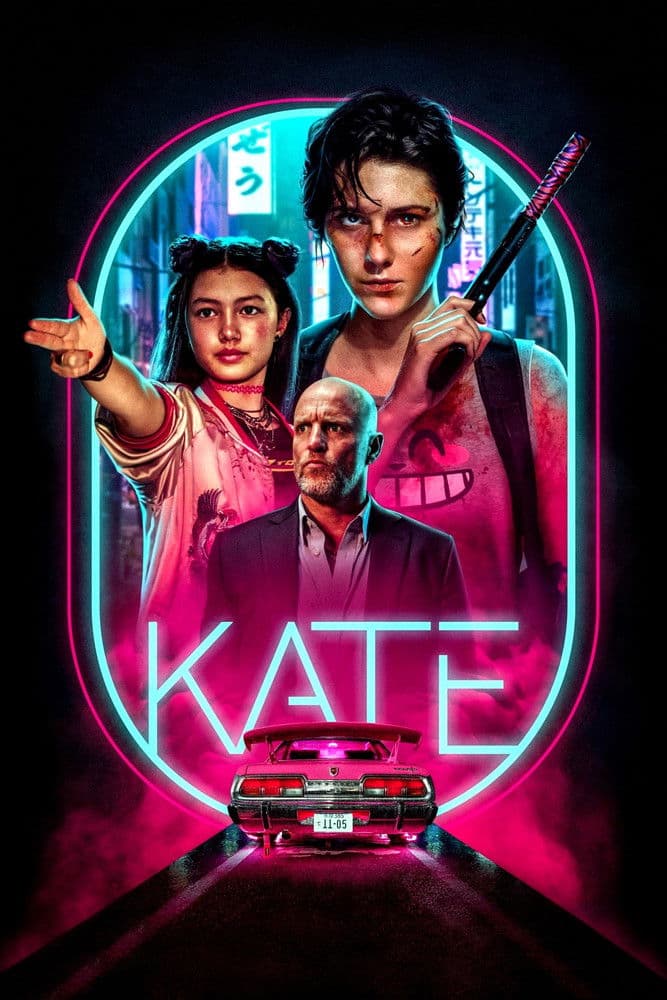
Kate follows a highly trained American assassin who learns that someone has poisoned her. She has less than one day to find the people behind the attack before the poison kills her. She moves through Tokyo and Osaka while fighting Japanese crime groups, chasing answers, and facing the people who trained her. The film uses bloody fights, neon streets, dark jokes, and a sad race against time.
The film puts a white woman at the center of a Japanese crime world and presents her as its strongest fighter. Kate also builds a protective bond with Ani, a mixed Japanese and white teenager whose family calls her “half-blood” and wants her dead. The story includes a small gay relationship because Renji’s partner Jojima is his boyfriend. Kijima says that Westerners ruin everything, but the film uses that idea as one line inside a revenge story instead of building a larger political message.
Community feedback
Was our 30% Woke rating accurate?
Breakdown
These are the editorial factors and ratings behind our score for Kate.
Woke representation / casting
The film puts a white American woman in the top fighter role in a Tokyo crime story. It gives Kate most of the action and presents her as one of the strongest people in the crime world. Director Cedric Nicolas-Troyan and Winstead both discussed the film as a strong female action vehicle. Ani’s male-male relationship is brief, but Jojima is clearly called Renji’s boyfriend.
32%
Woke political dialogue
Kijima says that Westerners ruin everything. The line blames outside Westerners for damaging his Japanese crime world. The film uses the line once and does not build it into a long political speech.
12%
Identity-driven story themes
Ani is a mixed Japanese and white teenager whose mother is a foreigner. Some yakuza call her “half-blood,” and a family power fight puts her life at risk. Kate sees Ani as another outsider and chooses to protect her. The film uses this identity conflict in the story but does not turn it into a broad lesson about race.
28%
Western institutional / cultural critique
Kijima calls Varrick a smug Westerner who wants to take over his Japanese crime group. Kijima also says that Westerners ruin everything. The film keeps this conflict inside a yakuza power struggle and does not attack modern Western institutions, capitalism, or family life.
18%
Woke character or canon changes
Not relevant. Original story with no source material, historical figures, or established characters altered for ideological reasons.
0%
Anti-woke backlash and complaints
Not present in this title.
0%
Creator track record context
The main creators mostly work in commercial action films. Writer Umair Aleem said the idea came from feeling that everything was on fire during the Trump era, but he did not describe an activist goal for the film. Casting director Jenny Jue has advocated for more Asian American and Pacific Islander representation, and the director chose female Japanese artists for the soundtrack.
15%
Production
Movie · 2024
When a Delta Force special ops mission goes terribly wrong, Air Force drone pilot Reaper has 48 hours to remedy what has devolved into a wild rescue operation.
Movie · 2026
A man takes justice into his own hands, hunting down criminals. His vigilante crusade makes him a social media star but puts him at odds with the local police chief.
Movie · 2017
A getaway driver for a bank robbery realizes he has been double crossed and races to find out who betrayed him.
Movie · 2026
A dysfunctional couple head to a remote cabin to "reconnect", but each has secret intentions to kill the other.
Movie · 2022
A disgraced ex-cop seeks solace by moving to the woods, but his quiet life comes to an end when a private eye recruits him to investigate the murder of an eccentric TV star's wife.
Movie · 2023
In a remote Irish village, a damaged Finbar is forced to fight for redemption after a lifetime of sins, but what price is he willing to pay?
Movie · 2021
Rescued as a child by the legendary assassin Moody and trained in the family business, Anna is the world’s most skilled contract killer.
Movie · 2023
After a heroic job of successfully landing his storm-damaged aircraft in a war zone, a fearless pilot finds himself between the agendas of multiple militias planning to take the…
