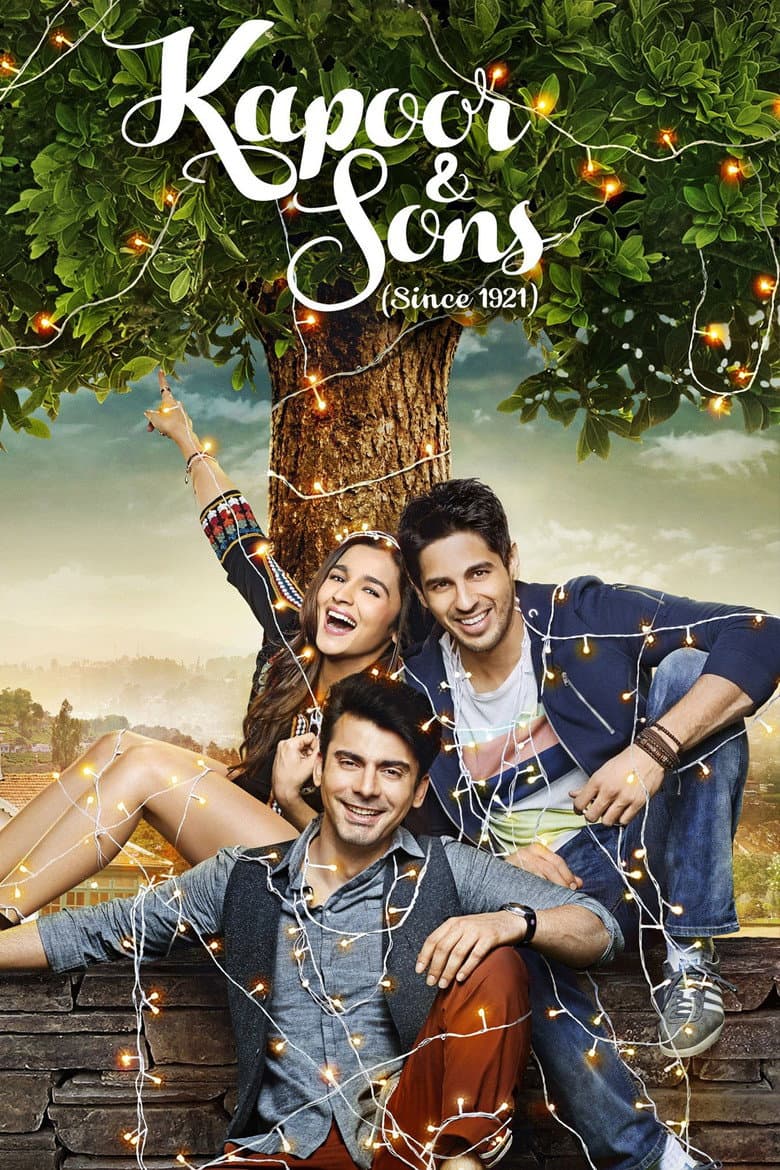
Kapoor & Sons follows Rahul and Arjun Kapoor, two brothers who return to their family home in Coonoor after their grandfather suffers a serious heart problem. Rahul is a successful writer in London, while Arjun is still trying to prove himself and escape his brother’s shadow. Their parents hide money troubles, an affair, and years of anger behind the image of a happy family. The story moves between sharp jokes, romance, loud arguments, grief, and a final attempt to bring the family back together. The clearest identity-driven part comes when Rahul is revealed to be gay and has a boyfriend in London. He hides this from his parents because he fears losing his place as their perfect son, and his mother first reacts with shock and rejection. Rahul says he should not have to apologize for who he is, while the film treats his feelings with sympathy. The film also gives Tia a modern, outspoken role and questions fixed ideas about marriage, how men should act, and success. These points stay inside the family conflict.
Community feedback
Was our 50% Woke rating accurate?
Breakdown
These are the editorial factors and ratings behind our score for Kapoor & Sons.
Woke representation / casting
The film casts Pakistani star Fawad Khan as Rahul, a gay son in an Indian family. Batra and contemporary coverage stress that Rahul is not played as a feminine joke or a common gay stereotype. The rest of the lead cast is a normal Indian family group, so the identity signal is limited to one prominent role.
38%
Woke political dialogue
Rahul tells his mother that he cannot apologize for who he is. The exchange directly defends his sexuality and rejects the demand that he be a “perfect” son. The film has no repeated political speeches or slogans, so this factor stays low.
24%
Identity-driven story themes
Rahul hides his boyfriend and sexuality from his family for years. His mother’s rejection and later regret make acceptance of a gay son a major emotional thread. The ending shows Rahul with his boyfriend and the boyfriend’s accepting family. The larger story still centers on two brothers, a failing marriage, money trouble, and grief.
48%
Western institutional / cultural critique
The film presents the family’s demand for a perfect son as harmful. The mother’s first response to Rahul’s sexuality and the parents’ pressure around marriage question traditional family rules. The movie does not attack Christianity, capitalism, or Western institutions. The critique stays tied to one family rather than a wider activist message.
20%
Woke character or canon changes
Not relevant. The film is an original family story. It does not change a known character, book, or real historical person.
0%
Anti-woke backlash and complaints
A few small X accounts called Rahul’s gay subplot disgusting or called it a Karan Johar LGBT agenda. One low-reach conservative post also grouped the film with wider attacks on Bollywood’s supposed “woke intellectual” content, but LGBT was not its main charge. No large accounts, review-bombing, boycott, or coordinated campaign were identified. Mainstream coverage said the film avoided a public storm, so the anti-woke complaints remain fringe.
14%
Creator track record context
Shakun Batra often explores sexuality, gender expectations, and difficult relationships, and he said he wanted Rahul to avoid a common gay stereotype. Karan Johar has a repeated record of LGBTQ and women-focused stories and public support for inclusion. The rest of the credited team has little documented activist history, so the wider creator signal is moderate.
42%
Production
Movie · 2019
Jodi, the tallest girl in her high school, has always felt uncomfortable in her own skin. But after years of slouching, being made fun of, and avoiding attention at all costs…

Movie · 2016
Pop superstar Jordan Jaye has a big dream he just wants to live like a regular teenager. When he's chased down by some excited female fans, he finds a perfect hideout and a…

Movie · 2016
Set against the backdrop of a beautiful garden in the heart of London, this contemporary fairy tale revolves around the unlikely friendship between a reclusive young woman and a…

Movie · 2017
The film follows a man with an unwanted gift for healing who meets a teenager with cancer who helps him to find himself.
Movie · 2019
Following a group of friends from university as they progress into middle-age life and go their own separate ways.
Movie · 2024
19 year old Isaiah Wright lives for basketball and video games. A year out of high school, he has no job, no plans, and no idea how to be a man.

Movie · 2016
Anne is at a crossroads in her life. Long married to a successful, driven but inattentive movie producer, she unexpectedly finds herself taking a car trip from Cannes to Paris…
Movie · 2020
A young rabbit embarks on a journey to dig the burrow of her dreams, despite not having a clue what she's doing.
