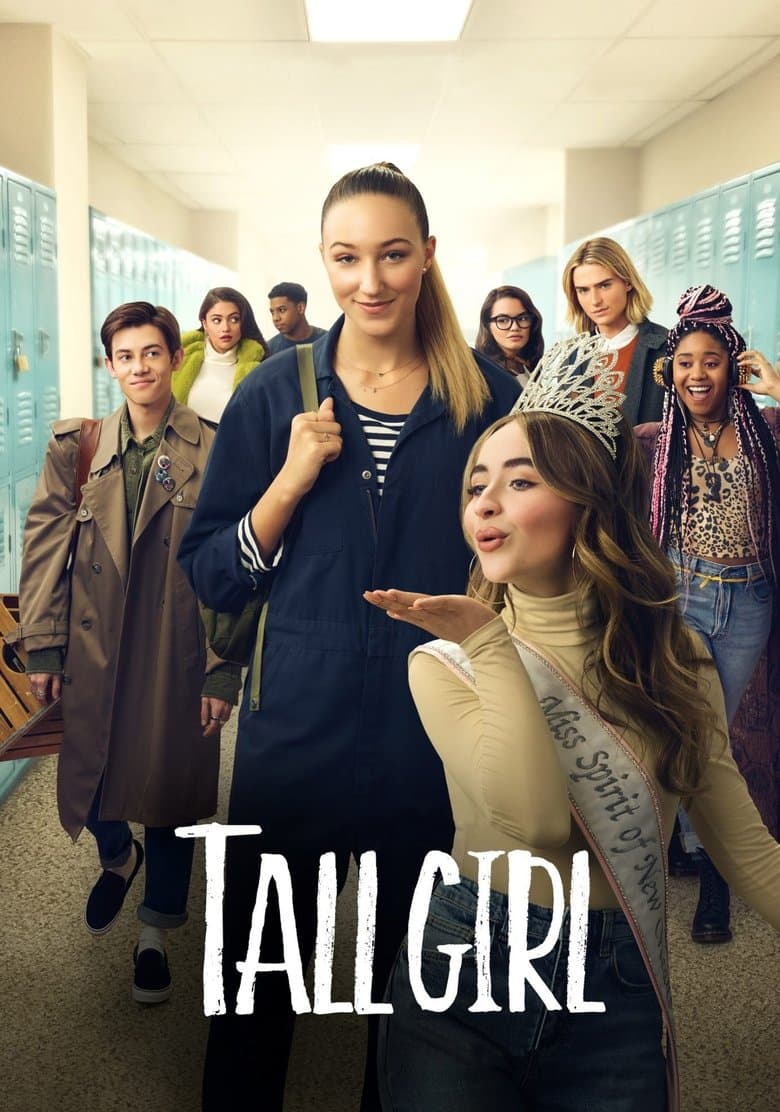
Tall Girl follows Jodi Kreyman, a 16-year-old girl who stands six feet one and feels trapped by the attention her height brings at school. Classmates tease her, and she hides inside loose clothes and a bent posture because she thinks no boy will want her. When a tall Swedish exchange student named Stig arrives, Jodi enters a messy love triangle with him and her shorter longtime friend Jack. The light teen comedy mixes school jokes, family scenes, friendship trouble, and a final push toward confidence.
The film makes Jodi’s height a strong personal identity and uses repeated bullying scenes to show the pain of feeling different. It asks her to stop treating her body as a problem and to reject the belief that a girl must be smaller than the boy she dates. The romance with Jack quietly challenges that dating rule, while the main message stays focused on self-acceptance rather than politics. The story also shows Jodi’s black friend Fareeda and other students from different racial backgrounds, but race, sexuality, and wider social causes do not drive the plot.
Community feedback
Was our 26% Woke rating accurate?
Breakdown
These are the editorial factors and ratings behind our score for Tall Girl.
Woke representation / casting
Not present. The school includes students from different racial backgrounds, but the film does not present race, gender identity, sexuality, or diversity as a casting message. The lead’s height is chosen for story accuracy.
0%
Woke political dialogue
Not present. The dialogue stays on school teasing, friendship, dating, and self-confidence. Jodi’s final speech is about her height, not a political cause.
0%
Identity-driven story themes
The film makes Jodi’s height into a visible identity that shapes how she dresses, hides, dates, and sees herself. Repeated scenes show classmates, family, and romantic expectations treating her height as a social problem. The story answers with a direct self-acceptance message about standing tall and refusing shame. The message is personal body confidence, not a campaign about race, sex, or politics.
38%
Western institutional / cultural critique
The movie questions the dating rule that boys should be taller than girls. Jodi rejects Jack at first partly because he is shorter, while the ending accepts their height difference. Her parents also treat her body as something that might need fixing. These scenes challenge beauty and gender expectations, but they do not attack family, religion, men, or Western institutions.
16%
Woke character or canon changes
Not relevant. The film is an original teen story about Jodi. It does not alter an established character, canon, or historical figure.
0%
Anti-woke backlash and complaints
Not present. The reported backlash said the film treated a tall, white, well-off girl as a victim and overlooked more serious discrimination. That was an inclusion-focused complaint, not an anti-woke complaint that the movie pushed DEI or identity politics.
0%
Creator track record context
The stored creator notes place Nzingha Stewart at 23/100 and Sam Wolfson at 10/100. The listed casting director and producers range from 7/100 to 19/100. The record gives a mild context signal, not a strong activist pattern.
17%
Production
Movie · 2022
After Jodi Kreyman gains popularity, her miscommunications start causing rifts with those around her and now she really needs to "stand tall".

Movie · 2016
Pop superstar Jordan Jaye has a big dream he just wants to live like a regular teenager. When he's chased down by some excited female fans, he finds a perfect hideout and a…

Movie · 2016
Set against the backdrop of a beautiful garden in the heart of London, this contemporary fairy tale revolves around the unlikely friendship between a reclusive young woman and a…
Movie · 2019
Following a group of friends from university as they progress into middle-age life and go their own separate ways.
Movie · 2026
After Matt's dreams of a picturesque Italian wedding are shattered when his fiancée leaves him at the altar, he embarks on his planned honeymoon across Italy alone, immersing…
Movie · 2019
A family dog – with a near-human soul and a philosopher's mind – evaluates his life through the lessons learned by his human owner, a race-car driver.
Movie · 2018
Dan, a 21-year-old carefree boy is always surrounded by a bunch of friends and fellow hotel interns who feed off each other's everyday moments, their ups and downs.

Movie · 2016
Anne is at a crossroads in her life. Long married to a successful, driven but inattentive movie producer, she unexpectedly finds herself taking a car trip from Cannes to Paris…
