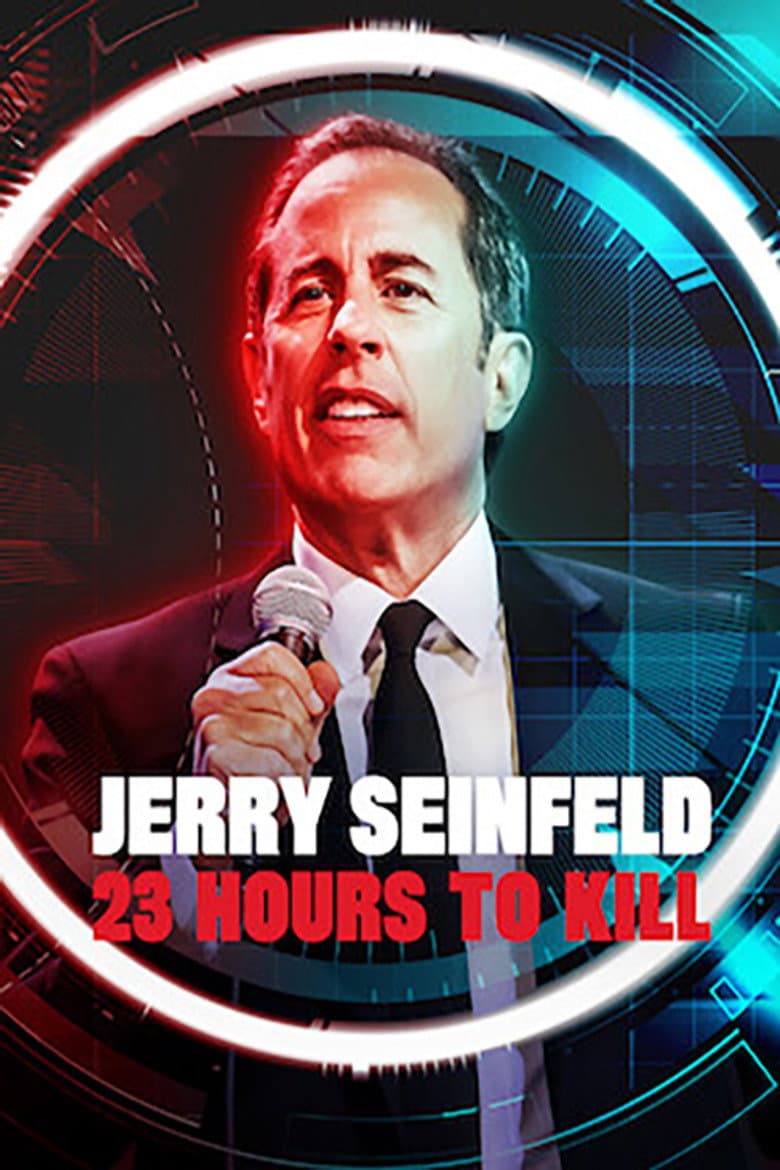
Jerry Seinfeld is the only main performer in this one-hour stand-up special. He arrives at the Beacon Theatre in New York through a playful spy-style stunt and then faces a crowd with a long set of jokes. His main conflict is with phones, food, travel, friends, marriage, and fatherhood. The tone is clean-cut, fast, dry, and often cranky. Seinfeld treats ordinary life as a chain of small annoyances, with Pop-Tarts, buffets, texting, restaurants, and public toilets as his main targets.
The identity-related material appears in the marriage section in the middle of the set. Seinfeld says the female brain is highly capable, presents wives as better at remembering details, and makes husbands look confused when they answer questions or use the wrong tone. He also uses broad jokes about what women and men do in relationships, including the idea that a wife can control the argument while the husband tries to keep peace. These lines give the special a recurring gender-role message, but the set does not build a story around activism, race, sexuality, diversity, or political change. The rest of the hour stays focused on everyday habits, aging, family life, and old-fashioned relationship comedy.
Community feedback
Was our 30% Woke rating accurate?
Breakdown
These are the editorial factors and ratings behind our score for Jerry Seinfeld: 23 Hours to Kill.
Woke representation / casting
Not present. The title shows one comedian, Jerry Seinfeld, rather than a group cast. It does not make casting or diversity part of the program.
0%
Woke political dialogue
Seinfeld makes a short group of jokes about gender roles in marriage. He calls the female brain highly capable and presents wives as better at tracking details. He says men must change their tone and accept that wives can control the argument. The jokes are repeated in one part of the hour, but the special has no speech about DEI, activist politics, or identity law.
28%
Identity-driven story themes
Marriage and gender differences take up a sustained part of the second half. The routine repeatedly makes women the more organized and informed side while men are confused, defensive, or trying to keep up. The female brain is praised, and the husband is placed in a game-show joke where the wife remembers old conversations. This creates a recurring gender-based message, but it remains old-style relationship comedy instead of the main subject of the hour.
44%
Western institutional / cultural critique
Not present. The set complains about phones, post offices, restaurants, movie theaters, and other daily systems. It does not turn those complaints into modern activist criticism of Western institutions, capitalism, Christianity, or traditional social norms.
0%
Woke character or canon changes
Not relevant. This is an original stand-up special, so it does not adapt established characters, canon, or historical figures.
0%
Anti-woke backlash and complaints
Not present. No significant anti-woke complaint was found saying the special pushes DEI or identity politics. Public criticism focused on stale jokes, wealth, and marriage stereotypes.
0%
Creator track record context
Jerry Seinfeld has a low stored score and is better known for criticizing political correctness than for activist work. Joe DeMaio has a low stored score, with one gun-control event among a broad entertainment career. The producers also have low stored scores, with only a mild humanitarian signal in Tammy Johnston’s record. This gives the title little creator track record support for woke content.
5%
Production
Movie · 2023
A chaotic intervention. An action-packed stay in rehab. After a weird couple of years, John Mulaney comes out swinging in his return to the stage.

Movie · 2022
Exploring every facet of ‘Weird Al’ Yankovic’s life, from his meteoric rise to fame with early hits like ‘Eat It’ and ‘Like a Surgeon’ to his torrid celebrity love affairs and…
Movie · 2023
From his onstage tackle to the slap heard round the world, Dave Chappelle lets loose in this freewheeling and unfiltered stand-up comedy special.
Movie · 2018
Adam Sandler takes his comical musical musings back out on the road, from comedy clubs to concert halls to one very unsuspecting subway station.
Movie · 2024
Inseparable best friends AJ and Moose decide to run the local pool's snack shack after their plan to sell home-brewed beer goes down the drain.
Movie · 2023
Two mismatched entrepreneurs – egghead innovator Mike Lazaridis and cut-throat businessman Jim Balsillie – joined forces in an endeavour that was to become a worldwide hit in…
Movie · 2016
Two teenage boys from inner-city Cork steal bicycles and ride off on a 160km quest to find an unrecovered bale of cocaine worth 7,000,000 euros.

Movie · 2024
Emotions run high when three estranged sisters reunite in a cramped New York City apartment to watch over their ailing father during his final days.
