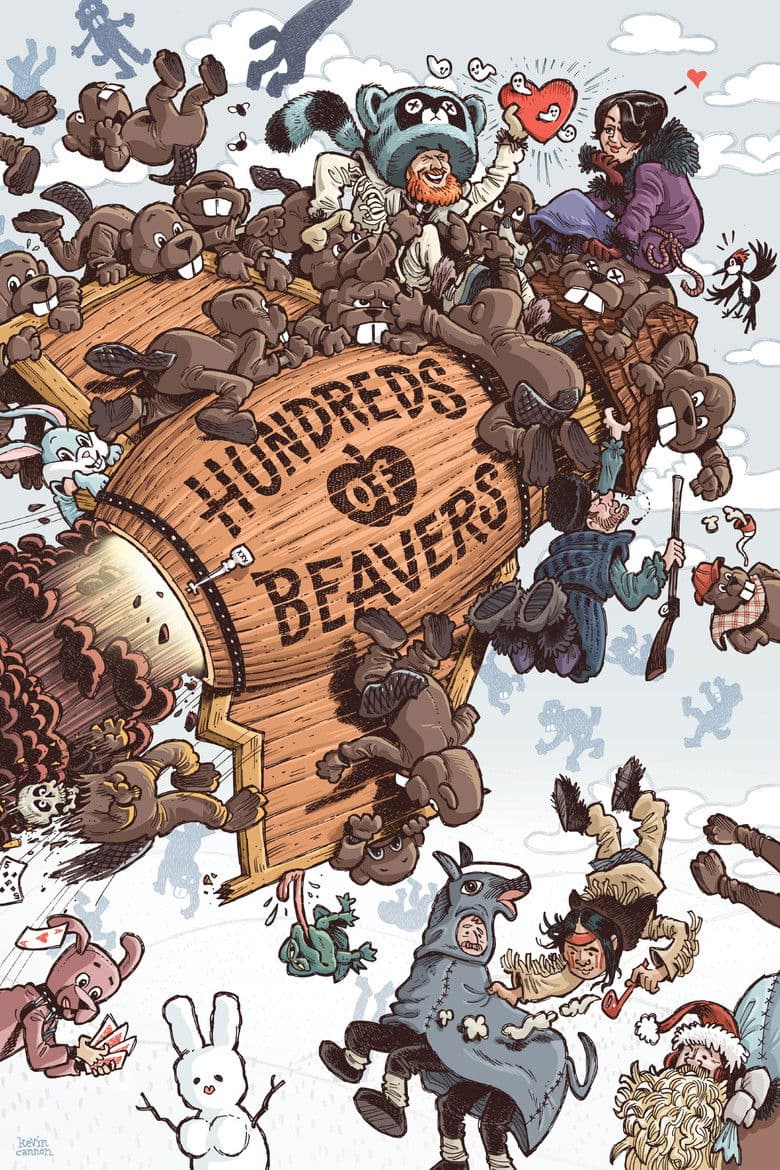
In the 1800s, a drunk applejack salesman named Jean Kayak loses his business when beavers wreck his orchard. He must learn fur trapping from a tough mentor and fight huge waves of cartoon-style beavers. The goal is to become a great trapper and win back the woman he loves. The movie is mostly black-and-white and plays like an old silent comedy, with very little spoken dialogue and lots of physical gags.
This is a throwback slapstick adventure built around stunts, chase scenes, and video-game-style level-ups. Story themes are simple: an underdog hero, man vs. wild, and old-school romance as motivation. Casting fits a frontier comedy with no clear identity-first messaging. Interviews and press focus on craft, Buster Keaton-style humor, and DIY filmmaking—not representation or activism. There is no confirmed LGBTQ content, activist dialogue, or modern social-justice framing in the story. Public talk treated it as a fun indie comedy, not a culture-war title.
Community feedback
Was our 8% Woke rating accurate?
Breakdown
These are the editorial factors and ratings behind our score for Hundreds of Beavers.
Woke representation / casting
The cast is a small Milwaukee indie ensemble in a period frontier setting, led by white male performer Ryland Brickson Cole Tews. Prominent roles read as story-driven casting for a friend-group production, not audience-visible diversity signaling or quota-style placement. No reported race or gender swaps of known characters. Evidence of identity-first casting emphasis is essentially absent.
0%
Woke political dialogue
The film uses a silent-movie style with very little spoken dialogue and simple title cards. Available summaries and reviews describe gag-driven action, not activist speeches or modern political slogans. No widely reported lines pushing identity politics, DEI messaging, or current social-justice framing.
0%
Identity-driven story themes
The core story is a drunk salesman becoming a hero trapper while fighting cartoon beavers and chasing a traditional romance. Themes are underdog growth, physical comedy, and man-vs-nature conflict played for laughs. Incidental gay rabbit couple gag appears in one scene. The love interest works as a classic prize-style goal, not an identity-politics storyline.
15%
Western institutional / cultural critique
The 1800s fur-trapping world could nod to frontier life, but coverage treats it as slapstick adventure, not a lecture on colonial guilt, toxic masculinity, patriarchy, or anti-Western institutions. No strong evidence the film reframes history into modern activist messaging. Any institutional angle appears background flavor, not a main theme.
0%
Woke character or canon changes
Not present in this title.
0%
Anti-woke backlash and complaints
No meaningful right-leaning or anti-woke complaints were found calling the film propaganda, DEI-driven, or identity-focused. Discussion stayed in critic and festival circles as a niche comedy homage. Pro-DEI complaints about lacking diversity, if any, are excluded from this score per guidelines.
0%
Creator track record context
Cached profiles for Cheslik, Hester, Tews, Balistreri, and Bellore all score 0/100, pointing to regional indie comedy work without documented activist statements, representation-first branding, or identity-politics creative patterns aligned with this title’s content or marketing.
0%
Production

Movie · 2016
The origin story of former Special Forces operative turned mercenary Wade Wilson, who, after being subjected to a rogue experiment that leaves him with accelerated healing powers…
Movie · 2022
A case of mistaken identity forces a bumbling entrepreneur to team up with a notorious assassin known as The Man from Toronto in hopes of staying alive.
Movie · 2016
A detective from Hong Kong teams up with an American gambler to battle against a notorious Chinese criminal.

Movie · 2024
When the plots of reclusive author Elly Conway's fictional espionage novels begin to mirror the covert actions of a real-life spy organization, quiet evenings at home become a…

Movie · 2026
Two marketing executives go "balls out" and pitch a bold full‑coverage condom sponsorship with the World Cup.

Movie · 2024
When 93-year-old Thelma Post gets duped by a phone scammer pretending to be her grandson, she sets out on a treacherous quest across the city to reclaim what was taken from her.

Movie · 2016
The life of a bank manager is turned upside down when a friend from his past manipulates him into faking his own death and taking off on an adventure.
Movie · 2023
Special agent Orson Fortune and his team of operatives recruit one of Hollywood's biggest movie stars to help them on an undercover mission when the sale of a deadly new weapons…
