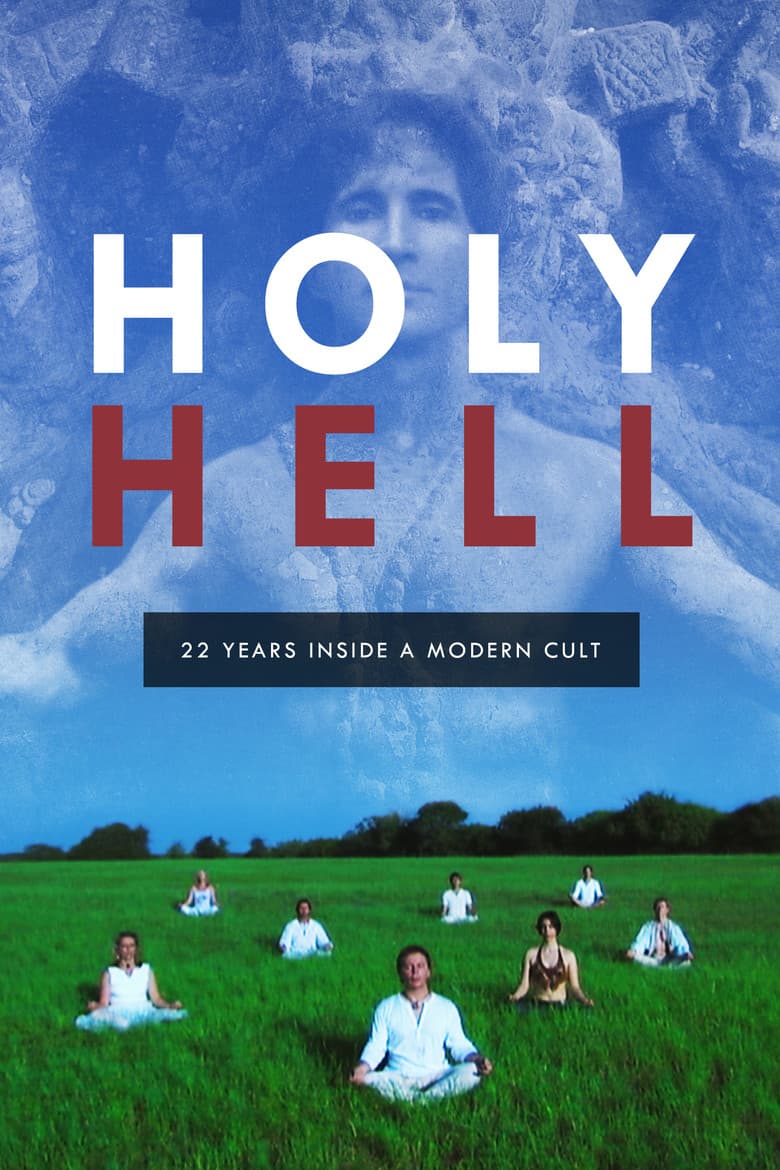
Holy Hell follows Will Allen, a young filmmaker who joins the Buddhafield, a spiritual group in 1980s West Hollywood. The group promises love, answers, and a close family, while its leader, Michel, claims to guide members toward direct contact with God. Allen spends 22 years filming the group as it moves to Texas and becomes more secretive, strict, and controlled. The documentary begins with bright images of dancing, friendship, and shared rituals before turning tense and painful as former members describe fear, sexual abuse, and the loss of freedom.
The film includes clear gay content because Allen says his mother rejected him after he came out as gay, and the group includes gay men. That history helps explain why its promise of unconditional love felt powerful, but the film does not turn the story into a wider campaign about identity. Its main message concerns the danger of giving a spiritual teacher control over a person’s body, money, work, friendships, and beliefs. Former members describe how the group used closeness, shame, and claims of special knowledge to keep people loyal, which gives the film a serious warning tone about manipulation and false family.
Community feedback
Was our 26% Woke rating accurate?
Breakdown
These are the editorial factors and ratings behind our score for Holy Hell.
Woke representation / casting
Not present. The documentary uses real members, former members, and archival footage instead of a fictional cast. The film does not show a diversity-first casting pattern.
0%
Woke political dialogue
Not present. The film contains spiritual claims and talk about group rules, but it does not use modern identity, DEI, or activist political lines.
0%
Identity-driven story themes
Will Allen says his mother rejected him after he came out as gay. The group’s promise of unconditional love becomes a major reason that its members stay. Former members say Michel used private spiritual sessions to sexually abuse men, including Allen. These gay identity and abuse themes affect Allen’s path into the group and the later break with it, but the film presents them as part of cult control rather than as a political campaign.
40%
Western institutional / cultural critique
Not present. The film warns about one abusive spiritual group and its leader. It does not turn that story into a broad attack on Christianity, family life, capitalism, or Western institutions.
0%
Woke character or canon changes
Not relevant. Holy Hell is an original documentary about real former group members. It does not adapt a known story or change an established character.
0%
Anti-woke backlash and complaints
Not present. Public discussion centers on cult abuse, survivor pain, and the documentary’s style. No notable complaint says that the film pushes woke, DEI, or identity politics.
0%
Creator track record context
Will Allen’s documented work focuses on personal testimony and abuse of power. Alexandra Johnes has produced documentaries about political change, institutional abuse, civil rights, and other public issues. Jared Leto has supported gun-control marches and more chances for gay and minority actors, but he is not mainly known for identity activism. Tracey Harnish has no clear activist pattern. Together, the key creators give the project a mild creator track record signal.
30%
Production
Movie · 2016
The Beatles stormed through Europe's music scene in 1963, and, in 1964, they conquered America. Their groundbreaking world tours changed global youth culture forever and…
Movie · 2019
An Iraqi journalist joins an army of uneasy allies and unforgettable characters in the epic battle to liberate the city of Mosul from the Islamic State.
Movie · 2019
Constructed from over 500 hours of never-before-seen footage, this documentary centers on the personal life and career of the controversial football player Diego Maradona who…
Movie · 2022
Matt Walsh's controversial doc challenges radical gender ideology through provocative interviews and humor.
Movie · 2025
The individual journeys of the four members of the band, as they move through the music scene of the 1960s, playing small clubs throughout Britain and performing some of the…
Movie · 2017
An intimate journey through the formative years of David Lynch's life. From his idyllic upbringing in small town America to the dark streets of Philadelphia, we follow Lynch as he…

Movie · 2017
While investigating the furtive world of illegal doping in sports, director Bryan Fogel connects with renegade Russian scientist Dr.

Movie · 2023
The remarkable coming-of-age story of Stephen Curry—one of the most influential, dynamic, and unexpected players in basketball history—and his rise from an undersized college…
