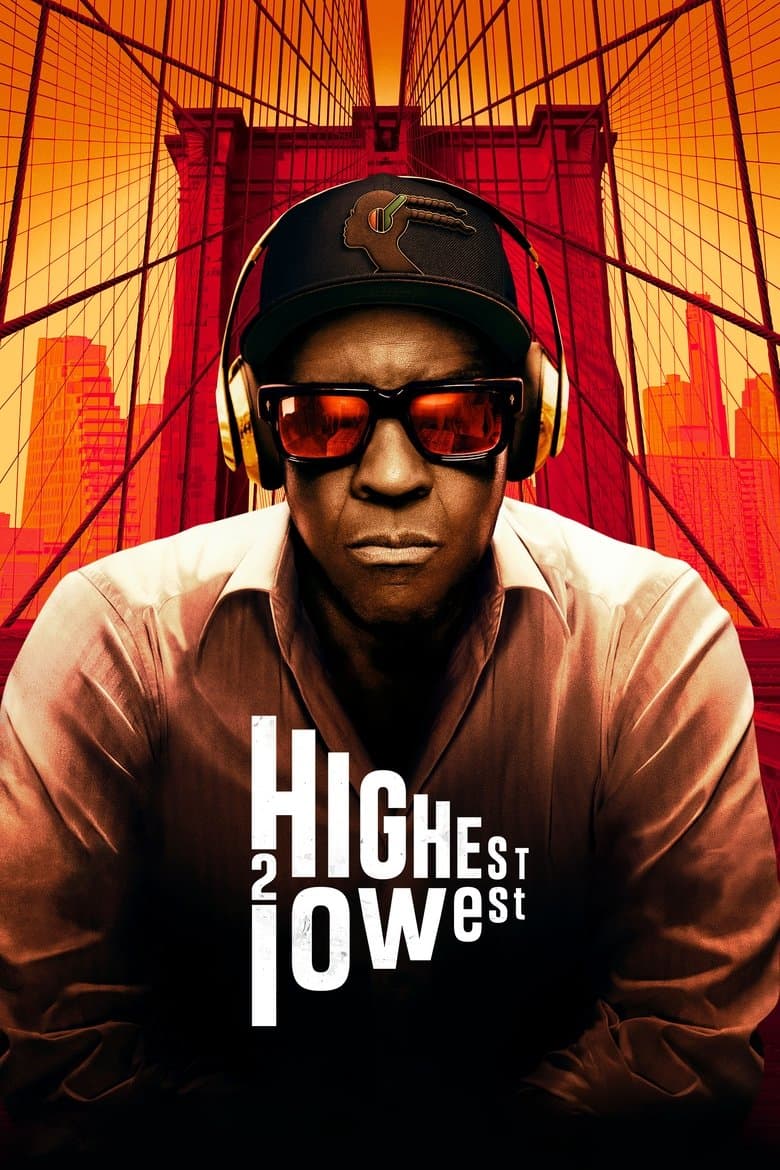
David King is a famous New York record boss who wants to buy back control of the label he built. A kidnapper takes the wrong boy and holds the son of David’s longtime driver, Paul, for a $17.5 million ransom. David must choose between protecting the boy and saving the money he needs to keep his business. The film moves from rich homes and offices to trains, streets, and a Puerto Rican parade, and it mixes crime tension with loud music, family drama, and sharp humor.
The film puts Black music, black family life, and Black New York culture at the center of its story. David’s struggle to protect an archive of black music gives the crime plot a strong identity and culture focus. The story also shows police treating Paul, a former prisoner, with more suspicion than David, which adds a clear class and race conflict. A Kamala Harris poster appears in David’s son’s room, but the movie does not build a full political speech around it. The ending favors jazz, gospel, family, and a small record label over rap fame, online attention, and corporate control.
Community feedback
Was our 54% Woke rating accurate?
Breakdown
These are the editorial factors and ratings behind our score for Highest 2 Lowest.
Woke representation / casting
The main cast is mostly Black, including David, Paul, their families, and the rapper Yung Felon. The film makes Black music and Black New York culture a main part of the screen world. That focus fits a modern New York record business story, so it is not a strong mismatch with the setting. The cast also includes Puerto Rican community scenes and varied police roles, which keeps it from looking like a simple one-of-each lineup.
32%
Woke political dialogue
Not present. The film has no recurring speeches about elections, identity politics, or activist causes. The Kamala Harris poster is a visual detail, not a political conversation.
0%
Identity-driven story themes
The film makes Black music and black cultural ownership central to David’s reason for saving his label. David is shown as a wealthy black leader whose value comes from protecting a music tradition and helping new talent. The plot also contrasts his world with a younger rapper driven by attention, fame, and online numbers. These themes run through the label fight, the kidnapping, and the ending, but family, crime, and art remain equally important.
38%
Western institutional / cultural critique
The film shows police treating Paul, a former prisoner, with more suspicion than David, even though both men are involved in the case. The detectives protect David’s family while they treat Paul’s past as proof that he is dangerous. The story also shows a holding company threatening to strip a music label for profit. These ideas recur during the ransom and hunt, but the movie does not turn them into a broad attack on family, religion, or Western society.
34%
Woke character or canon changes
The 1963 story’s Japanese company leader becomes a black American music mogul in modern New York. The business changes from a shoe company to a record label, and the kidnapper becomes a rapper who wants a record deal. These changes make Black music and black cultural history part of the central conflict. The film presents them as Spike Lee’s cultural version of the story, so the change is important but limited to this adaptation.
30%
Anti-woke backlash and complaints
A few small X accounts called the film woke, DEI, all black, or anti-white. Some viewers also complained about the Kamala Harris poster, and conservative critic Armond White criticized its race and politics clichés. The separate X pass found almost no engagement and no sustained boycott or review-bombing drive. Mike Adams, a larger right-leaning account, said the film was not woke at all.
15%
Creator track record context
Spike Lee has a strong stored record of films and public comments about race, black identity, police, and politics. That record fits the film’s focus on Black music, cultural ownership, and unequal treatment by police. Kim Taylor-Coleman has a moderate stored record linked to diverse casting. The stored scores for the writers and most producers are low or mild, so the strongest creator signal comes from Lee.
65%
Production
Movie · 2021
Deputy Sheriff Joe "Deke" Deacon joins forces with Sgt. Jim Baxter to search for a serial killer who's terrorizing Los Angeles.
Movie · 2021
An ambitious carnival man with a talent for manipulating people with a few well-chosen words hooks up with a female psychologist who is even more dangerous than he is.
Movie · 2019
A young agent is tasked with investigating a tangled web of corruption and fraud in New York.
Movie · 2021
Three stories about the world of opioids collide: a drug trafficker arranges a multi-cartel Fentanyl smuggling operation between Canada and the U.S., an architect recovering from…

Movie · 2025
Struggling single father Jerry indoctrinates his son Joe into the sovereign citizen movement, teaching him that laws are mere illusions and freedom is something you take.
Movie · 2021
William Tell just wants to play cards. His spartan existence on the casino trail is shattered when he is approached by Cirk, a vulnerable and angry young man seeking help to…
Movie · 2021
Based on true events, "Nitram" lives with his parents in suburban Australia in the mid-90s. He lives a life of isolation and frustration at never fitting in.

Movie · 2016
Alex, an immigrant from Ukraine comes to Canada and becomes involved with an online criminal organization called Darkweb.
