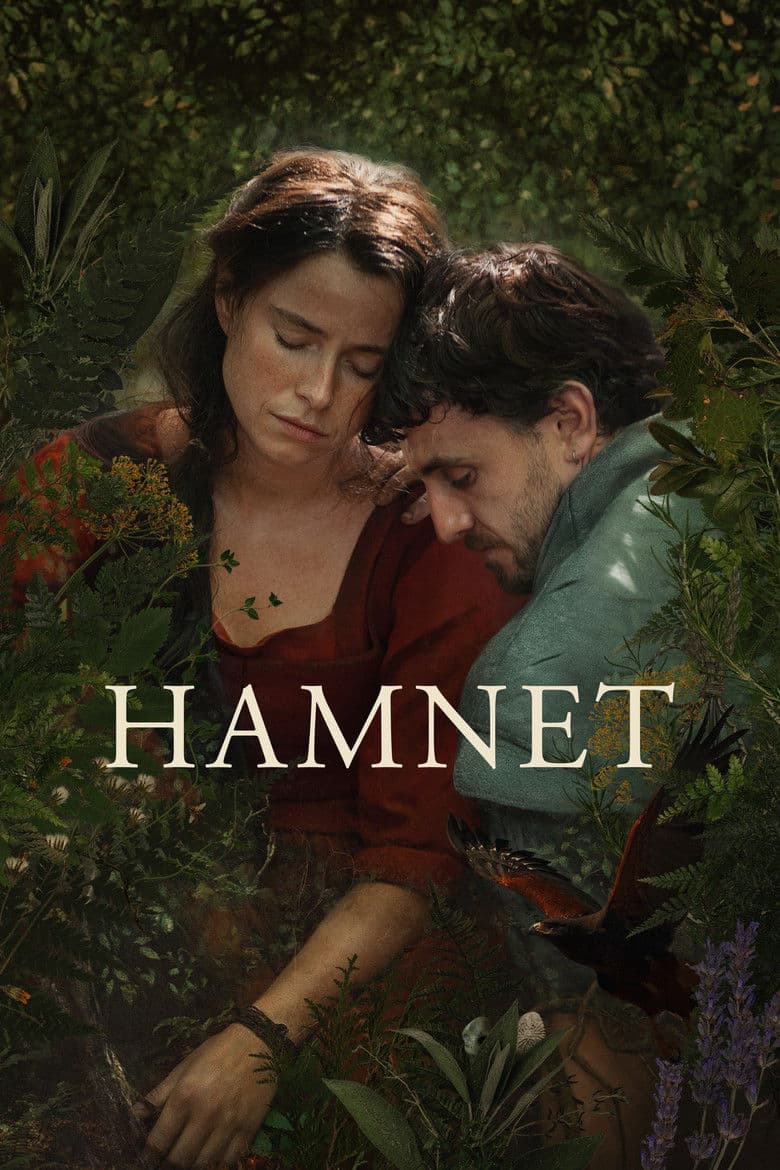
Hamnet is a historical drama about the marriage of William Shakespeare and his wife, Agnes. When their young son dies of the plague, the couple must deal with their deep sadness, which eventually inspires Shakespeare's famous play. The movie features clear feminist themes by focusing on Agnes as an independent, free-spirited herbalist who manages the home alone. This girl-power angle and her resistance to traditional town norms are highly visible to viewers.
Community feedback
Was our 43% Woke rating accurate?
Breakdown
These are the editorial factors and ratings behind our score for Hamnet.
Woke representation / casting
The film does not use identity-driven or quota-style casting. The actors playing the historical roles match the setting of 16th-century England. Jessie Buckley and Paul Mescal lead a traditional, historically accurate cast. There are no noticeable race or gender swaps in the main roles.
0%
Woke political dialogue
The characters speak in a way that matches their historical period. The dialogue focuses on themes of family, love, and grief. There are no modern progressive speeches or social-justice buzzwords. The script stays focused on the personal drama.
0%
Identity-driven story themes
The movie has a noticeable feminist theme. It tells the story of Shakespeare's wife, Agnes, rather than focusing on his writing. It shows her as a strong, free-spirited herbalist who has to run the household on her own. This girl-power angle makes her look superior to other traditional women of her time. Viewers who want a standard historical movie will notice these feminist revisionist ideas.
35%
Western institutional / cultural critique
The story shows some mild criticism of traditional roles. Agnes must carry a double burden at home while her husband works in London. Her nature-focused herbalism is also shown as better than the strict rules of the local church and her stepmother. Still, the film does not push a harsh critique of Western culture. It ultimately shows a deep belief in marriage, family, and parental love.
28%
Woke character or canon changes
The film is based on a novel that makes big changes to the real Anne Hathaway. It portrays her as a mystical, independent woman who does things her own way. While this is a feminist reimagining of history, it is a common way to write historical fiction. It does not feel like a forced, modern identity swap.
20%
Anti-woke backlash and complaints
Some conservative and traditional critics complained about the movie's feminist angle. They argued that the story focused too much on girl-power tropes. They felt that William Shakespeare was sidelined and treated as a simple supporting character to make his wife look better. Other complaints called the character of Agnes a modern archetype that does not fit the historical era.
35%
Creator track record context
The creators have a mixed track record. Author and co-writer Maggie O'Farrell is a self-identified feminist who focuses on gender struggles. Producer Liza Marshall often works on identity-driven films. However, director Chloé Zhao and producers like Steven Spielberg and Sam Mendes usually make human stories without strong political messages.
33%
Production
Movie · 2017
Addie Moore and Louis Waters, a widow and widower, have lived next to each other for years. The pair have almost no relationship, but that all changes when Addie tries to make a…
Movie · 2023
After decades apart, childhood friends Nora and Hae Sung are reunited in New York for one fateful weekend as they confront notions of destiny, love, and the choices that make a…

Movie · 2025
18-year-old Noah moves from America to London, with her mother who's recently fallen in love with William, a wealthy British businessman.

Movie · 2016
Canadian folk artist Maud Lewis falls in love with a fishmonger while working for him as a live-in housekeeper.
Movie · 2017
The story of four characters whose lives intertwine amid the hustle and bustle of the Coney Island amusement park in the 1950s: Ginny, an emotionally volatile former actress now…

Movie · 2020
When illness strikes two people who are polar opposites, life and death bring them together in surprising ways.
Movie · 2022
A young couple's relationship clashes with the harsh realities of the California Gold Rush of 1850. Angel, experiencing love for the first time and facing demons unsurmountable…
Movie · 2020
It was a chance meeting started by one of Sol’s friends trying to chat up Jennifer. However, in the end, it was those two who hit it off.
