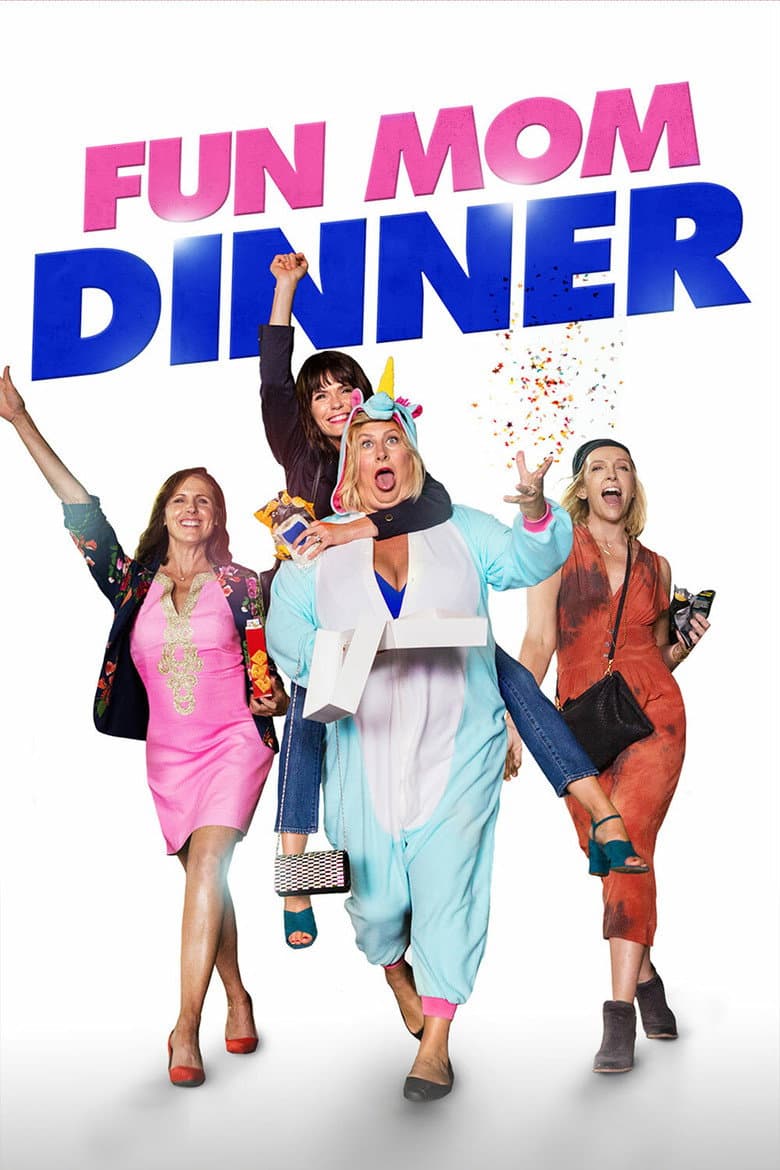
Fun Mom Dinner follows Emily, a former lawyer who now stays home with her young children in suburban Los Angeles. She joins her old friend Kate, divorced Jamie, and strict school volunteer Melanie for one night away from their children and husbands. The dinner turns into a messy trip through a restaurant, a drug store, a weed shop, and a bar after the women drink, smoke, sing, and argue. The comedy is crude and warm, and it ends with the friends facing their marriages, loneliness, and tired lives.
The film keeps its focus on women who feel trapped by the idea that motherhood should be their whole identity. Emily objects when her husband calls caring for their own children babysitting, and the men struggle when they must handle the children themselves. The women talk about wanting work, friendship, romance, and time alone, while the story presents female friendship as the main way they recover themselves. These ideas are central to the comedy and its emotional ending, but the film uses personal jokes and relationship problems instead of long political speeches or wider claims about society.
Community feedback
Was our 52% Woke rating accurate?
Breakdown
These are the editorial factors and ratings behind our score for Fun Mom Dinner.
Woke representation / casting
Four women hold the main roles, which fits a story about four mothers. The film and its marketing also make the four female leads and mostly female team part of its identity. Interviews call this setup rare and important for women in film. The casting does not use race, queer identity, or a one-of-each group as a selling point.
40%
Woke political dialogue
Emily tells Tom that caring for his own children is parenting, not babysitting. The women talk about being more than wives or mothers and about needing time for themselves. The script returns to unfair family duties and pressure on women during several scenes. The film keeps these points inside jokes and marriage problems instead of turning them into a long political speech.
38%
Identity-driven story themes
The main story follows four women who feel that motherhood has pushed aside their older selves. Emily faces a cold marriage and has left her former career behind, while Jamie faces divorce and dating again. The women use friendship and a wild night out to recover freedom and a sense of self. The ending says that a woman can love her children and still need a life beyond being a mother.
55%
Western institutional / cultural critique
The movie treats the old idea that mothers should handle the home as unfair. Emily calls out Tom for calling child care babysitting, and the dads struggle when left with the children. The story also jokes about male cluelessness and the pressure placed on wives. It does not attack religion, capitalism, schools, or other Western institutions, so the critique stays personal and mild.
38%
Woke character or canon changes
Not relevant. The film is an original story about four suburban mothers. It does not change an established character, source story, or real event.
0%
Anti-woke backlash and complaints
Not present. Reviews and audience posts focus on weak jokes, predictability, language, and the gender divide between the parents. No clear complaint says the film pushes woke, DEI, identity politics, or activist ideas.
0%
Creator track record context
Cached profiles give the director, writer, and main producers low or moderate woke scores. Those profiles show no major activist or DEI campaign by the main creative team. Julie Rudd’s title statements strongly focus on mothers, female friendship, and a mostly female creative team. The casting director has discussed diversity in professional panels, but no wider political pattern is tied to this film.
26%
Production
Movie · 2016
A comedy that follows a group of friends as they navigate their way through the freedoms and responsibilities of unsupervised adulthood.
Movie · 2024
Inseparable best friends AJ and Moose decide to run the local pool's snack shack after their plan to sell home-brewed beer goes down the drain.
Movie · 2018
Adam Sandler takes his comical musical musings back out on the road, from comedy clubs to concert halls to one very unsuspecting subway station.
Movie · 2022
Exploring every facet of ‘Weird Al’ Yankovic’s life, from his meteoric rise to fame with early hits like ‘Eat It’ and ‘Like a Surgeon’ to his torrid celebrity love affairs and…
Movie · 2023
A chaotic intervention. An action-packed stay in rehab. After a weird couple of years, John Mulaney comes out swinging in his return to the stage.
Movie · 2023
From his onstage tackle to the slap heard round the world, Dave Chappelle lets loose in this freewheeling and unfiltered stand-up comedy special.
Movie · 2023
Single mom Flora is at a loss about what to do with her rebellious teenage son, Max. Her efforts to keep him out of trouble lead to a beat-up acoustic guitar, a washed-up LA…
Movie · 2020
Scott has been a case of arrested development ever since his firefighter father died when he was seven. He's now reached his mid-20s having achieved little, chasing a dream of…
