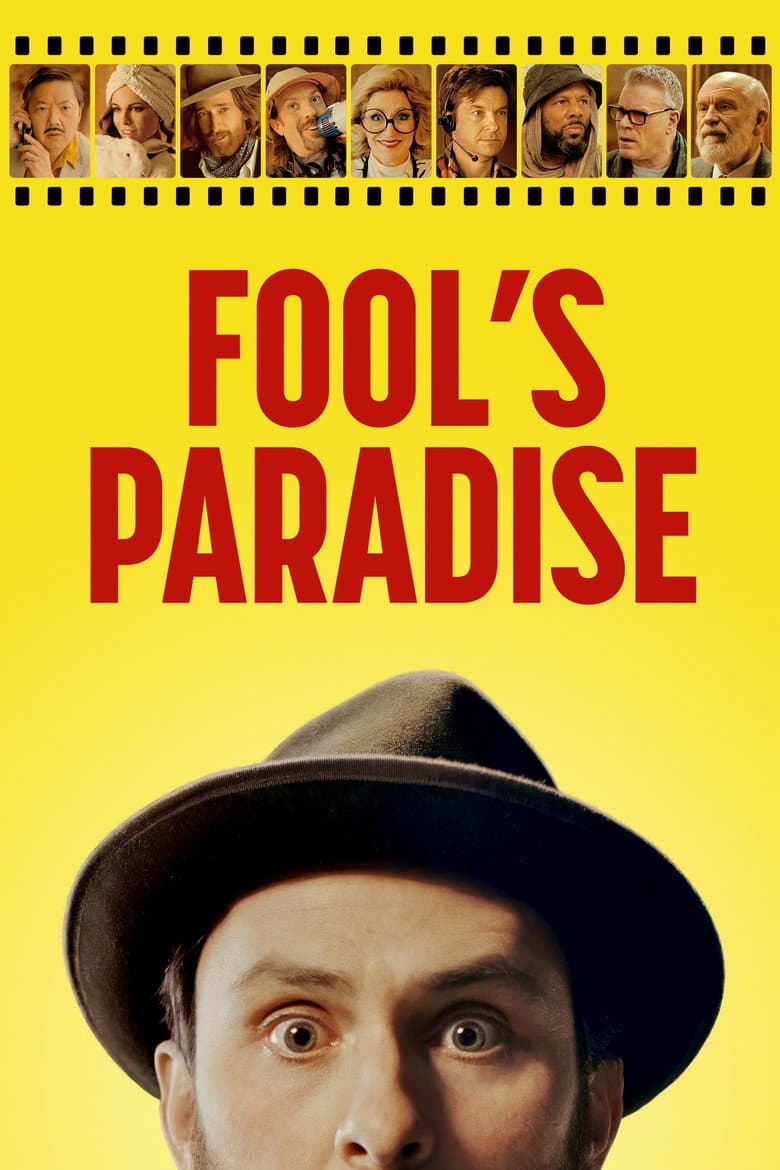
Fool's Paradise follows a silent man who leaves a mental health hospital and wanders into Hollywood. A struggling publicist named Lenny mistakes him for a movie star's double and turns him into Latte Pronto. Producers, actors, and agents praise his blank stare, so the new star rises without skill or a clear voice. The bright, rude comedy then follows fame, betrayal, marriage, money, and the search for real friendship.
Fame becomes the film's main trap, because the business rewards luck, looks, and shameless promotion. A late subplot gives Latte an anti-big-business political platform before wealthy oil men threaten him. Hollywood workers from different backgrounds fill the story, but their jobs and personal choices matter more than identity. Producers and stars treat Latte as a product, while Lenny mistakes success for friendship. The film ends by valuing human connection over public fame and uses mental illness for rough comedy.
Community feedback
Was our 22% Woke rating accurate?
Breakdown
These are the editorial factors and ratings behind our score for Fool's Paradise.
Woke representation / casting
Not present. The film uses a mixed cast in a modern Los Angeles setting, where such casting is ordinary. The story does not frame the cast as a diversity message or make identity the point of its main roles.
0%
Woke political dialogue
The mayor's team says Pronto should run on a platform that frees America from corporate control. The campaign calls him an anti-big-business candidate, and a rich oil businessman warns him against opposing business interests. Christiana also says tender men are hard to find, and Lenny complains about macho behavior. The political material appears mainly in a short late section rather than across the film.
28%
Identity-driven story themes
Not present. The central story concerns fame, mental health, exploitation, and friendship. It does not make race, gender, sexuality, or activist identity the main lesson.
0%
Western institutional / cultural critique
The final section presents big business as a threat to a public campaign. The movie also shows a state mental hospital with too few resources and a Hollywood system that treats people as products. Those scenes give it a brief modern critique of powerful institutions. Most of the film instead mocks celebrity vanity and greed, so this message stays mild.
18%
Woke character or canon changes
Not relevant. The title is an original story, not an adaptation of a known character or real event. The rewrite from El Tonto changed the film's focus but did not change an existing character's identity.
0%
Anti-woke backlash and complaints
Not present. X research found no movie-specific anti-woke reaction. Other public discussion focused on comedy quality, mental health jokes, the late political subplot, and production history.
0%
Creator track record context
Charlie Day has a largely apolitical record and is known for edgy comedy. The cached producer profiles show little record of DEI or identity-first work. Nicole Abellera Hallman has taken part in talks about inclusive casting, but that is a limited background signal. Film interviews focused on Hollywood satire, friendship, and the creative process.
13%
Production
Movie · 2018
Adam Sandler takes his comical musical musings back out on the road, from comedy clubs to concert halls to one very unsuspecting subway station.
Movie · 2023
A chaotic intervention. An action-packed stay in rehab. After a weird couple of years, John Mulaney comes out swinging in his return to the stage.
Movie · 2024
Inseparable best friends AJ and Moose decide to run the local pool's snack shack after their plan to sell home-brewed beer goes down the drain.
Movie · 2023
From his onstage tackle to the slap heard round the world, Dave Chappelle lets loose in this freewheeling and unfiltered stand-up comedy special.
Movie · 2022
Exploring every facet of ‘Weird Al’ Yankovic’s life, from his meteoric rise to fame with early hits like ‘Eat It’ and ‘Like a Surgeon’ to his torrid celebrity love affairs and…
Movie · 2016
A comedy that follows a group of friends as they navigate their way through the freedoms and responsibilities of unsupervised adulthood.

Movie · 2024
Mismatched cousins David and Benji reunite for a tour through Poland to honor their beloved grandmother. The adventure takes a turn when the pair's old tensions resurface against…
Movie · 2023
After it's discovered that a teacher at South Park Elementary has an OnlyFans page, Randy is compelled to take a closer look at the seedy underbelly of the world of online…
