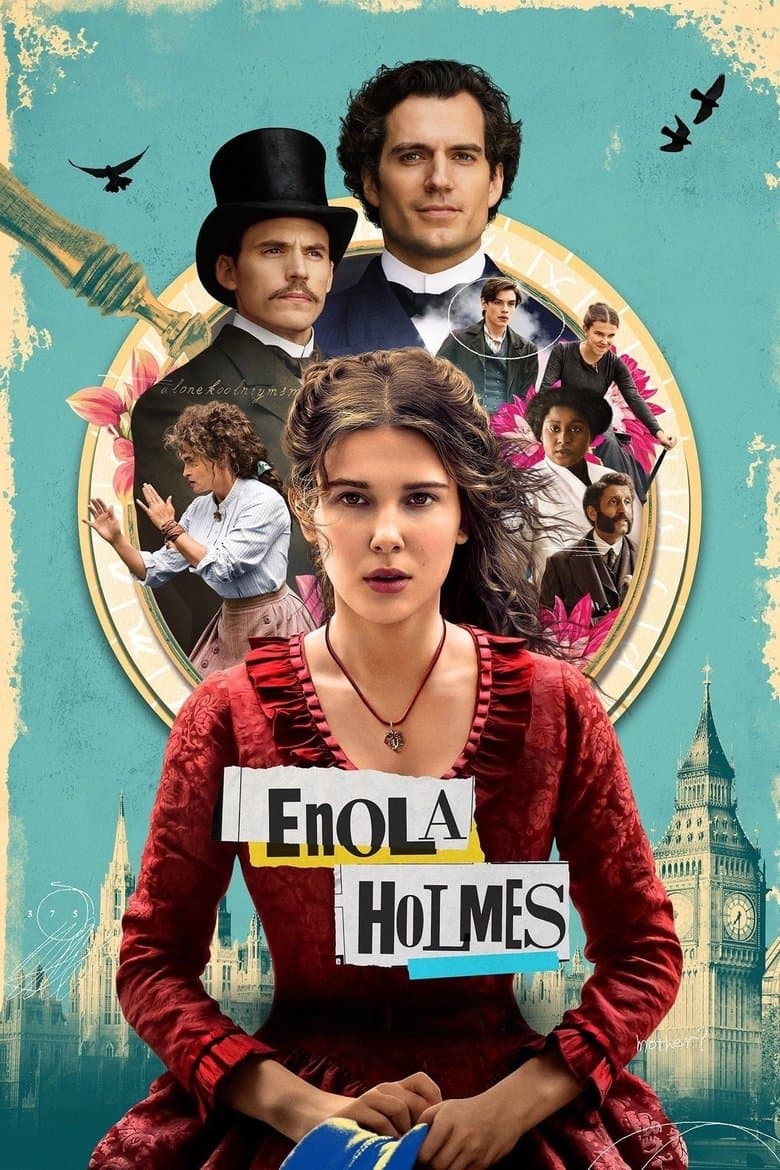
Enola Holmes is a smart teenage girl in late 1800s England. She is the younger sister of the famous detective Sherlock Holmes. When her mother vanishes, Enola runs away from her brothers and follows secret clues. Along the way she helps a young lord who is being hunted, and she tries to solve the mystery herself. The movie is a light adventure-mystery with jokes, fights, and a bold girl lead.
The film’s main message is girl power and women’s freedom. Enola was raised to think for herself, fight, and reject “proper lady” rules. Her mother is tied to a women’s rights group, and the big political plot is about a reform bill and votes. Enola talks to the camera about corsets, schools for girls, and not letting men control her life. She often outsmarts her famous brothers. A black woman runs a secret fight class for women, and a South Asian actor plays Inspector Lestrade. A normal viewer will clearly notice the feminism and “women can do anything” story. It is not mainly about race or queer identity, but the gender and rights themes sit at the center of the plot and marketing.
Community feedback
Was our 84% Woke rating accurate?
Breakdown
These are the editorial factors and ratings behind our score for Enola Holmes.
Woke representation / casting
Supporting roles show clear diversity choices in a Victorian setting: a black woman as Edith, the fight teacher and suffrage ally, and a South Asian actor as Lestrade. Leads are not race-swapped. The pattern is visible but not the whole cast, so weight is moderate.
38%
Woke political dialogue
Enola often speaks straight to viewers about freedom, schools for girls, and corsets as forced limits. Brothers argue over controlling her life. Mother’s group and reform-bill talk keep rights language on screen. Not constant modern DEI jargon, but feminist lines are easy to hear.
58%
Identity-driven story themes
Girl independence and women’s rights are the heart of the movie, not a side note. Enola rejects “proper” woman training, her mother joins militant suffrage work, and Enola saves the progressive young lord whose vote matters. Male power is often shown as wrong or weak next to her. Viewers cannot miss the feminist arc.
68%
Western institutional / cultural critique
The film targets Victorian male control, finishing schools, and strict gender rules as unfair. A hardline traditionalist grandmother is the killer who wants to stop reform. Classic male authority looks limited or silly beside Enola. It is mainly anti-patriarchy framing, not a broad attack on faith or all Western life.
52%
Woke character or canon changes
Enola is a new sister invented for feminist YA books, then filmed so she can outdo Sherlock’s world. Lestrade is race-cast differently from the usual white inspector image. Sherlock is slightly warmer, but that change is more adaptation than DEI. Changes matter most as a gender reframe of the Holmes brand.
48%
Anti-woke backlash and complaints
Some viewers and online voices call it woke, anti-male, Mary Sue, or feminist propaganda. Corset-line pushback and “too feminist” takes appear. There was no giant mainstream boycott storm for this first film; complaints stay real but limited next to the hit reception.
35%
Creator track record context
Writer Jack Thorne scores high on inclusion activism. Book author Nancy Springer and star-producer Millie Bobby Brown add clear feminist and progressive signals. Director Bradbeer and most producers sit lower. Team context supports a progressive girl-power title more than pure neutral craft.
42%
Production

Movie · 2016
Industrious high school senior Vee Delmonico has had it with living life on the sidelines. When pressured by friends to join the popular online game Nerve, Vee decides to sign up…
Movie · 2023
Celebrated sleuth Hercule Poirot, now retired and living in self-imposed exile in Venice, reluctantly attends a Halloween séance at a decaying, haunted palazzo.
Movie · 2025
A treasure-hunting mastermind assembles a team for a life-changing adventure. But to outwit and outrun threats at every turn, he'll need someone even smarter than he is: his…
Movie · 2016
Clavius, a powerful Roman military tribune, and his aide, Lucius, are tasked with solving the mystery of what happened to Jesus in the weeks following the crucifixion, in order to…
Movie · 2023
After starting their own detective agency, Nick and Audrey Spitz land a career-making case when their billionaire pal is kidnapped from his wedding.
Movie · 2017
In a locked down train station, a homicide detective conducts an interview with a tormented monkey who is suspected of murder.

Movie · 2020
Hired to steal a rare painting from one of the most enigmatic painters of all time, an ambitious art dealer becomes consumed by his own greed and insecurity as the operation spins…

Movie · 2016
Beatrice Prior and Tobias Eaton venture into the world outside of the fence and are taken into protective custody by a mysterious agency known as the Bureau of Genetic Welfare.
