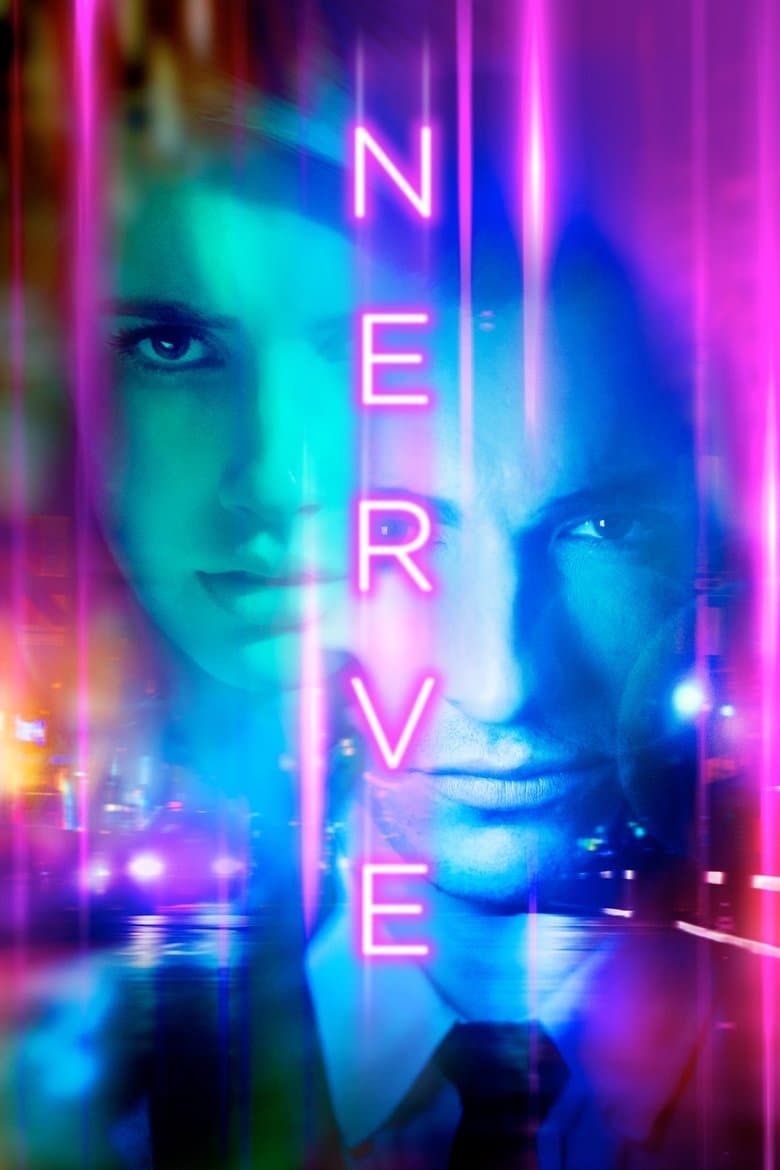
Nerve is a teen techno-thriller about a shy high school girl who joins a risky social media dare game. Players take public challenges for cash while anonymous watchers pay and vote on what happens next. The plot follows Vee as she pairs with a bold partner and faces growing danger from the app and the online crowd. Themes of privacy, internet fame, and mob pressure drive the tension. The movie stays centered on thrills, a mainstream romance, and the cost of chasing online attention.
Woke material on screen is mild and mostly secondary. The friend circle around the white heroine looks multi-ethnic in a modern New York high school setting, which fits the location more than an identity-first casting plan. A short supporting part shows a skilled black female hacker, and that is a light signal rather than the core of the film. Vee also has a light young-adult empowerment path as she takes bigger risks and later refuses a deadly final dare. The main story is still about the dare app and online voyeurism, not race politics, gender ideology, or activist identity themes.
Community feedback
Was our 17% Woke rating accurate?
Breakdown
These are the editorial factors and ratings behind our score for Nerve.
Woke representation / casting
The film is set in a modern New York high school with a multi-ethnic friend group around a white heroine. That mix fits the city setting more than an identity-first cast. The leads are mainstream white stars. A short bit for a skilled black female hacker is only a mild signal.
12%
Woke political dialogue
Not present. No identity-politics, DEI, race, gender-activism, or queer-rights dialogue appears as part of the story’s speech or messaging.
0%
Identity-driven story themes
The main story is a social media dare thriller about privacy, fame, and online crowds. Vee has a light young-adult path from shy risk-taker to someone who refuses a deadly final dare. That empowerment thread is present but thin. The plot is not built around race, gender ideology, or queer activist themes.
18%
Western institutional / cultural critique
The film warns about unaccountable social apps and anonymous watchers who pay to control the game. That is a tech-culture caution about voyeurism and online mobs. It does not attack patriarchy, whiteness, Christianity, traditional family, or Western political institutions as such.
8%
Woke character or canon changes
Not relevant. Book-to-film shifts are ordinary adaptation choices, not identity or DEI rewrites of characters or history.
0%
Anti-woke backlash and complaints
Not present. No meaningful anti-woke, anti-DEI, or agenda backlash turned up in news, reviews, or social search.
0%
Creator track record context
Most of the team scores low for activist work, including the directors known for Catfish-style tech thrillers and the novel author. Screenwriter Jessica Sharzer has credits that center LGBTQ and identity material, which lifts the team average. That context does not make Nerve itself a queer or activist project. The directors’ feminist framing of Vee’s arc on this title is a one-off note, not a career pattern of DEI work.
18%
Production
Movie · 2018
A serial killer is murdering school girls, and a newbie cop has to track him down before the victim count increases.
Movie · 2018
When an international border dispute arises between the U.S. and Canada, the Super Troopers- Mac, Thorny, Foster, Rabbit and Farva, are called in to set up a new Highway Patrol…
Movie · 2016
Clavius, a powerful Roman military tribune, and his aide, Lucius, are tasked with solving the mystery of what happened to Jesus in the weeks following the crucifixion, in order to…

Movie · 2018
Max and Annie's weekly game night gets kicked up a notch when Max's brother Brooks arranges a murder mystery party -- complete with fake thugs and federal agents.
Movie · 2017
In a locked down train station, a homicide detective conducts an interview with a tormented monkey who is suspected of murder.
Movie · 2018
A series of mysterious events changes the life of a blind pianist who now must report a crime that was actually never witnessed by him.
Movie · 2016
Los Reyes County, Arizona. Leland, a retired lawman, works with Wallace, the new sheriff who replaces him, when a vicious hit man, sent by a Mexican drug cartel, threatens their…

Movie · 2024
FBI Agent Lee Harker is a gifted new recruit assigned to the unsolved case of an elusive serial killer. As the case takes complex turns, unearthing evidence of the occult, Harker…
