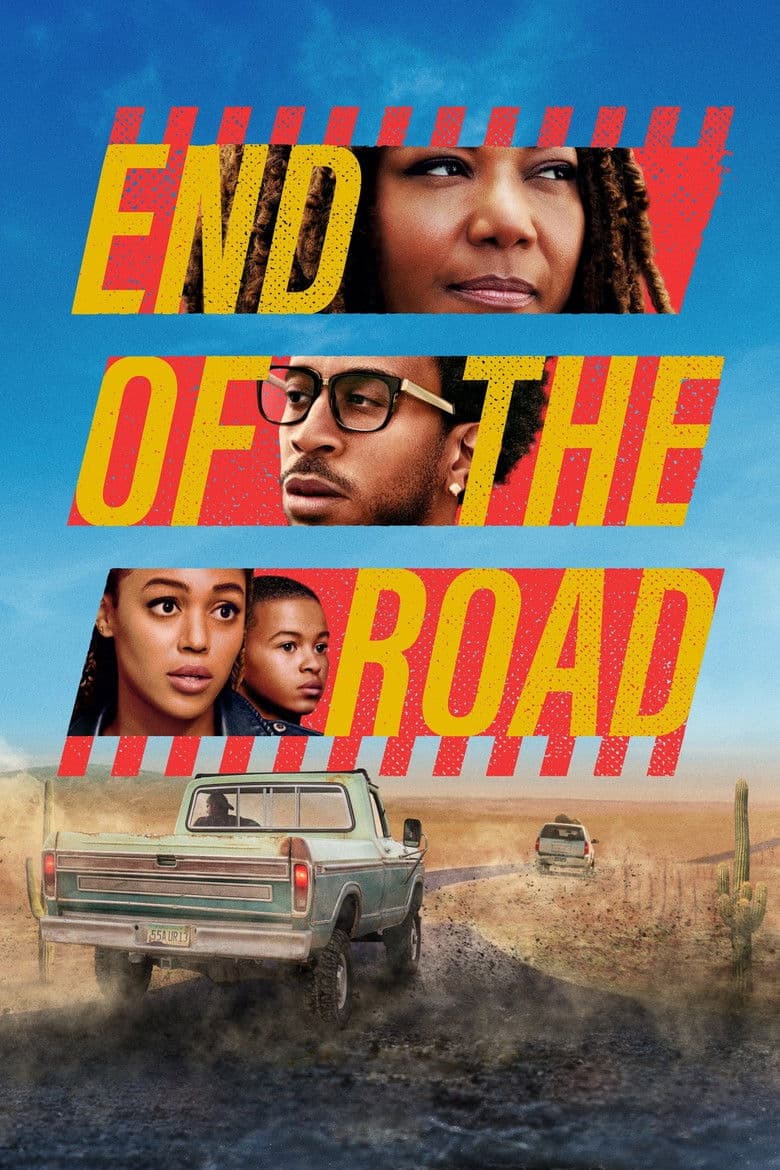
Brenda Freeman is a recently widowed mother who has lost her Los Angeles home after paying for her husband’s cancer care. She drives with her teenage daughter Kelly, young son Cam, and unreliable brother Reggie toward Houston, where they hope to start again with family. A dead man and a stolen bag of drug money turn the trip into a chase through the New Mexico desert. Brenda must protect the children from criminals, armed locals, and a hidden killer while the family struggles with grief, money, and fear. The film mixes family drama, dark jokes, and violent thriller action.
Race is a visible part of the danger because the black family meets racist white men, a racist group, and a white police captain who becomes the main villain. The movie shows Brenda forced to apologize for the safety of her family, then lets her fight back and make her own rules. Brenda is the smart, brave leader, while Reggie is often the foolish man who causes trouble and needs her help. Several lines directly mention black identity, white lives, human rights, and the family’s fear of traveling through racist places. The story therefore puts modern racism and black female strength near the center, even though the stolen-money chase remains the main plot.
Community feedback
Was our 73% Woke rating accurate?
Breakdown
These are the editorial factors and ratings behind our score for End of the Road.
Woke representation / casting
The movie centers a black family, with Queen Latifah, Ludacris, and the two children in the main roles. Shelton and the marketing openly present the film as a story about a black family traveling through places where racism may appear. Brenda is the main fighter and leader, while the black male adult is mostly a comic helper. The family casting fits the story, so the score comes from the repeated identity framing and gender pattern rather than a forced mismatch.
52%
Woke political dialogue
The movie has several direct identity lines during the road trip. Characters ask if black people live in Houston, say their black identity makes them the next best choice, and force a sarcastic apology centered on white lives. Brenda calls the attackers mean white boys and jokes about basic human rights during a body search. These lines appear in more than one part of the movie, but they support the racial danger instead of stopping the plot for a long speech.
50%
Identity-driven story themes
The movie makes racial danger part of the main road trip. White men harass Kelly, a racist group attacks the family, and a white state trooper becomes the hidden villain. Brenda repeatedly saves everyone, while Reggie is the foolish male helper who creates trouble and needs her direction. The story ties trust, safety, and family survival to the Black experience in modern America.
63%
Western institutional / cultural critique
The movie presents roadside white locals as racist threats and the police captain as a corrupt killer. The family avoids calling for help because they do not trust the system, and the desert is shown as a place where normal protection fails. Reggie’s selfish behavior also makes the adult man the weak link, while Brenda becomes the family’s real authority. This creates a clear critique of racism, law enforcement, and the idea that men should be the protectors, but the film keeps it inside a thriller plot.
50%
Woke character or canon changes
Not relevant. The movie is an original story about a modern family and does not change an established character, source, or historical event.
0%
Anti-woke backlash and complaints
Reddit users called the movie too woke and complained that it makes nearly every white character evil. Other comments objected to the racial dialogue and called Netflix politically correct. The supplied X pass found one small account calling the movie racist, with no larger account, boycott effort, or repeated woke or DEI campaign. The reaction was real but small and scattered.
34%
Creator track record context
Millicent Shelton has a supplied score of 46/100 and a history of inclusion and diversity work. Christopher J. Moore has a supplied score of 38/100 and has spoken about putting black characters at the center of stories. Queen Latifah has a supplied score of 51/100 and often supports strong black women and LGBTQ causes. Shelton also said this film was meant to show a black family facing racism, so the creator context matches the film, while most other supplied producer scores are low or mild.
47%
Production
Movie · 2023
In 1988, American video game salesman Henk Rogers discovers the video game Tetris. When he sets out to bring the game to the world, he enters a dangerous web of lies and…
Movie · 2016
When Krisha returns to her estranged family for Thanksgiving dinner, past demons threaten to ruin the festivities.
Movie · 2018
Two lifelong friends head up to an isolated Scottish Highlands village for a weekend hunting trip that descends into a never-ending nightmare as they attempt to cover up a…
Movie · 2024
During the 1972 Munich Olympics, an American sports broadcasting crew finds itself thrust into covering the hostage crisis involving Israeli athletes.
Movie · 2025
Marty Mauser, a young man with a dream no one respects, goes to hell and back in pursuit of greatness.
Movie · 2021
A head chef balances multiple personal and professional crises at a popular restaurant in London.
Movie · 2018
A logger defends his family from a group of dangerous drug runners.
Movie · 2022
After escaping a Michigan prison, a charming career criminal assumes a new identity in Canada and goes on to rob a record 59 banks and jewellery stores while being hunted by a…
