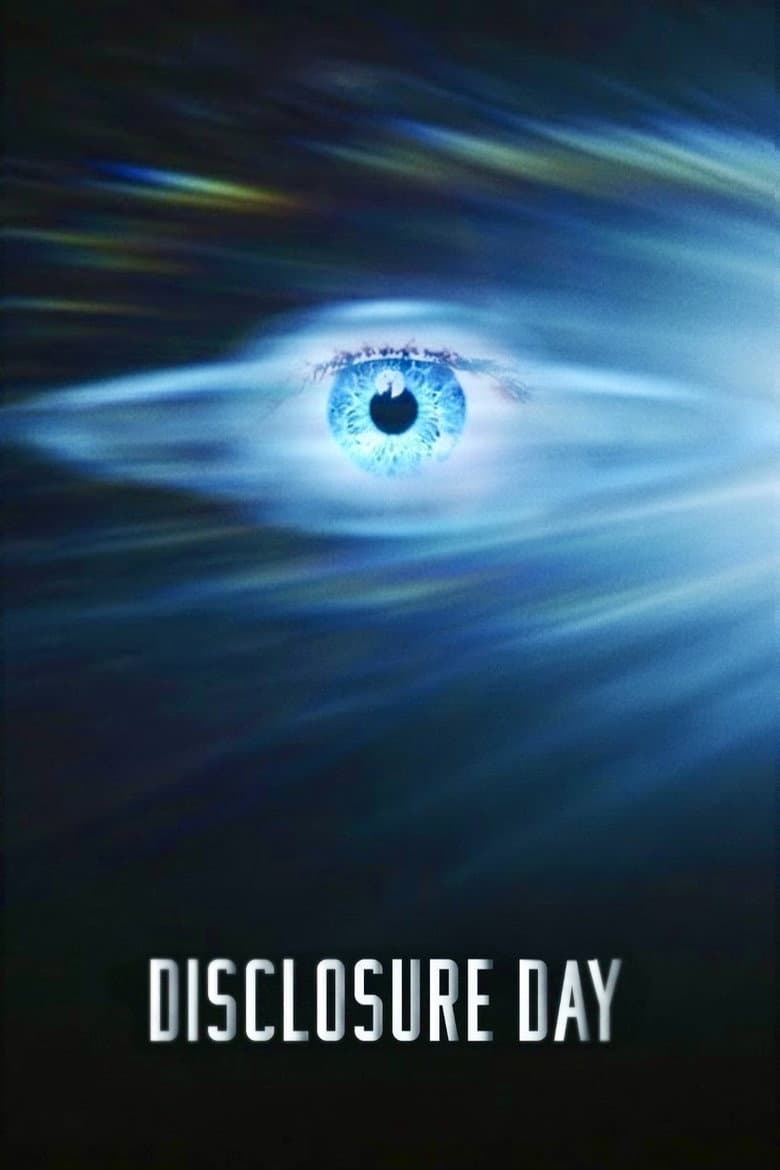
Disclosure Day follows Margaret Fairchild, a Kansas City television weather reporter whose strange meeting with a red cardinal unlocks hidden powers. She joins Daniel Kellner, a former cybersecurity worker who stole proof that the government and Wardex have hidden alien contact for decades. Wardex chases them while Hugo Wakefield helps them reach a television station and share the evidence with the world. The film mixes fast escapes, fear, wonder, religious questions, and a hopeful call to face the unknown.
The film's clearest woke-leaning material is its repeated lesson that empathy and openness are better than fear and control. The aliens are treated as outsiders who deserve understanding, while the humans who imprisoned and studied them are shown as cruel and closed off. Margaret receives emotional insight and mind-reading powers, while Daniel receives a math-based gift, creating a visible gender-coded contrast between feeling and logic. The story also asks whether proof of alien life could change belief in God, but it does not center race, sexuality, or current identity politics.
Community feedback
Was our 26% Woke rating accurate?
Breakdown
These are the editorial factors and ratings behind our score for Disclosure Day.
Woke representation / casting
Margaret is the main heroic figure, and the film gives her emotional insight and mind-reading powers. Daniel, the main male partner, is given the math and cyber skills. The film makes this a gender-coded contrast between empathy and logic. The abilities come from the alien plot, and the film does not sell the casting as a diversity or empowerment campaign.
12%
Woke political dialogue
The film uses repeated speeches about empathy, openness, and the harm caused by fear. Hugo calls empathy humanity's main evolutionary advantage, and Margaret ends the public broadcast by telling people to listen. The film also treats public access to hidden truth as a moral duty. The message is broad and humanist, not a current race, gender, or party program.
18%
Identity-driven story themes
The film repeatedly treats the aliens as outsiders who suffer because humans fear, imprison, and control what they do not understand. Hugo says empathy is the key trait for an advanced species, and the heroes seek understanding instead of domination. Margaret's power lets her feel other people's pain and offer them personal, compassionate truths. The film links this acceptance message to a spiritual question about whether God can love life beyond Earth.
22%
Western institutional / cultural critique
Not present in this title.
0%
Woke character or canon changes
Not relevant. This is an original story with no changes to established characters, canon, source material, or real historical figures for identity or ideological reasons.
0%
Anti-woke backlash and complaints
Some conservative and Christian commentators called the film and Spielberg's interviews a Hollywood attack on Christian faith. The complaints focused on the former nun, alien worship imagery, and the question of whether God created life elsewhere. The reaction was limited, while Christian reviewers said the movie does not reject faith. Most public discussion centered on the ending, plot logic, and effects, so this backlash was real but narrow.
24%
Creator track record context
Cached context gives Spielberg a broad humanist record, support for Democratic causes, and interest in past injustice, but no strong modern DEI or identity advocacy pattern. David Koepp and the cached producers have little public activist history, apart from some historical and civil-rights work in the producing record. Spielberg's interviews frame the film around empathy, truth, and questions about God, while Koepp says religion is an important part of the story. This gives the title a mild humanist and spiritual activist signal, not a strong identity-driven creator pattern.
22%
Production
Movie · 2016
A special-ops team is dispatched to fight supernatural beings that have taken over a European city.

Movie · 2022
With the Parliament under siege, India’s first super soldier Arjun Shergill is tasked to get hold of the terrorists in time, save the Prime Minister from their clutches and stop a…

Movie · 2018
Thomas leads his group of escaped Gladers on their final and most dangerous mission yet. To save their friends, they must break into the legendary Last City, a WCKD-controlled…

Movie · 2026
In the near future, a detective stands on trial accused of murdering his wife. He has ninety minutes to prove his innocence to the advanced AI Judge he once championed, before it…
Movie · 2017
“2048: Nowhere to Run” takes place one year before the events of Blade Runner 2049. The short film focuses on Sapper, a man who is trying to make it through life day-by-day…
Movie · 2020
Armed with only one word - Tenet - and fighting for the survival of the entire world, the Protagonist journeys through a twilight world of international espionage on a mission…

Movie · 2023
When a tech blogger lands an interview with a tech guru and stops an attack on him, he finds a mysterious ring that takes him back 57 seconds into the past.

Movie · 2016
Set in a near future, technology-reliant society that pits man against killing machines. Against this backdrop an elite army unit is helicoptered to a remote, off-the-grid island…
