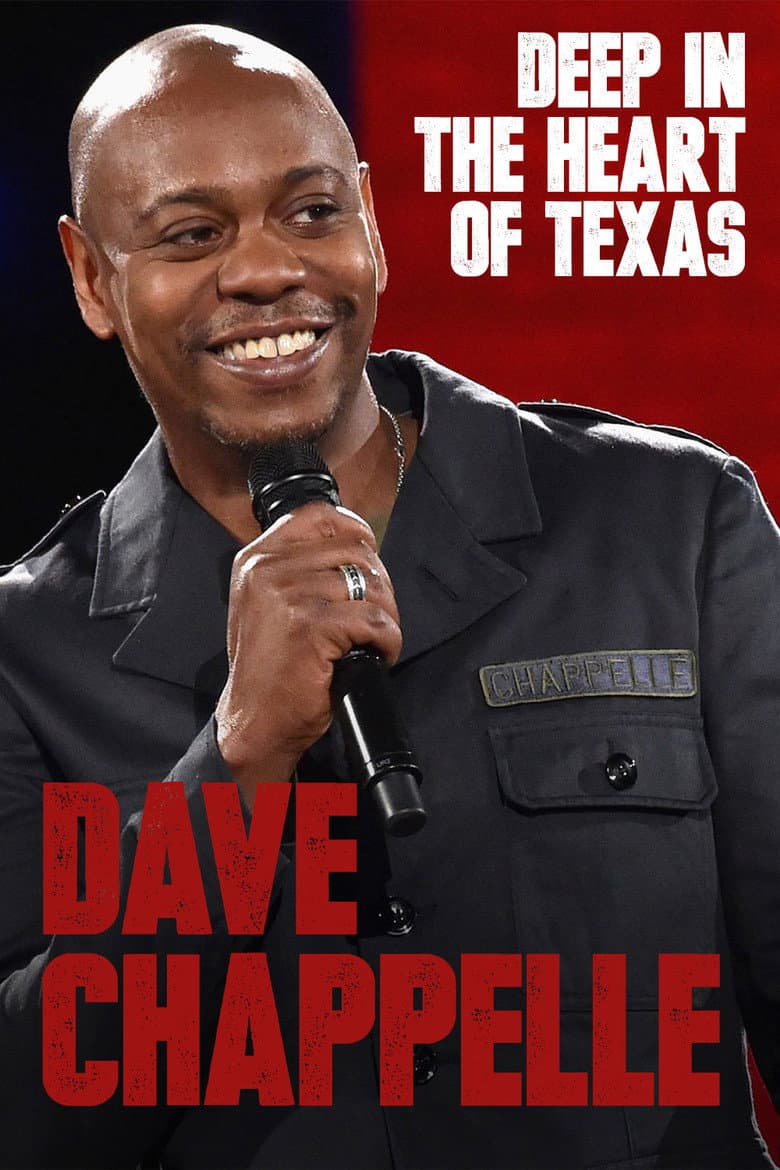
Dave Chappelle stands alone onstage at the Moody Theater in Austin, Texas, and turns an hour of stand-up into a chain of personal stories. He faces conflicts tied to racism, police encounters, fame, family life, marriage, sex, and public scandals. He moves between real memories and comic stories without a normal plot. His tone is relaxed, blunt, dirty, and often built around shock.
The strongest identity-driven material comes in a long section about a transgender woman, pronouns, gender change, and Caitlyn Jenner. Chappelle also jokes about gay marriage and compares the treatment of black people with the treatment of transgender people. He says people should be free to live as they choose, but he spends more time questioning identity language than supporting a social cause. The special uses race and sexuality as subjects for debate and shock comedy, while its main goal remains personal storytelling and laughs.
Community feedback
Was our 32% Woke rating accurate?
Breakdown
These are the editorial factors and ratings behind our score for Dave Chappelle: Deep in the Heart of Texas.
Woke representation / casting
Not present. Dave Chappelle is the only featured performer in the main set. The title does not use an ensemble or prominent role casting to make a representation point.
0%
Woke political dialogue
Chappelle says people should be free to live as they choose. He questions whether he must change his pronoun use to match a trans person’s self-image. He also compares Black discrimination with the treatment of trans people and jokes about gay marriage. These lines make identity politics part of the spoken material, but the special presents them as personal doubt and provocation rather than a call for DEI or activist change.
17%
Identity-driven story themes
Chappelle gives a long routine to a trans woman at a gallery party, pronoun use, gender transition, and Caitlyn Jenner. He returns to gay marriage and the place of LGBTQ people in American public life. He compares Black discrimination with the treatment of trans people. The special makes identity conflict a major comic subject for one extended section, but it does not build its whole set around an activist cause.
40%
Western institutional / cultural critique
Chappelle describes a racist attack in Ohio and contrasts the choices given to him with the treatment of white youths. He jokes about police stops and the justice system. He also points at racism and unequal treatment between racial groups. The special does not make a repeated case against family, religion, capitalism, or Western institutions.
12%
Woke character or canon changes
Not relevant. The special is an original stand-up performance, so it does not change a known character, source story, or historical figure.
0%
Anti-woke backlash and complaints
Not present. Reported criticism focused on jokes seen as anti-trans or homophobic, not on the special pushing woke or DEI ideas. Fan praise often treated Chappelle as an anti-political-correctness comic rather than criticizing the title as woke.
0%
Creator track record context
Stan Lathan has a long career centered on black-led television and comedy. Dave Chappelle often writes about race, policing, and social taboos. Chappelle’s recent public pattern is more about resisting political correctness than promoting DEI. Lathan’s representation-focused career raises the context score, while Chappelle’s anti-PC record keeps it moderate.
32%
Production
Movie · 2023
From his onstage tackle to the slap heard round the world, Dave Chappelle lets loose in this freewheeling and unfiltered stand-up comedy special.
Movie · 2016
A comedy that follows a group of friends as they navigate their way through the freedoms and responsibilities of unsupervised adulthood.
Movie · 2018
Adam Sandler takes his comical musical musings back out on the road, from comedy clubs to concert halls to one very unsuspecting subway station.

Movie · 2024
Inseparable best friends AJ and Moose decide to run the local pool's snack shack after their plan to sell home-brewed beer goes down the drain.
Movie · 2022
Exploring every facet of ‘Weird Al’ Yankovic’s life, from his meteoric rise to fame with early hits like ‘Eat It’ and ‘Like a Surgeon’ to his torrid celebrity love affairs and…
Movie · 2023
A chaotic intervention. An action-packed stay in rehab. After a weird couple of years, John Mulaney comes out swinging in his return to the stage.
Movie · 2016
Two teenage boys from inner-city Cork steal bicycles and ride off on a 160km quest to find an unrecovered bale of cocaine worth 7,000,000 euros.

Movie · 2024
Emotions run high when three estranged sisters reunite in a cramped New York City apartment to watch over their ailing father during his final days.
