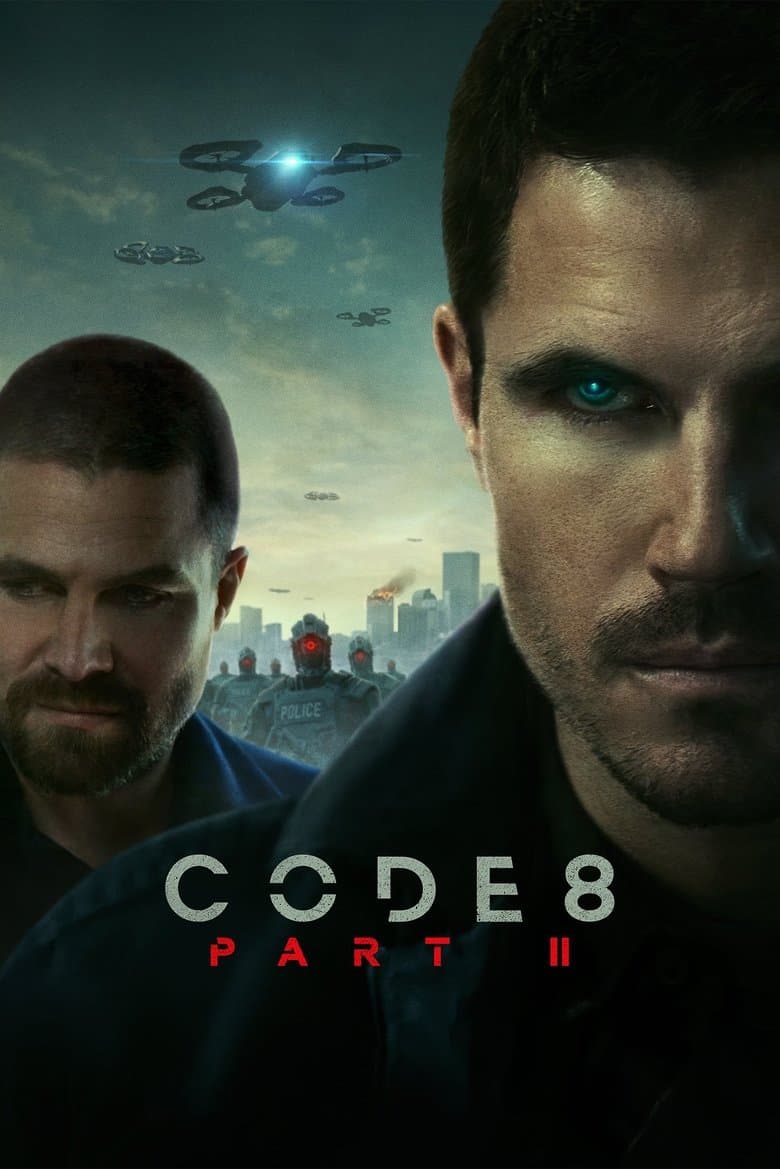
Code 8 Part II follows Connor Reed, a former criminal with electric powers, after he leaves prison and tries to live quietly. He works at a youth community center in Lincoln City, where people with powers are watched and treated as threats. Connor joins his old partner Garrett, a drug boss he hates, to protect Pavani, a fourteen-year-old girl who saw a police robot kill her brother. The film is a dark, fast science fiction crime chase with gun fights, drug dealing, robot attacks, and betrayal.
The film makes discrimination against powered people a main part of its world. Police use surveillance, armed robots, and a fake nonlethal program to control them, while corrupt officers hide murder and drug deals. Pavani becomes a central hero because she can control machines, expose the police, and save Connor. The story supports community care and public exposure as better answers than force, giving the film a clear identity-focused and anti-police message.
Community feedback
Was our 52% Woke rating accurate?
Breakdown
These are the editorial factors and ratings behind our score for Code 8 Part II.
Woke representation / casting
The movie gives its central new hero to an Afghan teenage girl with a rare power that lets her control police robots and save the male lead. It also places an older Korean woman in charge of a community center and uses several minority and female characters in important police and gang roles. The modern Canadian setting makes some diversity normal, but the plot does not explain the characters’ identities. The repeated prominence creates a moderate representation signal.
34%
Woke political dialogue
News reports and conversations repeatedly discuss police reform, surveillance, military equipment, and the treatment of powered workers. The film says powered people were exploited when machines replaced their labor. Connor rejects Garrett’s claim that drug profits can be humane and can support the community. These lines give the chase a clear activist-style political layer, but the dialogue stays tied to the plot.
32%
Identity-driven story themes
The story treats powered people as a separate minority group that loses jobs, lives in poor areas, and faces special police control. The plot centers on Pavani after a police robot kills her brother and officers try to hide the crime. The film says powered people were exploited for drug making and that they must stand together. This identity-driven theme is central and repeated, but the movie uses superpowers as its main stand-in.
44%
Western institutional / cultural critique
The film shows the Lincoln City Police Department as a corrupt system that hides killings and sells protection to a drug boss. It presents armed Guardians, robot dogs, surveillance, and military gear as threats to ordinary people. Police leaders use safer and nonlethal language to sell the program, but the story shows the same tools being used for murder. The ending sends money to the poor Monument Hill area and limits police robots after the evidence becomes public, while one detective offers a small counterpoint.
52%
Woke character or canon changes
Not relevant. The movie continues the fictional Code 8 world and returns Connor and Garrett. It does not make an identity-driven change to an established character or real historical figure.
0%
Anti-woke backlash and complaints
One Rotten Tomatoes audience review says the film has DEI overload, social-justice preaching, and a plan to move attention away from the straight white male leads toward Pavani. The same review complains that Pavani girl-bosses through the story. A Filmweb user review also calls the supporting cast a diversity checklist and says Connor and Garrett were pushed aside. The supplied X pass found no reaction, so this remains a small web backlash.
18%
Creator track record context
Jeff Chan and Sherren Lee have low cached scores of 27 and 28, while Chris Paré has 0. Jesse LaVercombe has 55 because of queer and disability-focused work, but that work is not the main subject of this movie. The cached casting and producer scores are mostly 0 to 11. This gives the film a mild creator-context signal rather than a strong activist pattern.
17%
Production
Movie · 2020
An ex-soldier, a teen and a cop collide in New Orleans as they hunt for the source behind a dangerous new pill that grants users temporary superpowers.
Movie · 2022
Thirteen year old Sam Cleary suspects that his mysteriously reclusive neighbor Mr. Smith is actually the legendary vigilante Samaritan, who was reported dead 25 years ago.
Movie · 2016
CIA Agent Bill Pope is on a mission to track down a shadowy hacker named 'The Dutchman'. When he gets mysteriously killed, an experimental procedure transfers his memories into a…
Movie · 2017
When an attack on the Kingsman headquarters takes place and a new villain rises, Eggsy and Merlin are forced to work together with the American agency known as the Statesman to…
Movie · 2026
A 'Man from the Future' arrives at an LA diner where he must recruit the precise combination of disgruntled patrons to join him on a one-night quest to save the world from the…
Movie · 2021
A former special forces agent is trapped in a time loop and relives his death over and over again. To escape the terrible situation, he must track down those responsible and stop…

Movie · 2018
Los Angeles, June 21st, 2028. While the streets are being torn apart by riots, the Nurse, who runs a clandestine hospital for criminals in the penthouse of the Artemis, a closed…

Movie · 2016
When a massive, gilled monster emerges from the deep and tears through the city, the government scrambles to save its citizens.
