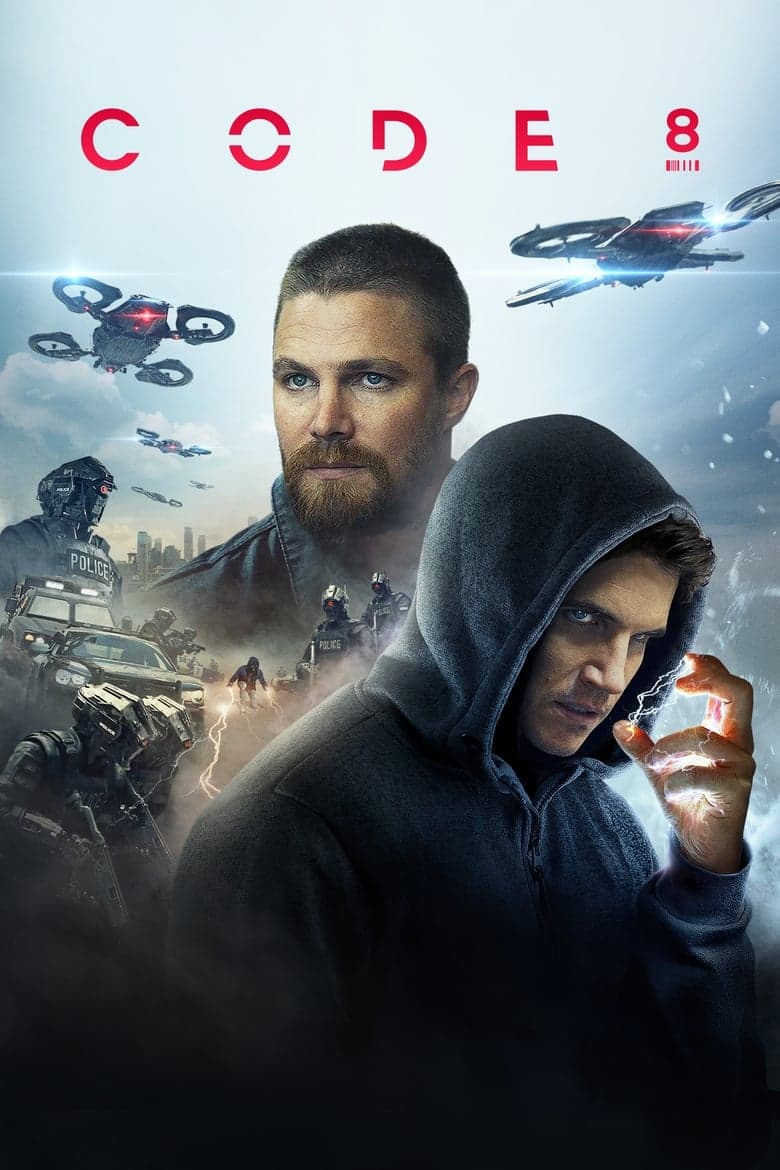
In Lincoln City, four percent of people are born with special powers. The city once used their skills to build its future, but machines and fear have pushed them into poverty and heavy police control. Connor Reed uses electricity and works as a day laborer while his mother grows sick. When he cannot pay for her treatment, he joins Garrett and a crime crew, which leads to robberies, drugs, and violent fights with police.
The film makes the treatment of powered people its main social idea. It shows power registration, job checks, surveillance, a proposed ban, and police robots that treat the group as a threat. The story links poverty and crime to the loss of work and to rules that limit how Powers can live. Connor still faces a personal moral choice, since he breaks the law to help his mother and finally rejects a cruel way to save her.
Community feedback
Was our 44% Woke rating accurate?
Breakdown
These are the editorial factors and ratings behind our score for Code 8.
Woke representation / casting
Not present. The film has white male leads and a mixed supporting cast that fits a modern North American city. The story does not present the casting as a diversity or identity statement.
0%
Woke political dialogue
The opening newsreel says Powers must register and that machines pushed them out of work. A radio debate links job loss, drug crime, and stronger police control. Garrett says the city used Powers to build Lincoln City and then forced them out. A later broadcast argues about a complete Powers ban and calls it a public safety issue.
34%
Identity-driven story themes
The movie treats people with Powers as a separate group that is watched, registered, and pushed into poverty. The story links lost jobs and social hatred to crime, drug abuse, and police violence. Connor and Garrett argue over whether Powers should hide or take back what the city owes them. The film also shows Copperhead, a nonbinary shapeshifter, but that character has only a small role.
50%
Western institutional / cultural critique
The city forces Powers to register and uses face scans, drones, and robot Guardians to watch them. Police officers treat the group as a danger and one officer plans to plant drug evidence at Connor’s home. The city debates a full ban even though some Powers have done nothing wrong. The film presents these systems as unfair barriers tied to poverty and fear.
45%
Woke character or canon changes
Not relevant. The feature expands the 2016 short and gives Connor an ailing mother instead of a younger brother. The change adds a personal goal. The movie has no famous character or real person whose identity was changed.
0%
Anti-woke backlash and complaints
Not present. Online discussion mostly focused on story logic, pacing, the crowdfunding story, and the quality of the action. No clear, broad complaint said the movie was pushing woke or DEI politics.
0%
Creator track record context
The stored creator notes give Jeff Chan 25 and Chris Paré 18, with no clear activist pattern. Robbie Amell and Stephen Amell are rated 11 and 13. Sung Kang has spoken about Asian-American representation, but that is supporting context only. The other listed producers and casting directors have mostly low scores and no strong identity-driven record.
16%
Production
Movie · 2016
CIA Agent Bill Pope is on a mission to track down a shadowy hacker named 'The Dutchman'. When he gets mysteriously killed, an experimental procedure transfers his memories into a…
Movie · 2020
An ex-soldier, a teen and a cop collide in New Orleans as they hunt for the source behind a dangerous new pill that grants users temporary superpowers.
Movie · 2022
Thirteen year old Sam Cleary suspects that his mysteriously reclusive neighbor Mr. Smith is actually the legendary vigilante Samaritan, who was reported dead 25 years ago.

Movie · 2017
When an attack on the Kingsman headquarters takes place and a new villain rises, Eggsy and Merlin are forced to work together with the American agency known as the Statesman to…
Movie · 2025
During the Vietnam War, a recon unit ventures to an isolated jungle valley to uncover the fate of a missing platoon.
Movie · 2020
As a grisly virus rampages a city, a lone man stays locked inside his apartment, digitally cut off from seeking help and desperate to find a way out.
Movie · 2022
The Red Ribbon Army, an evil organization that was once destroyed by Goku in the past, has been reformed by a group of people who have created new and mightier Androids, Gamma 1…

Movie · 2016
When a massive, gilled monster emerges from the deep and tears through the city, the government scrambles to save its citizens.
