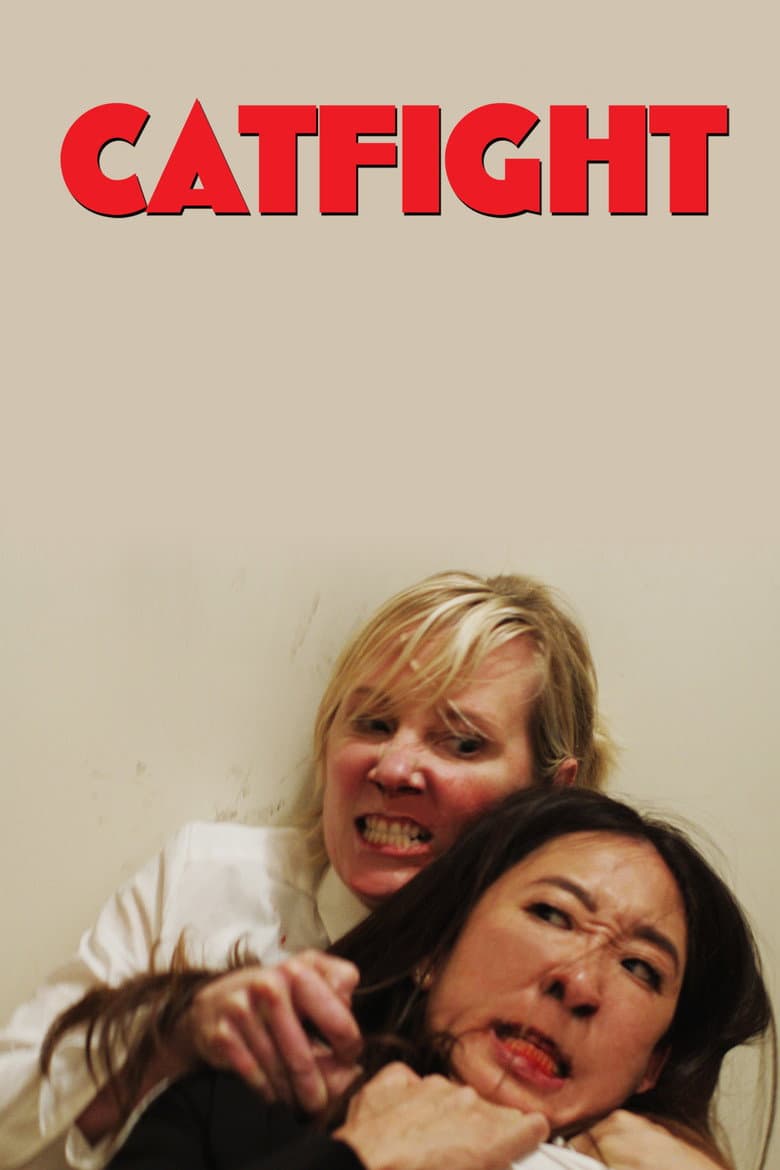
Catfight follows Ashley, a struggling artist, and Veronica, a rich housewife who once knew her in college. They meet at a party in New York after years apart, and old anger turns into a savage fight. Their lives change after each woman spends years in a coma, and each returns to find that money, family, work, or love has slipped away. The dark comedy jumps between parties, hospitals, art shows, and a country home while a new Middle East war grows in the background.
The film gives most of its story to two women who are angry, violent, proud, and often cruel. Ashley lives with her girlfriend Lisa, and their plan to have a child becomes an important part of Ashley’s life. Veronica’s son joins the army, and his death ties her private grief to the war. The film also mocks a wealthy defense business, a president, a news host, and the public’s habit of treating war as entertainment. Its repeated female fights make women’s rage and physical power a main subject, not a side joke.
Community feedback
Was our 63% Woke rating accurate?
Breakdown
These are the editorial factors and ratings behind our score for Catfight.
Woke representation / casting
The film puts two women in the lead and gives several women and people from different racial backgrounds visible roles. Ashley's girlfriend Lisa is also part of the main cast. The New York setting makes the mix believable, so the cast does not look out of place. Tukel still described the cast as balanced in age and race and called it diverse, which turns the casting into part of a broader diversity message.
40%
Woke political dialogue
The news host talks about a new Middle East war, the draft, forcing black and Latino people to leave the country, and the president's rising poll numbers. The host then drops the subject for the fart machine, making political indifference part of the joke. Veronica says she stopped seeing Ashley because she was gay, then quickly denies that was the reason. An aunt calls a tree Hillary untrustworthy and a tree Donald an asshole.
44%
Identity-driven story themes
The story makes two women the main fighters and gives their anger most of the action and emotional weight. The film treats their ability to use force as a break from the usual soft or sexual image of women in fights. Ashley's relationship with Lisa and their plan to have a child are recurring parts of the plot. Veronica's motherhood and her son's death connect the women's private pain to war and loss. The film makes gender and sexual identity part of its main story.
58%
Western institutional / cultural critique
The film makes Veronica's husband rich by selling debris cleanup during a U.S. war, and it treats that business as part of the story's main problem. The television host turns the draft, people being forced to leave, and the war into jokes while viewers laugh. The film also mocks a president, the defense industry, public apathy, and the idea that Western culture can be spread through conquest. The critique is strong and recurring, but it is aimed more at war, greed, and media numbness than at every Western institution.
50%
Woke character or canon changes
Not relevant. The film is an original story about new characters. It does not change an established character or source story.
0%
Anti-woke backlash and complaints
A Rotten Tomatoes audience reviewer called the film “written by the left” but still said it was enjoyable. That is one weak anti-left complaint, not a boycott or organized backlash. The X research pass found no anti-woke reaction, and broader reviews did not show similar complaints.
7%
Creator track record context
Onur Tukel's cached creator score is 58/100, based on repeated work about gender, war, class, and political hypocrisy. Cached producer scores are mixed, with Hamza Ali at 51, Malik B. Ali at 38, Badie Ali at 56, Greg Newman at 4, Gigi Graff at 55, and Stephanie Holbrook at 10. The film's women-centered and anti-war ideas line up most clearly with Tukel's known pattern. The context is moderate because several key producers have little or no activist record.
46%
Production
Movie · 2016
The story of Florence Foster Jenkins, a New York heiress, who dreamed of becoming an opera singer, despite having a terrible singing voice.

Movie · 2024
Mismatched cousins David and Benji reunite for a tour through Poland to honor their beloved grandmother. The adventure takes a turn when the pair's old tensions resurface against…
Movie · 2020
Scott has been a case of arrested development ever since his firefighter father died when he was seven. He's now reached his mid-20s having achieved little, chasing a dream of…

Movie · 2023
The true story of how Dave Fishwick, a working class man and self-made millionaire, fought to set up a community bank so that he could help the local businesses of Burnley not…

Movie · 2018
An American hypochondriac who is working as a baggage handler is forced to confront his fears when a British teenager with a terminal illness enlists him to help her carry out her…

Movie · 2022
The remarkable true story of how retiree Jerry Selbee discovers a mathematical loophole in the Massachusetts lottery and, with the help of his wife, Marge, wins $27 million…
Movie · 2019
Ten fishermen from Cornwall are signed by Universal Records and achieve a top ten hit with their debut album of Sea Shanties.

Movie · 2019
A young Scottish singer, Rose-Lynn Harlan, dreams of making it as a country artist in Nashville after being released from prison.
