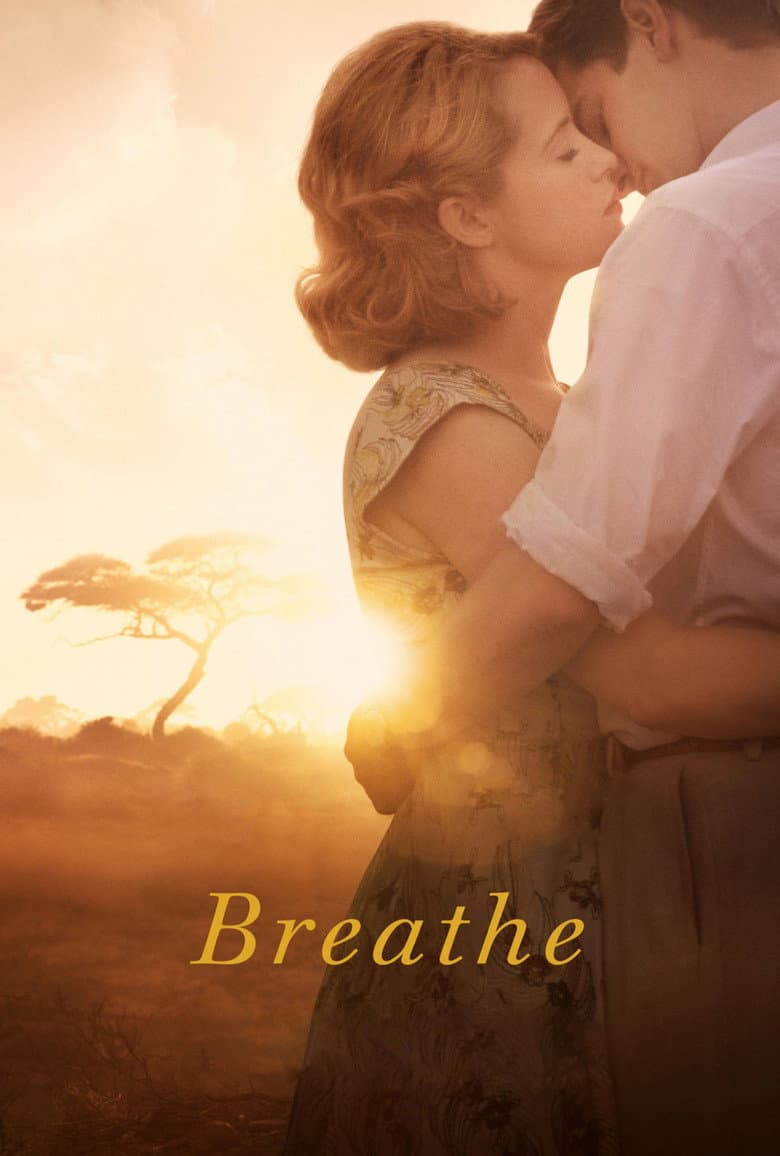
Robin Cavendish is a lively young English tea broker who falls in love with Diana. In 1958, polio leaves him unable to move or breathe without a machine while he is in Kenya. He returns to Britain, where doctors expect him to die in a hospital bed. The film follows the couple as they build a family life, travel, and face painful choices. Its tone is warm, romantic, and hopeful, but it also shows fear, sadness, and death.
Robin's disability is the center of the story, not a side detail. He and Diana fight the idea that a person who needs a machine must stay in a hospital or live only a short time. With help from friends, Robin uses a wheelchair with a portable respirator and later speaks for other disabled patients. The film presents family care, personal freedom, and humane treatment as important values. It also shows Robin choosing to end life support when his body can no longer continue.
Community feedback
Was our 36% Woke rating accurate?
Breakdown
These are the editorial factors and ratings behind our score for Breathe.
Woke representation / casting
Not present. The main cast matches the British setting and the real people shown in the story. The film does not use diversity-first casting or identity-based marketing.
0%
Woke political dialogue
Robin gives a public speech asking doctors to treat severely disabled patients as people with full lives. The speech attacks hospital rules that keep patients shut away and are framed as harmful. The film presents this as disability advocacy, but it does not use modern party politics or broad identity slogans.
26%
Identity-driven story themes
Robin’s struggle for freedom and respect shapes the whole story. The film shows disabled patients being kept in beds and treated as if death is the only answer. Robin’s wheelchair, public work, and final choice about life support all connect to personal control and the value of disabled lives. These themes are clear and repeated, but the film keeps them inside this true story.
42%
Western institutional / cultural critique
Hospital doctors first treat Robin as a patient who should accept confinement and an early death. A German care center is shown as a grim place where disabled people are shut away. Robin challenges these systems through his mobile chair and public advocacy. The criticism is aimed at poor medical care and old attitudes toward disability, not at Western culture as a whole.
30%
Woke character or canon changes
Not relevant. The film adapts the real life of Robin Cavendish and does not make an identity-driven change to an established character or historical figure.
0%
Anti-woke backlash and complaints
Not present. The supplied X pass found no anti-woke reaction. Web coverage showed normal praise, mixed reviews, and progressive criticism of the film’s treatment of disability.
0%
Creator track record context
The casting director has publicly supported greater diversity, disability representation, and gender balance. Andy Serkis has a modest record of debate over modernizing older stories. The writer and listed producers have little public activist history in the cached material. This context is weaker than the film’s own disability story.
18%
Production
Movie · 2022
A young couple's relationship clashes with the harsh realities of the California Gold Rush of 1850. Angel, experiencing love for the first time and facing demons unsurmountable…
Movie · 2016
Canadian folk artist Maud Lewis falls in love with a fishmonger while working for him as a live-in housekeeper.
Movie · 2019
England, early 20th century. The future writer and philologist John Ronald Reuel Tolkien (1892-1973) and three of his schoolmates create a strong bond between them as they share…
Movie · 2020
When a young woman meets an aspiring saxophonist in her father’s record shop in 1950s Harlem, their love ignites a sweeping romance that transcends changing times, geography, and…

Movie · 2025
Heather is a young woman traveling Europe with friends before starting her perfectly planned life. A chance meeting with Jack sparks an unexpected romance that leads to deep…
Movie · 2017
The story of four characters whose lives intertwine amid the hustle and bustle of the Coney Island amusement park in the 1950s: Ginny, an emotionally volatile former actress now…

Movie · 2017
In 1950s London, a renowned dressmaker's meticulous lifestyle begins drastically changing as his relationship with his young muse intensifies.
Movie · 2016
In 1958, in the state of Virginia, the idea of interracial marriage was not only considered to be immoral to many, it was also illegal.
