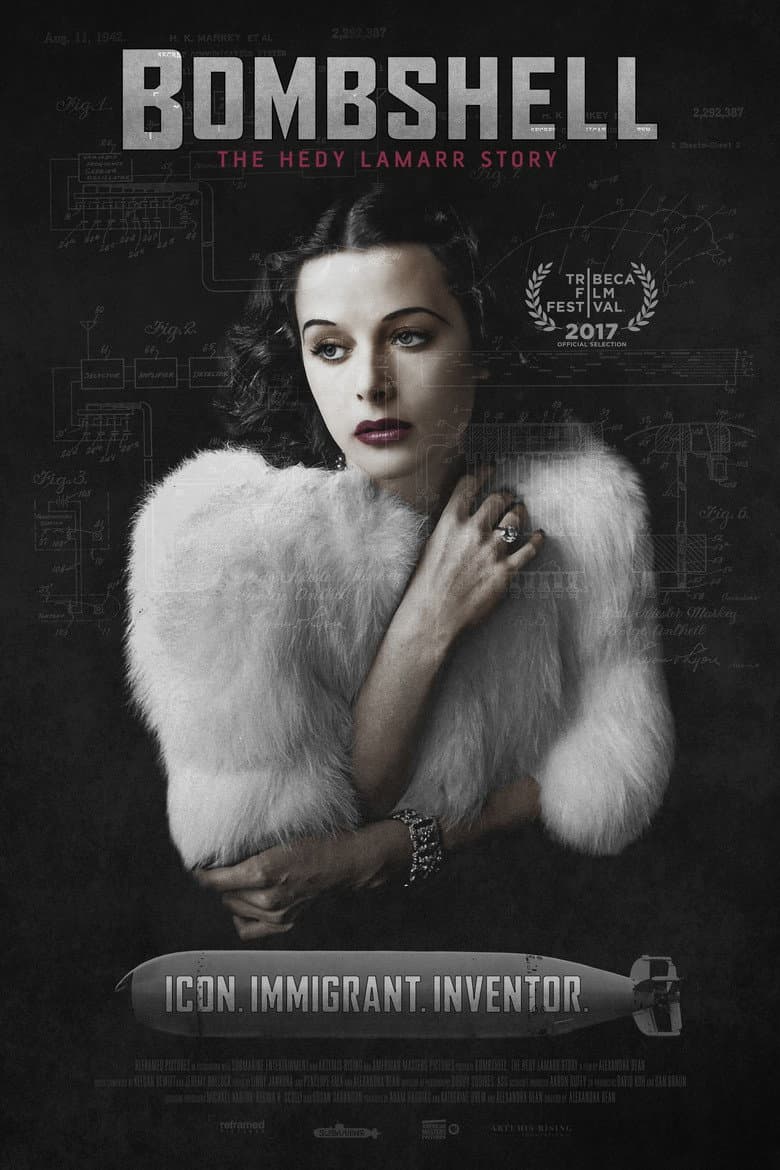
Hedy Lamarr is a famous Hollywood actress who also spends her spare time working on inventions. The documentary follows her from Vienna and a controlling first marriage to her escape to America, movie stardom, and later life alone. During World War II, she works with composer George Antheil on a radio system that changes frequencies to stop enemy jamming. The film has a bright but sad tone as it moves between glamour, science, romance, war, and a long fight for credit.
The clearest woke element is the identity-driven story about a woman being judged by her beauty while men and institutions overlook her mind. The film presents Lamarr as a capable inventor whose work is ignored, unpaid, and doubted while Hollywood pushes her toward attractive roles. The documentary links her life to modern barriers for women in science and technology, and to the need to honor women as creators. The film briefly notes that she had relationships with men and women, but the story is not built around queer identity.
Community feedback
Was our 62% Woke rating accurate?
Breakdown
These are the editorial factors and ratings behind our score for Bombshell: The Hedy Lamarr Story.
Woke representation / casting
Not present. The film uses Lamarr’s real footage and real interviewees. It does not use identity-based casting as a story device.
0%
Woke political dialogue
The documentary repeats comments that Lamarr was judged by beauty instead of ability. It includes lines about women needing to be taken seriously in science and technology. It uses her story to point at present-day doubts about female inventors. The dialogue is recurring, but it does not fill the film with slogans or long political speeches.
38%
Identity-driven story themes
The central story is that Lamarr is treated as a beauty first and an inventor second. The film follows her fight to escape male control, win serious roles, protect her ideas, and receive credit. It presents her life as an example of how women can be pushed aside in science and entertainment. A brief reference to relationships with men and women adds a queer element, but queer identity is not the film’s main subject.
66%
Western institutional / cultural critique
The film presents Hollywood bosses, controlling husbands, the Navy, and the press as forces that reduce or ignore Lamarr. It links that treatment to beauty standards and the belief that women should be attractive rather than technically gifted. The story also points toward modern barriers for women in science and technology. It does not attack Christianity or Western life as a whole.
45%
Woke character or canon changes
Not relevant. The film is a documentary about a real person and does not change a fictional character’s race, sex, sexuality, or role.
0%
Anti-woke backlash and complaints
Not present. Public reviews and online posts mostly praised Lamarr or discussed the film’s quality. The supplied X research found no anti-woke complaints, boycott talk, or review-bombing.
0%
Creator track record context
Alexandra Dean’s public work centers on women inventors, sexism, and fuller recognition for women. Susan Sarandon and Regina K. Scully bring strong activist and gender-focused media backgrounds. Adam Haggiag has a smaller gender-equality strand, while the other producers have broader records with less clear activist focus. This gives the film strong representation-first context, but the whole team is not equally ideological.
61%
Production

Movie · 2025
The individual journeys of the four members of the band, as they move through the music scene of the 1960s, playing small clubs throughout Britain and performing some of the…
Movie · 2020
When Washington Post journalist Jamal Khashoggi disappears after entering Saudi Arabia’s consulate in Istanbul, his fiancée and dissidents around the world are left to piece…

Movie · 2016
With stunning views of eruptions and lava flows, Werner Herzog captures the raw power of volcanoes and their ties to indigenous spiritual practices.

Movie · 2018
New York, 1980. Three complete strangers accidentally discover that they're identical triplets, separated at birth.
Movie · 2017
The life and career of an actor, artist, and icon. His own journey through his own camera.

Movie · 2020
Record-shattering Korean girl band BLACKPINK tell their story — and detail the hard fought journey of the dreams and trials behind their meteoric rise.
Movie · 2020
This documentary examines unidentified aerial phenomenon. With testimony from high-ranking government officials and NASA Astronauts, Senator Harry Reid says it "makes the…

Movie · 2023
The remarkable coming-of-age story of Stephen Curry—one of the most influential, dynamic, and unexpected players in basketball history—and his rise from an undersized college…
