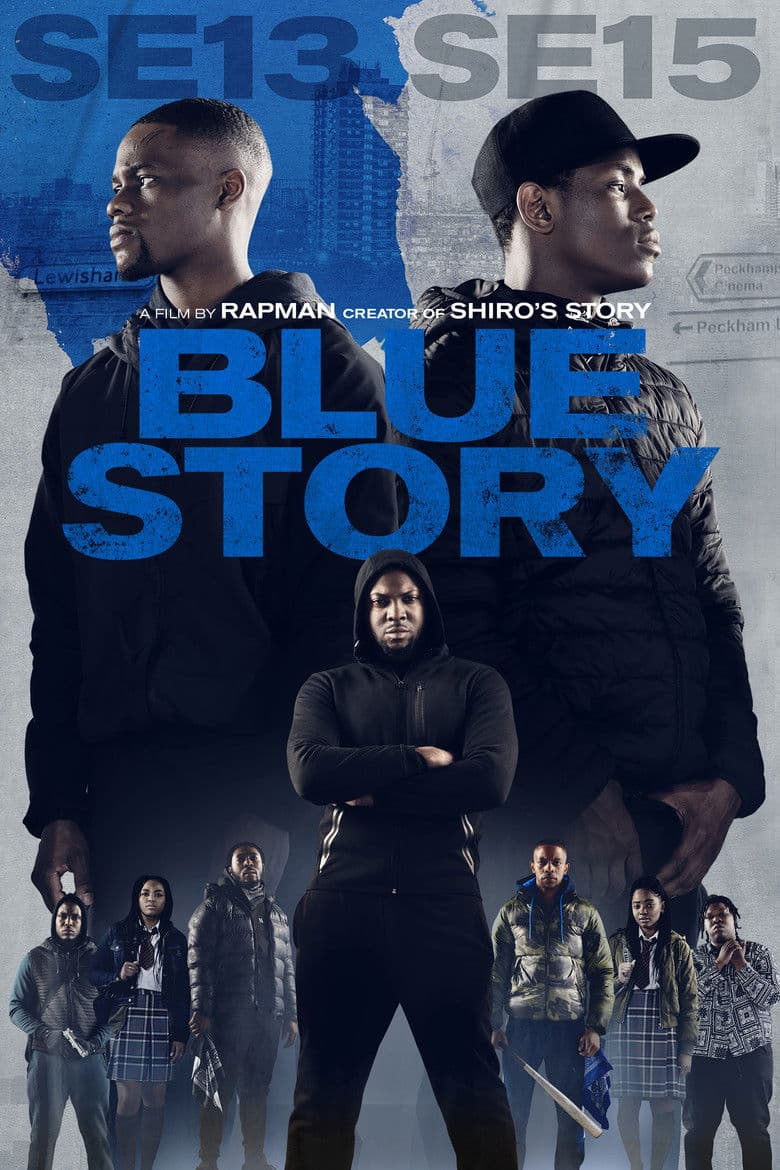
Timmy is a shy and smart teenager from Deptford who goes to school in Peckham. He becomes close friends with Marco, a confident boy whose older brother leads a local gang. The boys come from rival postcodes, but their friendship survives for years before one violent clash pulls them onto opposite sides. The movie is a bleak, fast-moving crime drama with music, romance, jokes, and sudden violence.
Blue Story gives a black British view of life in south London and asks viewers to understand how young men can be pulled into crime by family ties, pride, revenge, and pressure from their area. The story treats gang power and violent male pride as destructive, not heroic. Leah gives Timmy a loving relationship and a clear voice outside the gangs, while her death shows how the violence harms people who did not choose it. Race and community identity shape the setting, but modern identity politics is not the main subject.
Community feedback
Was our 27% Woke rating accurate?
Breakdown
These are the editorial factors and ratings behind our score for Blue Story.
Woke representation / casting
Not present. The main cast is black British, but the story takes place in present-day south London and is based on Rapman’s local experience. The casting fits the people and neighborhoods shown, and the movie does not present the cast as a wider diversity campaign.
0%
Woke political dialogue
Not present. The dialogue uses London slang, threats, jokes, and lines against postcode violence. It does not contain a clear speech or repeated line about modern identity politics, DEI, or activist causes.
0%
Identity-driven story themes
The film gives a black British view of young life in south London. The story asks viewers to see gang members as young people shaped by family, school, postcode, and peer pressure. The film treats violent male pride as destructive instead of heroic. Race and community identity stay visible, but friendship, love, and gang violence remain the main subjects.
24%
Western institutional / cultural critique
The film shows poor neighborhoods, family pressure, and limited choices around young people. The story connects those pressures to the gang cycle and asks viewers to see the boys as more than criminals. The film gives no sustained attack on capitalism, patriarchy, Christianity, or Western institutions. The social critique is mild and supports the crime story.
17%
Woke character or canon changes
Not relevant. The movie expands Rapman’s own YouTube story and keeps its South London setting and main character types. No race, gender, sexuality, or hero-role change in established material is reported.
0%
Anti-woke backlash and complaints
Not present. The main public dispute concerned a cinema fight, safety, and whether the film made gang life look good. Some people accused the cinema ban of racism, but no clear anti-woke complaint about DEI or identity politics is reported.
0%
Creator track record context
Rapman has a strong record of telling black British stories and supporting black representation. Joy Gharoro-Akpojotor has a strong record of developing Black, female, and LGBTQ+ stories. Eva Yates has backed programs aimed at creators from under-represented groups. Other listed creators have lower or unclear activist records, so the context is meaningful but mixed.
55%
Production
Movie · 2018
German artist Kurt Barnert has escaped East Germany and now lives in West Germany, but is tormented by his childhood under the Nazis and the GDR regime.
Movie · 2016
James, down on his luck and desperate for some quick cash, agrees to drive a small truck across country. He soon realizes that he's made a huge mistake and has inadvertently…
Movie · 2017
A brilliant but impulsive young surgeon spirals into self-destruction after a painful breakup, struggling to cope with love, loss, and the consequences of his own temper.
Movie · 2019
A bullied teenage girl forms an unlikely friendship with a mysterious young man who protects her from her assailants, while she copes with the pressures of her final examinations.

Movie · 2025
Two artistic souls find harmony through music despite their contrasting worlds. As feelings deepen, age and circumstances challenge their undeniable bond.

Movie · 2024
A mild-mannered professor moonlighting as a fake hit man in police stings ignites a chain reaction of trouble when he falls for a potential client.
Movie · 2023
After decades apart, childhood friends Nora and Hae Sung are reunited in New York for one fateful weekend as they confront notions of destiny, love, and the choices that make a…
Movie · 2020
Young musician Zach Sobiech discovers his cancer has spread, leaving him just a few months to live. With limited time, he follows his dream and makes an album, unaware that it…
