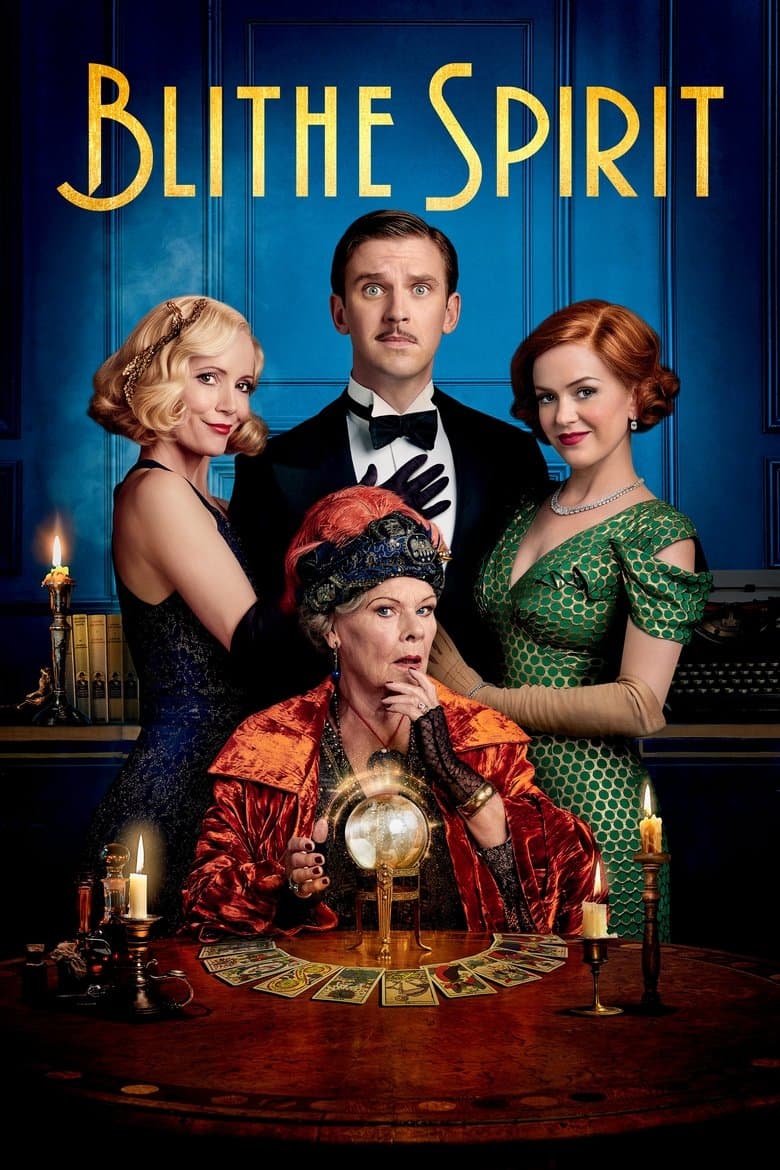
Charles Condomine is a famous crime writer who cannot finish the screenplay he owes to his father-in-law. He lives with his second wife Ruth in a large Art Deco house in 1937 England. Charles invites the medium Madame Arcati to hold a séance for ideas, but the meeting brings back Elvira, his dead first wife. Charles alone can see Elvira at first, so the marriage becomes a silly and bitter love triangle filled with ghosts, jealousy, sex jokes, and physical comedy.
The film adds a clear feminist thread to Coward’s old comedy. Elvira says she supplied the ideas and wrote much of Charles’s work while he took the public credit. Ruth and Elvira both call out Charles’s selfishness, and the women gain the last word while Charles loses control of his life. The message about women being denied credit appears in a few key scenes, but it stays inside the love triangle and writing plot instead of becoming a broad political speech.
Community feedback
Was our 52% Woke rating accurate?
Breakdown
These are the editorial factors and ratings behind our score for Blithe Spirit.
Woke representation / casting
Not present. The main roles are played as the period story’s white British and American characters. The small supporting roles do not create a repeated diversity pattern or a clear casting message.
0%
Woke political dialogue
The film includes a few direct lines about gender and credit. Elvira says that women are used to not getting the credit they deserve. The women also ask whether Charles took all the glory and dismiss men like him. These lines support the feminist plot, but they appear in a few scenes rather than in a long political speech.
34%
Identity-driven story themes
The film makes Elvira the hidden creative force behind Charles’s success. She helps write his new screenplay, and the story says she supplied much of his earlier work. Ruth and Elvira both expose Charles as selfish and unworthy of the credit he received. This feminist revenge thread shapes the second half, but it remains part of a comic marriage story.
54%
Western institutional / cultural critique
The film presents Charles as a selfish man who uses both wives and takes credit for their help. Ruth and Elvira push back against his control of the home, the marriage, and the writing. This is a repeated critique of male entitlement and old gender roles. The story does not widen that critique into a serious attack on churches, government, capitalism, or Western society.
24%
Woke character or canon changes
The film changes Noël Coward’s characters by making Elvira the hidden author behind Charles’s books and screenplay. The earlier story has Elvira as a source of help, but this version makes her the main reason for Charles’s success. The film also gives Ruth and Madame Arcati more personal backstory and makes the women more sympathetic. Those gender-based changes shape the final conflict and ending.
52%
Anti-woke backlash and complaints
Not present. The supplied X pass found no anti-woke posts or complaints. Reddit and mainstream reviews discussed the poor comedy, the remake’s quality, and comparisons with the 1945 film, not woke or DEI messaging.
0%
Creator track record context
The writers and most producers have no clear activist or DEI record. Edward Hall has a modest public track record, but his interview describes more contemporary storylines with feminist undercurrents. Hall also says the women are rewarded while Charles is punished. The wider crew has a few mild social themes but no strong public activist pattern.
15%
Production

Movie · 2019
A struggling musician realizes he's the only person on Earth who can remember The Beatles after waking up in an alternate reality where the group was forgotten.

Movie · 2021
When single mom Callie and her two kids Trevor and Phoebe arrive in a small Oklahoma town, they begin to discover their connection to the original Ghostbusters and the secret…
Movie · 2022
Two strangers believe in love but never seem to be able to find its true meaning. In a wild twist of events, fate puts each in the other's path on one stormy New Year's Eve.

Movie · 2023
Hapless family man Paul Matthews finds his life turned upside down when millions of strangers suddenly start seeing him in their dreams.

Movie · 2018
Titu is going to marry a perfect woman named Sweety. Titu's best-friend Sonu doubts Sweety's character and tries to break the marriage while Sweety tries to do opposite and which…

Movie · 2021
Two teenagers trapped in an endless time loop set out to find all the tiny things that make that one day perfect.

Movie · 2019
A boy is given the ability to become an adult superhero in times of need with a single magic word.

Movie · 2018
When teenager Elle's first kiss leads to a forbidden romance with the hottest boy in high school, she risks her relationship with her best friend.
